JUBA, South Sudan — A Vietnamese national deported to South Sudan by the Trump administration under its controversial third-country deportation program was repatriated to Vietnam on Friday after spending more than a year in detention.
South Sudan’s Ministry of Foreign Affairs announced the repatriation of 44-year-old Tuan Phan at a press briefing on Friday.
“We are grateful that while in our custody Mr. Phan was very disciplined, joyful, and importantly, he remained healthy,” said spokesperson Agok Anyar.
Phan and seven other men were sent to Africa in May 2025, rerouted first to a U.S. military base in Djibouti after a federal judge blocked their deportation to South Sudan midflight, citing procedural irregularities. They arrived in Juba, South Sudan’s capital, aboard a military aircraft in July 2025 after a Supreme Court ruling greenlit their removal.
The eight men all have criminal convictions in the U.S. but had served their prison sentences when they were taken into custody last year.
At least seven African countries have agreed to accept deportees who are not their own citizens as part of arrangements with the U.S., which in exchange has agreed to pay millions of dollars to those governments.
More than 180 people have been sent to those countries, according to the monitoring initiative Third Country Deportation Watch.
The choice of South Sudan as a receiving nation was particularly controversial given its exceptionally poor human rights record, high levels of corruption and growing political instability. Armed conflict displaced more than half a million people in 2025, according to the United Nations.
Phan is the second person in the group to be repatriated after Jesus Munõz-Gutierrez was flown to Mexico in September. Dian Peter Domach, the only South Sudanese national in the group, was released upon his arrival, officials said. The remaining men are from Cuba, Myanmar, and Laos.
Phan moved to the U.S. as a child in 1991, court documents show. In 2000, shortly after turning eighteen, he received a 25-year prison sentence after he shot and killed someone during a gang altercation. His removal from the U.S. was ordered in 2009, and he was taken into custody by Immigration and Customs Enforcement immediately after completing his sentence in March 2025.
In Juba, the deportees were held in a gated house under supervision by armed guards, according to a U.S. Senate report. A congressional aide who visited Juba last year was the first person other than a South Sudanese official to visit the men, the report says.
Michael Bochenek, a senior counsel for Human Rights Watch, said that the lack of visits means “there’s been no independent check on people’s treatment and conditions of confinement and raises serious questions about South Sudan’s compliance with human rights norms and essential safeguards against abuses in detention.”
While the details of deals made between the U.S. and other governments to accept deportees have been made public, the conditions of the South Sudan arrangement remain murky.
State Department documents made public show that South Sudan made requests to the U.S. after agreeing to accept the men, including sanctions relief for a former top official and support with the prosecution of a prominent opposition leader.
It is unclear what South Sudan’s government was paid or what it received in return.
“Amercians have been used to in-play ads for 40, 50 years, so culturally this fits right in,” says Rob di Gisi, lecturer in sport management at the University of Pennsylvania’s Wharton School.
“There is very little pushback here. Any changes which make games more Americanised will be embraced without people noticing.”
Fellow US broadcaster Telemundo, which shows matches in Spanish and is aimed at Latino Americans, is one of the few broadcasters which has decided not to show ads during the breaks.
During Canada’s opening match last week, its commentator said: “We prefer the old school way. We should be able to see what the players do.
“We show fans, people enjoying themselves, not the corporate direction of football.”
BBC Sport has contacted Fox Sports and Telemundo for comment.
In other big markets around the world ads are being used too, including in Mexico, Canada, France, Germany, Italy, Spain, China, Japan, India, Australia, the Middle East and Sub-Saharan Africa.
The broadcasters in those territories will not be able to charge prices as high as Fox Sports, and not all are running them for the maximum duration allowed, but the total amount accrued will be huge.
“When you start scaling that up over all the rest of the countries, it’s probably a billion dollars (£756m) from hydration break ads across the globe,” Di Gisi adds.
Having eyeballs on products during in-game breaks doesn’t necessarily guarantee success, however.
“Will advertisers in the hydration break be met with enough discontent that it negates the value of the advertising?” says T. Bettina Cornwell, head of marketing at the University of Oregon.
“It is the case that when brands violate the expected experience, in this case the flow of the game, fans can react negatively.”
Morocco captain Achraf Hakimi will stand trial for rape, French prosecutors have confirmed.
A woman accused the Paris St-Germain defender of raping her at his home in the French capital in 2023, when she was aged 24.
The public prosecutor’s office in Nanterre, a western suburb of Paris, began a preliminary investigation in March 2023.
An investigating judge ordered a trial in February 2026 and French media report that Hakimi failed with a recent appeal to have the trial dismissed.
Hakimi, who is set to lead his side out for their second World Cup fixture against Scotland on Friday (23:00 BST), has consistently denied the accusations.
“The justice system looked me in the eye and said, ‘If you weren’t famous, there would never have been a case,'” Hakimi wrote on social media on Friday.
“I chose to remain silent for years. I believed that maintaining my dignity, being patient, and trusting in the justice system would allow the right decisions to be made.
“Today, a story that isn’t mine is being told at the expense of my family, my life, and above all, the truth. I sometimes feel like I’ve become an easy target.
“I’ve been waiting for this trial since day one. And now I’m eagerly awaiting it. Finally, I’ll be able to speak.”
Rachel-Flore Pardo, the plaintiff’s lawyer said in a statement: “After more than three years of legal proceedings, and after my client was, in her view, defamed and dragged through the mud by Achraf Hakimi’s defence, this decision brings her relief and hope.
“Relief that she has been heard by the justice system and will have the right to a trial.
“Hope that this trial will help other women and further weaken the wall of denial and impunity surrounding sexual violence, including in the world of men’s football.”
A date has not yet been set for the start of the trial.
All three of Morocco’s group stage fixtures are being held in the United States, where the team are currently based.
But should Morocco progress to the knockout stages, Hakimi could face difficulties in entering Canada or Mexico if their matches are scheduled outside the United States.
Partey, 32, has pleaded not guilty to seven charges of rape and one count of sexual assault relating to allegations by four different women between 2020 and 2022.
He is due to stand trial next year.
Canada’s government website states that they can deny entry to any person that has “committed or been convicted of a crime”.
The World Cup is being held across all three co-host countries until the quarter-final stage, when it will be held exclusively in the US.
Hakimi, who has won 97 caps for Morocco, made his international debut in 2016 at the age of 17.
He was a key figure in the Morocco side that became the first African nation to reach the semi-finals of the World Cup in 2022.
The defender joined Paris St-Germain from Inter Milan in 2021, and has won 13 pieces of silverware during his time at the club – including back-to-back Champions League titles in the past two seasons.
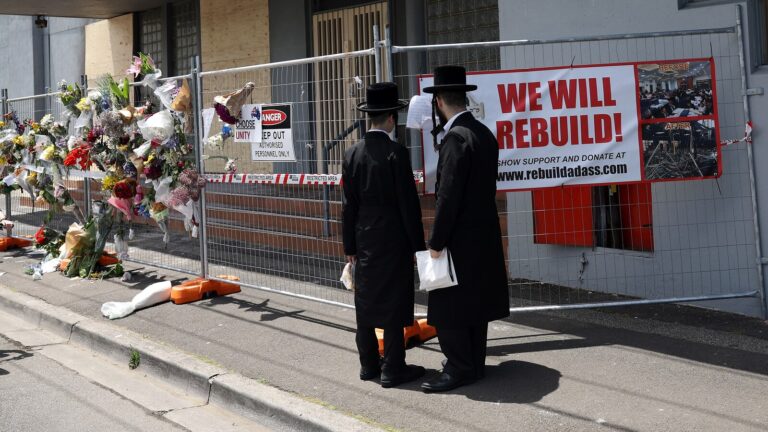
MELBOURNE, Australia — Police charged a third suspect on Friday with an arson attack on a Melbourne synagogue that was allegedly directed by Iran.
The 20-year-old man was one of three masked offenders who broke into the Adass Israel Synagogue, doused the interior with flammable liquid then set it alight in the early hours of Dec. 6, 2024, a police statement alleged.
The fire caused extensive damage to the synagogue and a worshipper sustained minor injuries.
The Victorian Joint Counter Terrorism Team, which brings together federal and state police with a spy agency, charged the man, who has not been named, with offenses including arson.
He was charged in a Melbourne jail where he was already being held in custody on unrelated offenses. Police declined to elaborate on those offenses.
His co-accused Giovanni Laulu, 21, was arrested in July last year and another suspect, Younes Ali Younes, 20, was arrested a month later.
Prime Minister Anthony Albanese last year accused Iran’s Revolutionary Guard of directing the synagogue fire and an arson attack two months earlier at a Sydney kosher eatery, Lewis’ Continental Kitchen.
Mike Burgess, director-general of the Australian Security Intelligence Organisation, the nation’s main domestic spy agency, said the Revolutionary Guard used a “complex web of proxies to hide its involvement” in both antisemitic attacks.
Iran’s ambassador to Australia and another three Iranian diplomats were expelled. Tehran has denied Australia’s allegations.
Australian Federal Police Assistant Commissioner Peter Crozier told reporters on Friday that investigators were working with international partners in the continuing investigation.
Police were also investigating whether the three alleged arsonists knew who ordered the attack.
“They may not actually be aware of the people who are directing or the principals of these investigations. That remains a key line of inquiry for us,” Crozier said.
Victoria Police Acting Assistant Commissioner Paul O’Halloran said police had informed the local Jewish community of the third arrest before the news was made public.
“Our heart goes out to them. Again, this brings back this terrible incident,” O’Halloran said.
“People deserve the right to feel safe and be safe in their community and particularly at their place of worship. Today’s charges are a strong testament to this,” he added.
The latest suspect will make his first court appearance on the new charges next week.
The Australian government has established a public inquiry to investigate a rise in antisemitism across the country, including the killing of 15 people when two gunmen opened fire on a Sydney Hanukkah celebration in December.
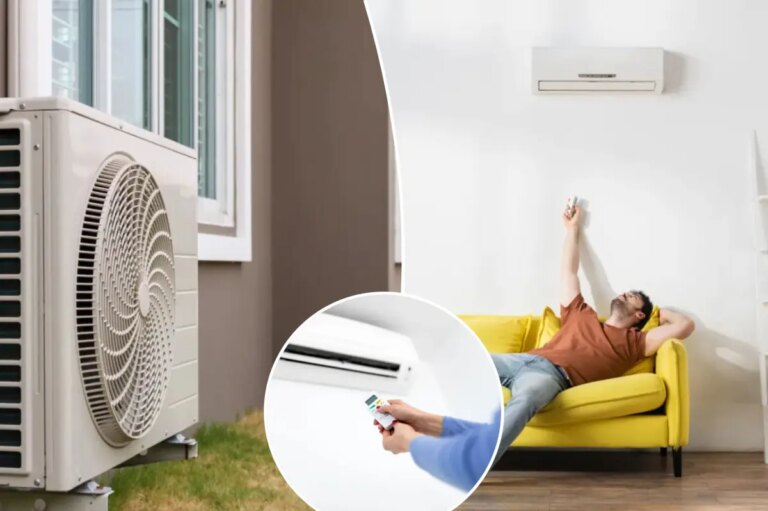
If your AC is older or breaking down more than you’re used to, waiting to deal with it won’t save you more money — in fact, it will make it worse.
AC repairs and replacements are already expensive, but several factors can make the cost even higher over the next few years. Between installation and ductwork issues, new refrigerant rules and hard-to-source parts, HVAC quotes feel a lot steeper than expected.
According to ARS, the refrigerant transition that began in 2025 is expected to push repair and replacement costs on older R-410A systems higher over the next several years as supply tightens.
That does not mean every homeowner needs to panic-replace their AC right now. But if your system is already older, inefficient or constantly needing repairs, the math may start changing sooner than you think.
Here’s why your AC may be about to get more expensive, and what to do before you’re stuck making a rushed decision.
The refrigerant transition could raise costs
As mentioned above, older systems may get more expensive to repair as supply tightens.
That matters because refrigerant is not just a random add-on. If your system has a leak, needs a major repair or requires refrigerant-related service, the cost can be dependent on what refrigerant the system uses and how easy it is to source.
If your AC is new and working well, it’s probably not an issue. But if your system is already aging, leaking, noisy or failing to cool properly, the refrigerant transition is one more reason not to ignore it.
visoot – stock.adobe.com
Older systems may become harder to justify repairing
Sometimes repairing an older AC unit just doesn’t make sense anymore.
ARS recommends a general rule for homeowners: If a repair quote is more than half the cost of a new system and the unit is over 10 years old, replacement usually makes more financial sense over the life of the system.
Joey Dooley, a general manager at ARS in Texas, says age alone is not the only factor.
“In some cases, an eight- or nine-year-old system makes sense to replace,” he says. “In other cases, you may have a system that’s 15 years old that still makes sense to keep. We really want to do that analysis and let the homeowner know what the true cost of ownership has been so they can make a decision.”
If repairs get more frequent, it might be time to consider replacing your HVAC.
Replacement costs are already high
Even before future cost increases, AC replacement is already a major investment.
According to ARS, a complete residential HVAC system replacement typically ranges from about $12,000 to $16,000, depending on system type, home size and installation requirements. ARS notes that simpler furnace-only replacements run lower, while premium or high-efficiency systems and complex installs run higher.
These numbers are worth paying attention to before the system completely fails. If you wait until your AC breaks during a heat wave, you may not have time to compare quotes or properly plan the project.
Quotes can vary by thousands
All contractors can have varying quotes.
According to ARS, two HVAC quotes for the same home can differ by thousands of dollars, and it’s typically not because one contractor is overcharging. ARS points to equipment tier, efficiency rating, install complexity, and whether work like ductwork or electrical upgrades is included.
The AC is only part of the cost. Ductwork can drive up the price if it’s leaking or not installed properly, which happens more often than you think.
“A lot of the real problems come from ductwork,” says Dooley. “If the ducts are installed improperly, if there are restrictions, if things are sealed badly, then you’re not getting the efficiency you paid for. For example, we can change to higher-efficiency equipment, but if the airflow and duct system aren’t right, you’re not going to get that full efficiency.”
According to ARS service data, ductwork repair or replacement typically runs between about $2,800 and $4,000 per job, depending on the extent of work and home layout.
A bigger AC is not always the answer
Sometimes, homeowners will choose a bigger, more expensive AC because they think it will cool their space faster. But bigger is not always better.
“First of all, it needs to be sized properly,” says Gregory Milich, an HVAC expert and college instructor with 43 years of experience. “You can’t just take a three-ton system out and put a four-ton system in because the customer says, ‘I just want more air conditioning.’ It does not work that way.”
That’s why a proper evaluation matters before you get an AC installed. Josh Conder, division operations manager for ARS Central Division, says his team does a full energy analysis and heat-load calculation to determine what works best for each home.
The last thing you want to do is pay for the wrong AC.
LIGHTFIELD STUDIOS – stock.adobe
Installation quality can make or break the investment
A new AC is expensive, but the equipment itself is only part of the equation.
“An HVAC system is not complete until it’s installed correctly,” says Scott Urquhart, an HVAC sales and customer experience expert. “Whether it’s the greatest equipment with the greatest warranty in the world, or it’s the cheapest equipment you’ve ever found or heard of, you have to install it correctly. And if you don’t, you’re going to have problems.”
Dooley says the same thing applies to system performance.
“I tell people all the time that the equipment can be great, but if the installation is bad, the performance will be bad,” he says.
Newer HVAC systems are generally more expensive, but they’re built to last longer and come with smarter tech.
“Now you’ve got systems with much more precise capacity control,” Dooley says. “That means if the house needs less cooling, the system can operate at a lower speed, use less electricity and still keep people comfortable.”
“There are even systems now that can help tell you if a filter is actually dirty versus replacing it just because it’s ‘time,’” he adds. “If you’re buying expensive filters, replacing them when you don’t need to is unnecessary.”
Those features may add to the upfront cost, but they can help with comfort, diagnostics and efficiency over time.
Kwangmoozaa – stock.adobe.com
What to check before costs climb
Before you assume you need a full replacement, make sure the problem is properly diagnosed.
What to check
Why it matters
System age
Older systems may become harder to justify repairing
Refrigerant type
Older R-410A systems may become more expensive to repair as supply tightens
Repair history
Frequent repairs can raise the true cost of ownership
Ductwork
Leaky or restricted ducts can reduce efficiency
System size
An oversized or undersized unit can cause comfort problems
Installation quality
Bad installation can hurt performance even with good equipment
Humidity control
Your AC should dehumidify, not just cool
Warranty coverage
Coverage can affect whether repair or replacement makes sense
Maintenance history
Missed maintenance can lead to breakdowns and warranty issues
What to ask your HVAC contractor
If you are worried about rising AC costs, ask direct questions before spending money.
Ask your HVAC contractor:
What refrigerant does your current system use
Whether the refrigerant transition affects future repair costs
Whether a repair or replacement makes more financial sense
Is the system is the correct size for your home
Was a heat-load calculation was performed
Whether the ducts were inspected, sealed or replaced
What, if any, electrical work is included
What warranties or guarantees apply
Whether there is a money-back or comfort guarantee
What maintenance is required to protect the warranty
The goal is to understand the long-term cost, not just the immediate quote.
Our verdict: How to avoid a surprise HVAC bill
The best way to avoid a future surprise bill is to stop waiting for the system to fail — that’s when it becomes expensive. That’s where maintenance comes into play.
“The importance of maintenance may change a little depending on where you are in the U.S., but biannual maintenance is the baseline,” he says. “Almost every manufacturer recommends it, and I can tell you that a lot of them also effectively require maintenance if you want to protect your warranty.”
Regular maintenance can help catch problems earlier, protect warranty coverage and give you more time to plan if a replacement is coming.
FAQ
Why is AC repair getting more expensive?
AC repair can get more expensive because of refrigerant changes, older system parts, labor and whether additional work like ductwork or electrical upgrades is needed.
What is the 2025 refrigerant transition?
According to ARS, the refrigerant transition that began in 2025 is expected to increase repair and replacement costs on older R-410A systems in the next few years as supply tightens.
Should I replace my R-410A system now?
Not necessarily. If your system is newer and working well, you may not need to replace it. But if it is older, leaking, breaking down often or expensive to repair, the refrigerant transition may change the repair versus replace calculation.
For over 200 years, the New York Post has been America’s go-to source for bold news, engaging stories, in-depth reporting, and now, insightful shopping guidance. We’re not just thorough reporters – we sift through mountains of information, test and compare products, and consult experts on any topics we aren’t already schooled specialists in to deliver useful, realistic product recommendations based on our extensive and hands-on analysis. Here at The Post, we’re known for being brutally honest – we clearly label partnership content, and whether we receive anything from affiliate links, so you always know where we stand. We routinely update content to reflect current research and expert advice, provide context (and wit) and ensure our links work. Please note that deals can expire, and all prices are subject to change.
What’s worse than spreading a disease? Not even realizing when you’re doing it.
Unfortunately, it happens more often than most people think because of simple, everyday behaviors that may seem harmless.
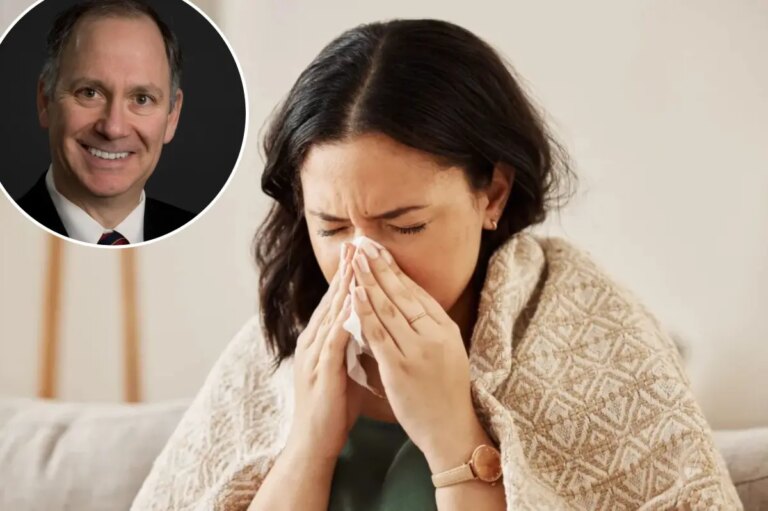
Dr. Bruce Hirsch, MD, an attending physician of infectious diseases at Northwell Health, teveals the super common habits that make him squirm because of their likelihood to spread pathogens.
And while they’re a bad move for anyone, he warns that they’re especially risky for people who are more vulnerable to illness, like those with weakened immune systems and delicate GI tracts.
You may be spreading bacteria without knowing it, but a few small changes can make a big difference. Malik/peopleimages.com – stock.adobe.com
1. Not washing hands properly before handling food
Washing one’s hands might not come as a surprise, but it’s not just about getting rid of dirt.
The bigger concern is the bacteria you may be carrying without even knowing it. Hirsch explained that while many of those germs don’t make you sick, they can be harmful to someone else.
“Often, a lot of us are colonized with bacteria that we’re getting along with fine but can cause illness in other people,” he told The Post. “If a person is colonized with potentially dangerous bacteria, then that becomes a real issue. Sometimes, it’s not just the bacteria, it’s what the bacteria are doing.”
The fix is simple: Wash your hands thoroughly with soap and running water, creating friction by rubbing them together for at least 10 seconds before rinsing.
And don’t stop there. Hirsch said it’s important to dry your hands with a towel or hand dryer rather than just shaking off the water.
2. Improper sneezing technique
Everybody sneezes. The problem is where those sneezes land.
Many people instinctively sneeze into their hands, which can quickly spread germs to everything they touch afterwards. But your elbow is actually the safest target, Hirsch said.
“You’re supposed to put all the sneeze right in there so that it impacts a spot that never will touch anybody else or anything around you,” he explained.
Dr. Bruce Hirsch, MD, advises people to focus on basic infection control habits, including washing hands thoroughly. Northwell Health
He advises achooing right inside the bend of the elbow, pulling up your arm and turning away from anyone nearby.
“That way, you’re not putting all this stuff on your hands, which manipulates the area around you,” said Hirsch.
3. Overusing alcohol sanitizer
You can be too clean for your own good.
While hand sanitizer has its place, Hirsch says there are some people who “bathe themselves or their desks in alcohol sanitizer,” an extreme that does more harm than good.
“In medical literature, there’s this concept called the hygiene hypothesis,” Hirsch explained. “[It] states that over keeping the environment super clean has been associated with an increased frequency of allergic conditions such as peanut allergies in kids.”
His views align with a body of research suggesting that exposure to the natural world can benefit both the immune system and the gut microbiome.
“We did not evolve in the presence of alcohol hand- cleansing gel,” he said. “We became what we are in response to an environment that often contained bacteria and germs, and we persevered as a species and evolved as a species anyway.”
You might want to rethink dousing your hands in sanitizer. Milan – stock.adobe.com
4. Shaking hands in a hospital
In most settings, refusing a handshake might come across as rude. But in a hospital, it could be the smarter, safer move.
Hirsch said he values connecting with patients and their loved ones, but a handshake can be especially risky. Hospitals, in particular, are filled with people battling different illnesses and taking different antibiotics, creating a unique environment for germs to run rampant.
“These patients pose a higher risk than seeing people in different types of social settings. In hospitals, it makes sense to avoid unnecessary casual contact,” explained Hirsch. “Let’s tap elbows instead.”
He expressed less concern about by the spread of “the regular poop bugs” in fecal mater than pathogens, such as MRSA, or methicillin-resistant staphylococcus aureus, a prevalent “peculiar bug” he considers one of the biggest offender.
5. People wearing a mask in their chin — not their mouth and nose
A mask can’t do its job if it’s not covering the parts of your face it’s designed to protect.
That may sound obvious, but Hirsch says he still sees plenty of people wearing masks under their noses or dangling from their chins, especially in healthcare settings where respiratory illnesses like the flu and COVID are a concern.
“It’s a very peculiar kind of performative gesture, wearing a mask on your chin or below the nose so that you’re able to breathe out in the atmosphere,” he argued.
“In this case, the mask is not doing any good. And yet, you’re wearing it on your face anyway.”