

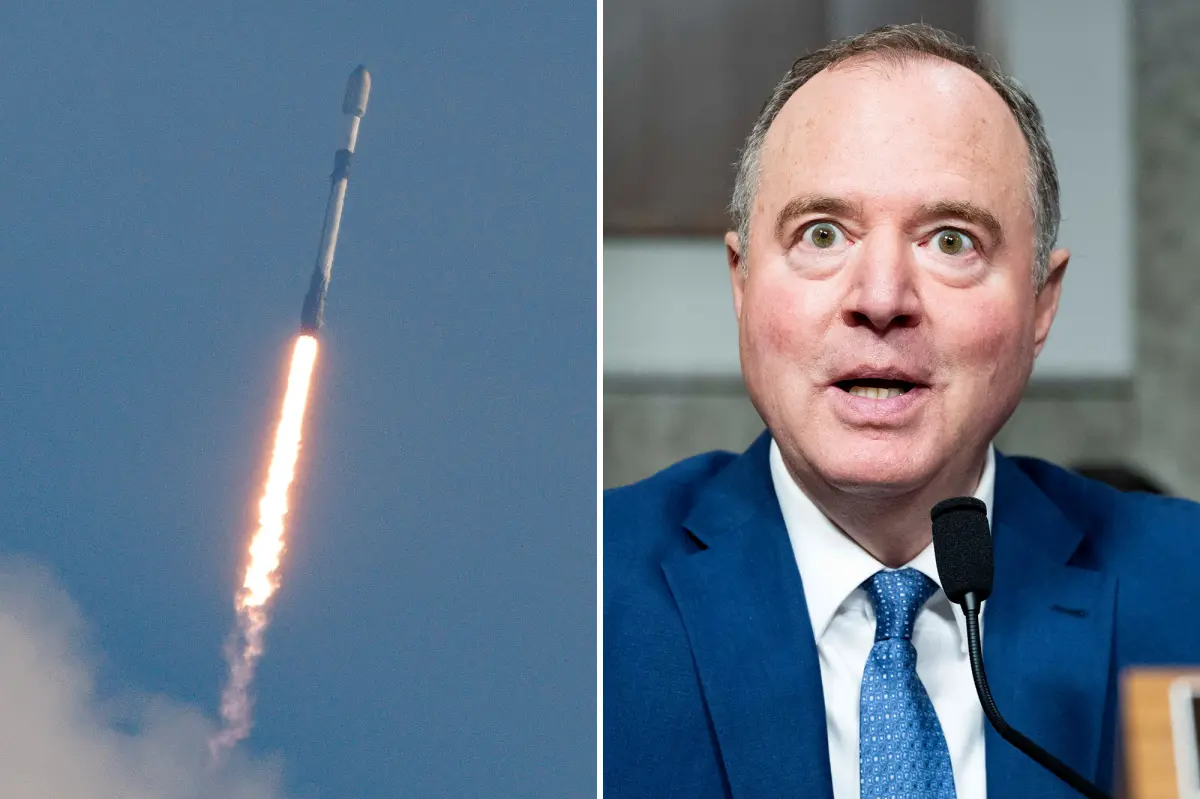

When SpaceX hit the Nasdaq on Friday and made Elon Musk the first trillionaire, plenty of Americans saw cause for celebration. Adam Schiff saw a crime scene.
Something is “terribly wrong,” the Democratic senator wrote, with an economy that mints a trillion-dollar fortune while people go without health care.
He called it the cost of a corrupt system, where wealth feeds on itself, and poverty does the same. He posted this on X, the platform Musk owns. The richest man alive took his cut of the engagement.
It is worth asking where the money came from. And whether anyone earned it.
It came out of Hawthorne. The engineers and the machinists who built the rockets held shares. When the stock began to trade on Friday, that paper turned into down payments and college funds for people who build rockets for a living.
A welder with options doesn’t need a senator to explain the cost of a supposedly corrupt system. He just paid off his house with it.
Musk is a visionary and America’s greatest builder. He took a launch business the government had given up on and taught it to land its own boosters on a barge at sea, then reuse them the next week. Schiff’s California cannot house its own people or keep the grid upright through a heat wave, but it can hold a grudge indefinitely.
Tax policy is fair game. Argue the brackets and the carried interest until everyone is hoarse.
But a senator from the state that lost SpaceX has little standing to lecture anyone on who earns the right to be rich.
California has been shedding employers for years. Its marquee names keep filing change-of-address forms to Austin. SpaceX joined the exodus in 2024, heading for Texas, a place where getting approval doesn’t require surviving three governors and two economic cycles. Make a state slow and expensive enough, and the builders stop asking why. They book a moving truck.
There is also the matter of X, the platform Schiff just used to air his grievance. Before Musk owned it, the site ran like a faculty lounge with a login, where the approved opinions earned a blue check and the rest earned a timeout. People like Schiff leaned on it to police what Americans were allowed to say.
Then Musk bought the building and changed the locks. The scolds kept their accounts but lost their monopoly. Everyone else got the floor. For a certain kind of senator, free speech on a site he cannot control starts to look like a threat to the republic. He trusted the old platform to muzzle his opponents. The new one lets them answer, which is the grievance underneath the grievance.
Schiff has company in his grief. Bernie Sanders, the millionaire who hates millionaires, blasted Musk’s success. Paul Krugman went further, branding SpaceX a “Ponzi scheme” floated on a rigged market. This is the same man whose once advised Enron.
The chorus berates the man and overlooks the rather important point that Musk’s fortune was built over many years of tireless work.
SpaceX put up reusable rockets and a satellite grid that reaches villages with no roads. NASA buys its rides to orbit from him now, because the alternative was buying seats from Russia. Musk’s launch rate embarrasses every national space program. You can loathe the man and still acknowledge the accomplishments. The left excels at the first half. The second half defeats them every time.
California helped make SpaceX and then made staying a punishment. Musk understood he had to leave. So did Schiff’s late father. A salesman who spent his working life chasing the California dream chose to spend his last years in Florida, a state with no income tax and dependable air conditioning. The son still campaigns on the dream his father left the state to keep.
A man came here from South Africa, built a car company and a rocket company, and now stands as the country’s first trillionaire. The wealth is large because the ambition was larger.
Two-hundred fifty years ago, the founders designed the country for this. They wanted the man who showed up without a name to out-build those who inherited one.
The experiment still works, and Musk is what it was built to produce.
John Mac Ghlionn is a researcher and essayist.