

It’s the attack of the chiller blob.
While climatologists fear skyrocketing temps, scientists are now warning of a “cold blob” in the Atlantic could trigger a global cooling event, among other apocalyptic scenarios, per an alarming study in Geophysical Research Letters.
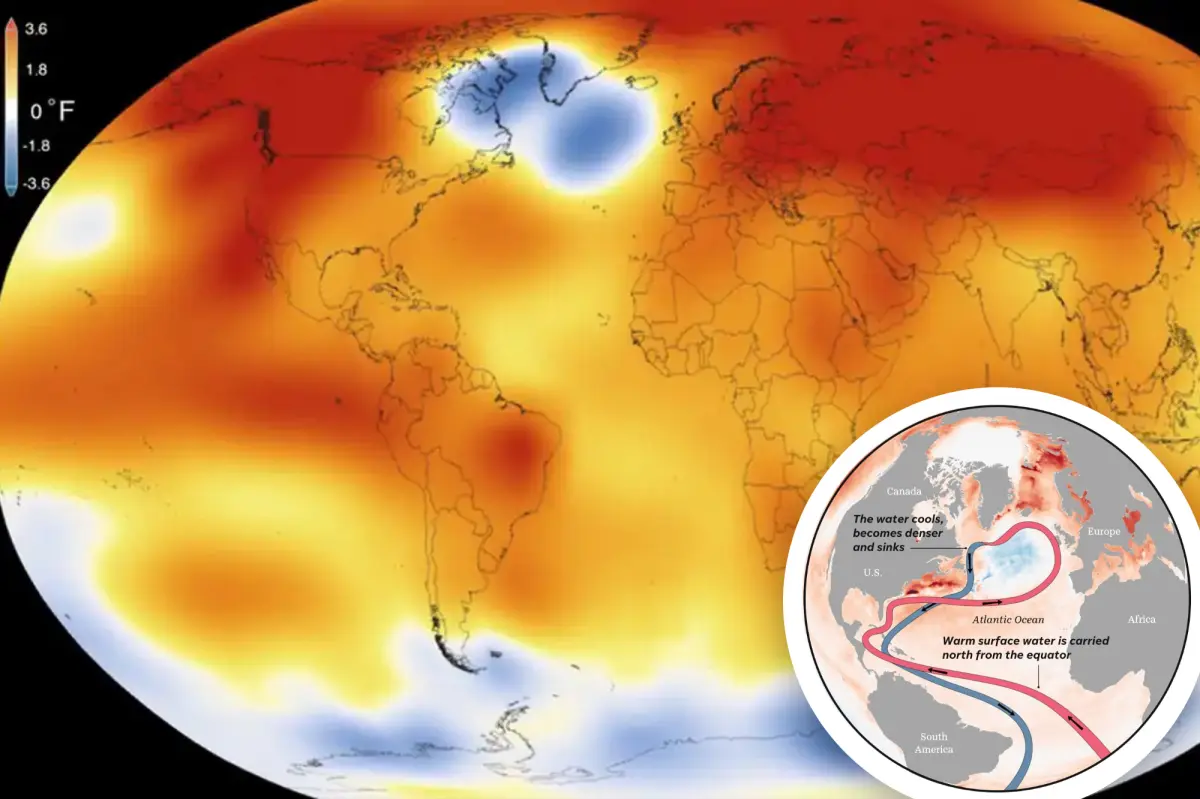
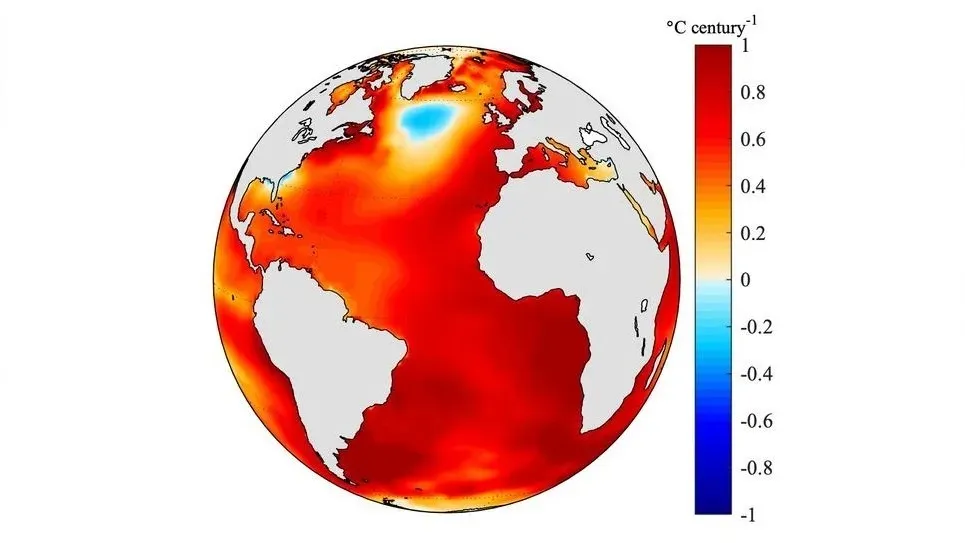
Located South of Greenland and Iceland, this anomalous patch of ocean has seen temps dip by 1.8 degrees Fahrenheit since the 19th Century, Science News reported.
Coincidentally, this comes as the United Nations’ influential climate change committee has discarded dire temperature increase models spouted by doomsdayers on the Left.
Meanwhile, a Dutch investigation of data at coastal sites by revealed that apocalyptic sea rise projections are likely overblown.
Per the latest study, this marine cold spot is related to the weakening of the Atlantic Meridional Overturning Circulation (AMOC), an oceanic conveyor belt that circulates warm water toward the ocean surface from the tropics to the Northern Hemisphere.
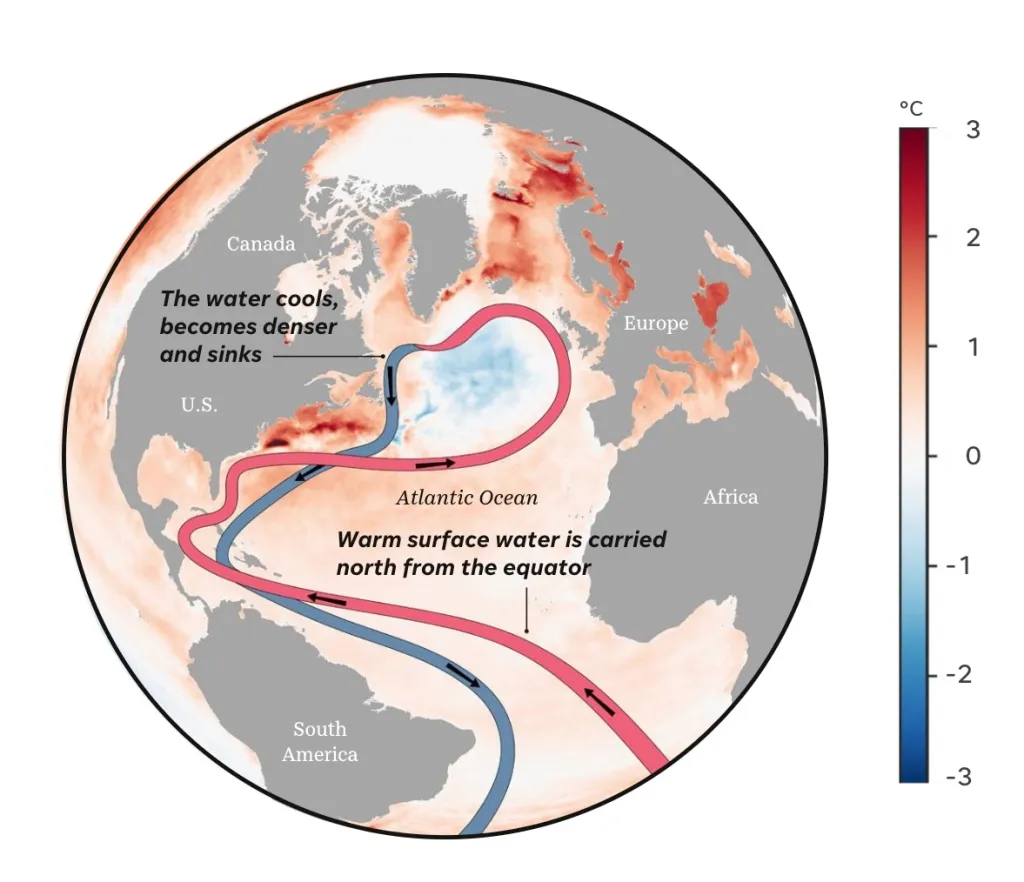
This key current, which runs from Gulf of Mexico to the East Coast and across the Atlantic to Europe, helps maintain the mild climate of Europe, the UK and the East Coast, as well as helping sustain marine life.
Specifically, the team discovered a significant decline in the level of heat escaping to the atmosphere over the last half-century.
A substantial portion of this polar plunge appeared to originate in the AMOC’s, pointing to a flagging heat supply in the region.
While this sea artery’s rate of decline is yet unclear, past studies project that it could slow between 43% and 59% by 2100 — 60% more than forecast by prior models.
Were it to collapse completely, it would allegedly bring about a “tipping point,” wherein temperatures in portions of Northern Hemisphere could plunge by up to 27 degrees Fahrenheit, study authors claim.
And it’s not just a big chill that’s on the horizon, per the study. Other forecast cataclysmic effects include agriculture-devastating droughts in southern Europe to sea level rise on the coast of North America.
“The strong evidence for a weakening AMOC is a serious concern for society and policy,” study authors warned.