

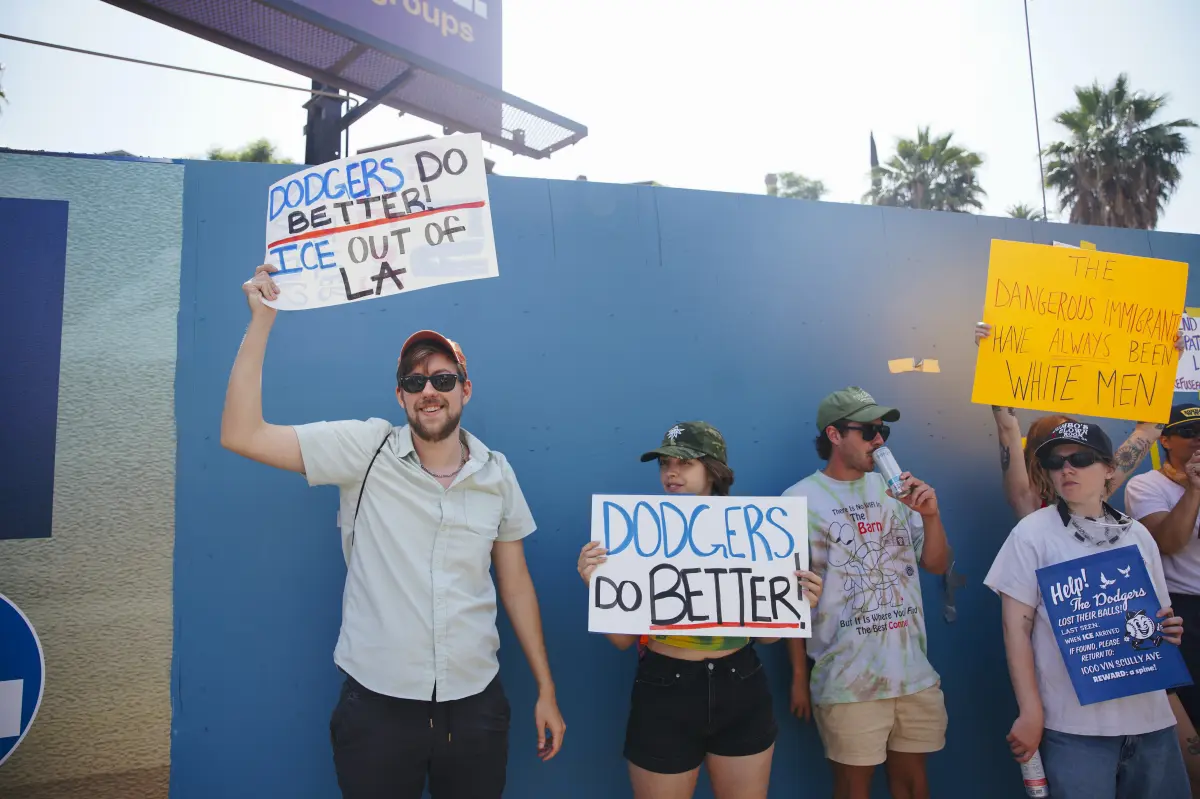
Last week, the Los Angeles Dodgers completed their $1.1 million donation to aid immigrant families affected by recent federal immigration enforcement actions in Southern California — fulfilling a pledge they made after activists and politicians successfully pressured the team to take a side.
The Dodgers can spend their money however they want.
That does not mean they should drag one of baseball’s most iconic brands into one of America’s most divisive political fights.
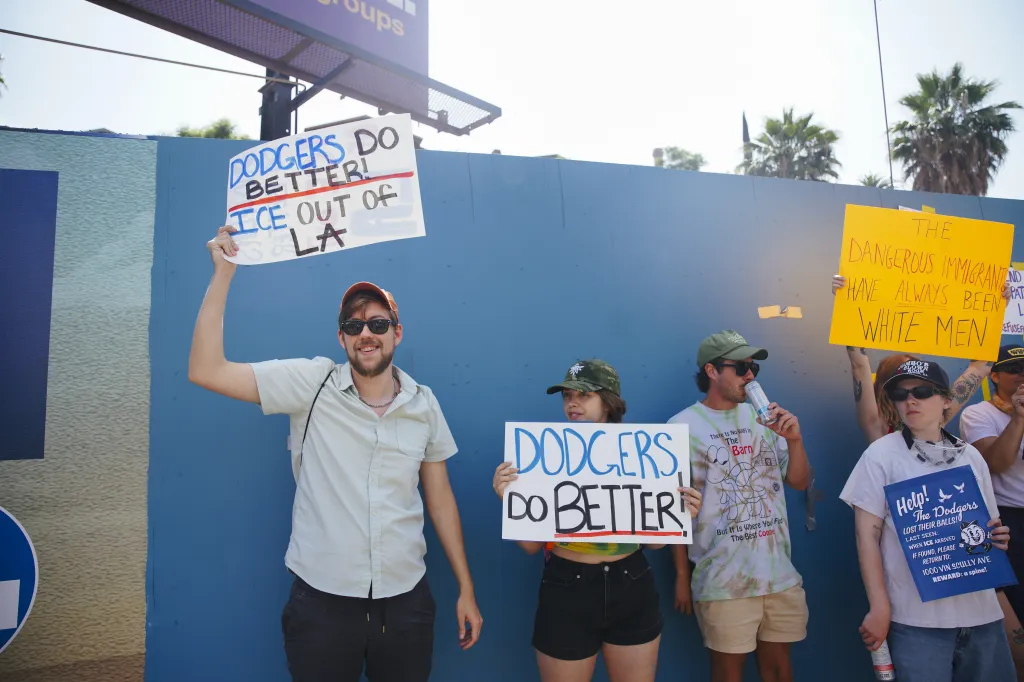
Immigration is one of the defining battles in American politics. Californians disagree about it. Angelenos disagree about it.
Dodgers fans absolutely disagree about it.
Some support aggressive enforcement. Others oppose it.
Some want violent criminals deported but object to broader raids. Others want tighter borders, more deportations, or broader legalization.
There is no Dodgers position on immigration policy because there is no Dodgers fan position on immigration policy.
I write this as someone who has loved the Dodgers for most of my life. My parents took me and my brothers to games in the 1970s, and today I am a season ticket holder who regularly makes the drive from Orange County to Dodger Stadium.
So this is not written as a detached political complaint from someone who dislikes the Dodgers. It is written as a fan who wants the Dodgers to remain what they have always been at their best: a shared civic institution, not another combatant in California’s political wars.
The Dodgers do not speak for Los Angeles.
They speak for ownership, executives and the activists who demanded that the team pick a side.
That distinction matters.
Professional sports teams occupy a unique place in American life. Republicans and Democrats sit next to each other at Dodger Stadium. Union members and business owners cheer for the same home runs. Immigrants and native-born Americans celebrate the same victories and complain about the same bullpen collapses.
For three hours, politics can disappear.
That is not a small thing in 2026 America. It is valuable. Increasingly rare, in fact.
The Dodgers are one of Southern California’s last truly shared civic institutions. They belong to everyone and to no one at the same time.
That is exactly why they should be careful before letting activist pressure turn Chavez Ravine into another stage for California’s political wars.
Unfortunately, this is becoming a habit throughout professional sports.
More recently, the San Francisco Giants found themselves in the middle of a culture-war fight over Pride Night apparel and players who objected to participating.
Everyone had an opinion.
Everyone was angry.
Nobody was talking about baseball.
That is what happens when sports franchises behave like advocacy organizations with pitching staffs attached.
Supporters of the Dodgers’ decision argue that Los Angeles is an immigrant city and that remaining silent was itself a political statement.
Maybe that is what activists believe.
But if silence is political, then everything becomes political. Every game. Every uniform. Every promotion. Every charitable contribution. Every public appearance by ownership.
That road has no ending because activism has no ending.
After the Dodgers made their donation, activists did not simply say thank you and go home. There were more demands, more scrutiny, more pressure and more insistence that the team take still more positions.
There is always another cause.
Another controversy.
Another litmus test.
Would the Dodgers donate $1 million to support ICE agents and their families after violent anti-ICE protests?
Of course not.
Everyone knows it.
That is why fans are right to see this not as neutral compassion, but as a political choice dressed up as community support.
Nobody buys a ticket to hear the front office’s views on immigration policy. Nobody watches Shohei Ohtani because they are curious where ownership stands on ICE operations. Nobody tunes into a baseball broadcast hoping for public policy analysis between innings.
They watch baseball.
Or at least they used to.
The Dodgers have every right to enter America’s political fights. But rights and wisdom are not the same thing.
The wiser course is simple: stop doing this.
Stop turning every activist demand into a franchise position. Stop letting pressure groups decide what the team must say next. Stop asking fans to import the country’s political fights into the one place where they should be able to escape them.
The Dodgers currently have the best record in baseball. Shohei Ohtani is posting one of the lowest ERAs in modern baseball history — while effortlessly swatting balls out of the stadium. Andy Pages leads the entire major leagues in RBIs.
That is the story.
The Dodgers should play baseball, serve the community in broadly unifying ways and leave divisive political advocacy to politicians, campaigns and activist organizations.
Jon Fleischman, a longtime strategist in California politics and a lifelong baseball fan, writes at SoDoesItMatter.com.