Home Blog Page 196

WWI soldier’s postcard from home helps unite his family after a century


ZONNEBEKE, Belgium — A postcard belonging to a World War I soldier whose body was found with five comrades during an excavation has helped reunite distant descendants more than a century after his death on the Western Front.

Dozens of mourners attended a memorial service in western Belgium on Wednesday during which six new white marble headstones were dedicated to the British soldiers whose remains were recently identified through the use of archival research and DNA analysis.

The six burials at the Tyne Cot Cemetery included that of Pvt. Thomas Whitaker, who died in the trenches carrying a postcard from Bradford, in north east England, where some of his relations still live.

At the ceremony were three members of the Whitaker family. Under sunshine piercing the gray drizzle, Joe Whitaker, 22, read aloud a poem written in honor of his great-great-uncle: “At peace in foreign hills, he finally drifts away to sleep, his mind on Bradford mills.”

The soldier’s postcard proved to be a crucial piece of evidence that helped British government researchers establish his identity and ultimately linked Joe’s family with another, estranged, branch of the Whitaker family.

Joe said: “The thought that (Thomas) might have been thinking of home, comforted by this postcard that he kept on him from Bradford — we were all quite taken aback by that.”

He said writing a poem “felt like the right thing to do.”

Alexia Clark, a commemorations case worker at the U.K. Ministry of Defence’s Joint Casualty and Compassionate Centre (JCCC), said the six soldiers were found during an excavation in western Belgium. But the discovery of the postcard on one of them proved to be a crucial “hint.”

She added: “And then actually when we looked at the missing list and went, ‘Oh we have got one from Bradford! Great, there’s a strong chance that he is going to be one of them.‘”

By matching the postcard with other found artifacts, including a Lewis Gun and uniforms, the JCCC researchers — known as “the war detectives” — were able to zero in on a likely group of men from the more than half a million British soldiers still missing from World War I.

The team contacted potential relatives for DNA samples, and the analysis confirmed the identity not only of Thomas Whitaker, but also privates Horace Frederick Cook, Frederick Martin, Charles Richard Russels, Courtney Darvill Hart and Joseph Turnley — all members of 2/4 Battalion Queen’s Royal West Surrey Regiment.

Paul Turnley was presented with a British flag folded into a triangle given by the military in honor of the sacrifice of his relation, Pvt. Joseph Turnley.

“Just a privileged to be laying a relative of ours to rest, to watch, to be present and then to be passed the flag… it was the greatest treasure actually,” said Paul, in tribute to his grandfather’s cousin.

As nearby cows, students and bike riders watched along an adjacent farm road, a military musician played a martial lament on a cornet, while prayers were said by the Rev. Adéle Rees.

Then Pvt. Jone Wainile of the Princess of Wales’s Royal Regiment honor guard read the poignant Kohima Epitaph: “When you go home tell them of us and say, ‘For your tomorrow, we gave our today.’”

Paul Whitaker said: “My children, my grandchildren, anyone, can come and know where Thomas is, and that is a lovely thing to have. It’s just a real privilege to have Thomas be one of the ones that has been found.”


Source link

U.N. says at least 1 killed in crackdown on protests against the arrest of women in Afghanistan


A violent crackdown on a protest in western Afghanistan against the arrests of women for allegedly violating dress code regulations has left at least one person dead, the United Nations’ mission in Afghanistan said Wednesday.

Eyewitnesses said they saw Taliban police open fire during a protest on Tuesday by about 100 to 150 people against the arrests of women over the weekend in the western city of Herat.

The U.N. mission said Wednesday it had “confirmed that at least one person, a boy, was killed by gunfire, while several others suffered injuries including from being beaten with sticks.” It said it was also verifying reports of a second fatality.

Protests are rare in Afghanistan, which has been run by the Taliban since 2021 in the wake of the chaotic withdrawal of U.S.-led forces. The government has since imposed rules governed by a strict interpretation of Islamic law, or Shariah. Dissent is not tolerated, and protests against government decisions are illegal.

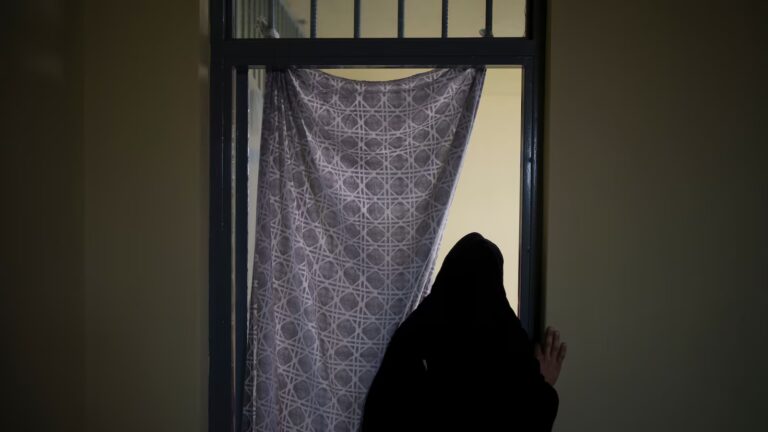
The regulations include draconian restrictions on women and girls, including bans on education beyond primary school and what women can wear.

The rules stipulate that women can only go out in public when wearing full hijab — which includes a headscarf and long robe covering the entire body — as well as a face covering that leaves only the eyes visible. The regulations are policed by the feared Ministry for the Propagation of Virtue and the Prevention of Vice.

The U.N. mission, known by its acronym UNAMA, said that at last 30 women were arrested in Herat on Saturday and Sunday. “Dozens more women reportedly received verbal warnings. While the women were released on 8 June, the impact of such arbitrary arrests and detentions on women and their families is profound,” it said in a statement.

UNAMA called on authorities to rescind policies that restrict the rights of women and girls in Afghanistan, and stressed that law enforcement “must comply with international legal standards.”

“Individuals have the right to express dissent peacefully without fear of violence, intimidation or reprisals,” it said.

Herat police command spokesperson Sayed Masoud Hosseini said in a statement Wednesday that the police “takes a serious, Shariah, and principled approach to any action that disrupts public security.”

He said “a number of rioters” had gathered on Tuesday “under the pretext of protesting issues related to the observance of the hijab and opposition to the Islamic hijab, and acted to disrupt public order.” He said security forces’ presence “brought the situation under control in the shortest possible time.”

“The Herat Provincial Security Command once again emphasizes that individual and social freedoms must be implemented within the framework of Shariah law and social values, and any behavior or action that disrupts public security, creates tension, and disrupts public order is unacceptable.”

On Monday, Afghanistan’s vice and virtue ministry dismissed the reports of arrests and detentions of women.

“The issues being spread about women being arrested in Herat are all rumors,” it said in a statement, adding that wearing the “hijab is a divine command, a law that we are obliged to implement.”

Georgette Gagnon, the U.N.’s Deputy Special Representative of the Secretary-General and officer in charge of UNAMA, said that the detention of women in Afghanistan “carries enormous stigma, which can put women at risk of further violence and isolation in their families and communities even after they are released.”

She said authorities were “obliged under international law to uphold the rights of all Afghans to freedom of expression, peaceful assembly, liberty and security of person, and freedom from arbitrary detention.”


Source link

A minibus packed with schoolchildren catches fire in central Zimbabwe, killing 7


A minibus carrying schoolchildren caught fire in central Zimbabwe, killing seven, according to police

HARARE, Zimbabwe — A minibus packed with schoolchildren caught fire in central Zimbabwe Wednesday afternoon, killing seven, authorities said.

Twenty-four children were on board when the vehicle burst into flames in the city of Gweru, according to a police statement, adding that an investigation was underway, but initial examination suggested a jerry can of petrol kept in the minibus may have fueled the fire.

Authorities didn’t immediately share the number of the injured.

Local media reported the driver and conductor were taken to a hospital and that all the dead were schoolchildren.

State broadcaster ZBC News showed photos of the burned-out vehicle, saying some children were able to escape the blaze while the others trapped were killed. A rescue crew and firefighters were at the scene.

Private minibuses and unregulated sedan taxis are commonly used in Zimbabwe to transport children to schools.

The accident has renewed concerns about overcrowded vehicles used for school runs in the southern African country of around 15 million people.

In February, a cabinet minister said he had stopped a minibus carrying 42 schoolchildren despite its legal capacity of 15 passengers.

Road accidents involving buses, minibuses and unregulated sedan taxis are common in Zimbabwe, which has one of Africa’s highest traffic fatality rates. The World Health Organization estimates nearly 30 road deaths per 100,000 people annually. Authorities say human error accounts for a little over 90% of crashes in the country.

Across Africa, road crashes kill an estimated 300,000 people each year, about a quarter of the global toll, according to the United Nations Economic Commission for Africa, which says the continent of 1.5 billion people has the world’s highest road fatality rate despite accounting for just about 3% of the global vehicle population.


Source link

World Cup 2026: Three red cards shown as mexico beat South Africa


Referee Wilton Pereira Sampaio shows red cards to South Africa’s Yaya Sithole and Themba Zwane as well as Mexico’s Cesar Montes during the opening match of the 2026 World Cup at the Mexico City Stadium.

Watch more Fifa World Cup 2026 video.

Available to UK users only.


Source link

Kuwait closes its airspace over Iranian attacks


Kuwait closes its airspace over Iranian attacks


Source link

Quinones scores opening goal of 2026 World Cup


Mexico’s Julian Quinones scores the opening goal of the 2026 World Cup against South Africa at Mexico City Stadium.


Source link

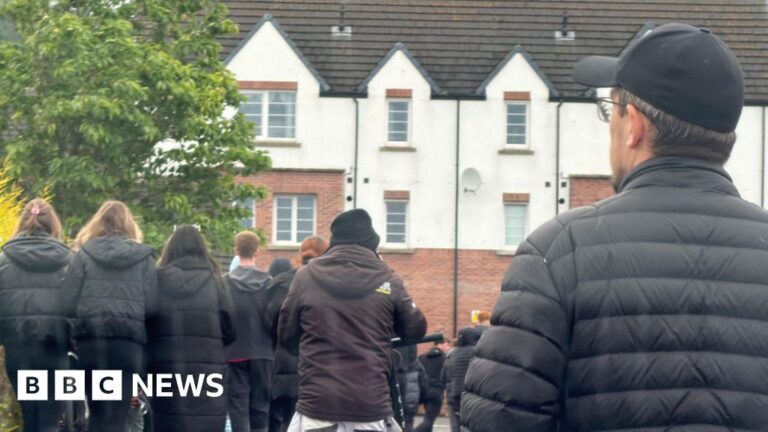
Northern Ireland protests pass off without incident after two nights of unrest


After two nights of unrest, pockets of protests held across Northern Ireland have passed off peacefully.


Source link

Foreign workers say they were paid less than $2 an hour to build a new US Consulate


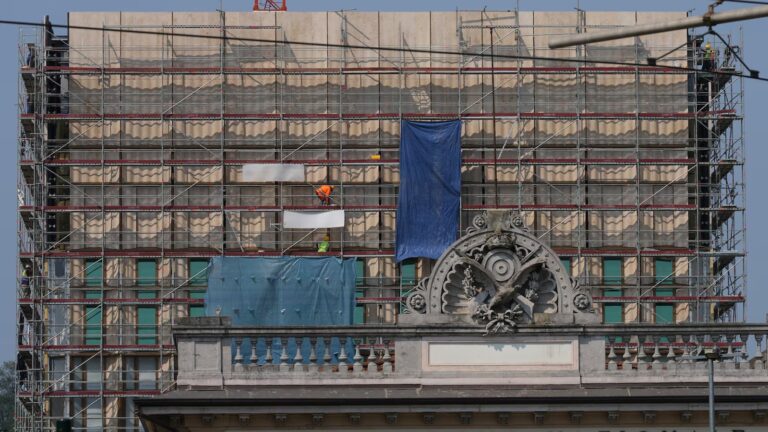
MILAN — Foreign workers building a sprawling $350 million American Consulate in Milan were paid less than $2 an hour after being promised fair wages, according to Associated Press interviews with five former employees and a review of their employment letters and pay stubs.

Italian prosecutors are investigating Montgomery, Alabama-based Caddell Construction, a major builder of U.S. diplomatic missions. Two of its managers in Italy were arrested this month on suspicion of labor exploitation, one while boarding a flight to leave the country and another planning to flee, prosecutors said.

The investigation is led by prosecutor Paolo Storari, who also has spearheaded probes into sweatshops supplying luxury brands. So far only Caddell has been named as a target, not any of its subcontractors.

The consulate probe was launched about six months ago and involves some 70 workers, mostly from India. Prosecutors allege Caddell illegally deducted room and board from wages and forced them to work 10-hour days, six days a week. Some were paid as little as 500 euros (less than $580) monthly after room and board were deducted, prosecutors said.

Caddell and the U.S. State Department said they are investigating the allegations and cooperating with Italian authorities.

The consulate project is part of a construction boom in Milan over the past two decades that has modernized the skyline and raised the international profile of Italy’s fashion and finance capital.

The AP spoke to four workers from Kenya and one from India at a trade union center where officials were organizing assistance, including legal help and housing. The workers provided documentation and spoke on condition of anonymity out of fear of retaliation and to protect the ongoing investigation.

The Kenyan workers said they had been hired by Caddell after working on a multi-million-dollar extension of the U.S. Embassy in Nairobi.

Two showed employment letters on Caddell stationery signed by a company representative promising annual salaries topping 25,000 euros (nearly $29,000).

They said they were not paid anything close to that and were threatened by human resources personnel at the job site after they questioned management.

“When you go to the office to ask any question, you are being told, ‘Either you work or you will be returned to your country. That’s the amount you are supposed to be paid,’’’ one Kenyan electrician said. He added that he was paid just 800 euros ($925) a month after being promised 2,300 euros ($2,660).

Another Kenyan electrician said he was threatened with defamation after presenting an AI summary of Italian labor law and was told the 25,000 euros in the employment letter was “for visa purposes,” not a promise of payment.

The State Department said it is investigating the allegations made by prosecutors and that U.S. law enforcement is working with Italian authorities.

“The U.S. government does not tolerate labor exploitation,” the department said in a statement.

Caddell said it was “fully cooperating” with Italian authorities and conducting its own “comprehensive inquiry into this matter to ensure all our global subcontractors and consultancies are in compliance with all labor standards and legal requirements.”

“Caddell is committed (to) treating and paying workers fairly. We will continue to work with authorities in good faith to ensure the welfare of those who work on this important project,” the company said in a statement.

More than a decade ago, Caddell paid millions to the U.S. government to settle allegations it made false claims to gain access to government incentives. Caddell did not reply to a request for comment on that case.

All five of the workers who spoke to the AP, ranging in age from their late 20s to early 50s, said they were fired without cause this year. One of them said he returned from visiting family in Kenya to find that he no longer had a job or place to stay.

Four of the workers were trained electricians, including the Indian worker whose resume showed he had more than a decade of experience working for other companies in Persian Gulf countries.

The Indian worker said he was promised a monthly salary of 2,500 euros (nearly $3,000). Instead, he had a pay slip showing his actual pay amounted to around 500 euros (less than $580) per month. It listed an hourly wage of 1.55 euros ($1.80).

The Kenyans said they reached out to authorities after learning of the investigation.

“I believe in justice,” one said. “Also the workers there should not be afraid. They should come and speak up.”

Two said they are currently sleeping in parks, while one is staying with a friend. One said he had been offered a job at a Caddell site in another country but declined after his treatment in Milan.

Caddell became a leader in building U.S. diplomatic missions when the State Department launched a major security upgrade after the 1998 bombings of U.S. Embassies in Tanzania and Kenya killed more than 250 people.

“Very few contractors can meet the strict requirements to even bid on secure work necessary for diplomatic facility projects,” Caddell said on its website marking its 40th anniversary in 2023. At that point, the firm counted 39 projects in its embassy portfolio valued at $7.4 billion. It has added four projects since then.

The Milan consulate campus is being built on a 10-acre (40,000-square meter) site at a former shooting range. The current U.S. Consulate is in a high-rise building designed by acclaimed Italian architect Gio Ponti.

Plans for the campus called for about 500 “locally employed workers,” according to the U.S. State Department. The project includes restoration of a century-old building, along with a five-story consulate building, restored gardens, a reflecting pool and a large outdoor gathering area.

Work is continuing under court supervision. Workers no longer have their room and board deducted. They are limited to 45 hours and guaranteed two days off a week.

The pay stubs presented by the workers listed apparent charges of 510 euros (around $590) a month for housing and more than 300 euros (around $350) monthly for food. But those deductions only account for a portion of the difference between the promised wages and actual pay.

Unions intend to seek damages for the workers to recover at least what they earned “through hard work and commitment,” said Laura Malguzzi, a labor representative at the Fillea Cgil union federation representing construction workers.

Malguzzi said she was surprised that the pay stubs presented by the workers appeared to document the alleged exploitation. Union experts are still studying the documents, which do not conform to Italian standards, and could not verify their origins.

“They probably had in their minds the absolute certainty that they were untouchable,’’ Malguzzi said.

The Kenyan workers said they begrudgingly accepted a $200 monthly salary in Nairobi, where unemployment is rampant. But they expected better from a U.S. company operating in Europe.

“They can just hire you, and you just go running,” one worker said of the company. “Because you are poor you have nothing. And you have nothing you can do.”



Source link

G7 summit at Swiss-French border brings tight security in case violent protests occur


GENEVA — French and Swiss authorities will impose a week of pandemic-like border restrictions as U.S. President Donald Trump and other leaders attend a G7 summit starting Monday while organizers fear potentially violent protests.

The summit of some of the world’s richest nations from June 15-17 in the French town of Evian-les-Bains on Lake Geneva is meant to discuss the Middle East, Ukraine and global economic imbalances.

In nearby Geneva, Switzerland, business owners and local leaders want to avoid a repeat of violent protests that smashed storefronts on the sidelines of the G8 summit in 2003, when Russia was in the club of nations.

Protests are nothing new around such elite gatherings. This time, activists want to demonstrate frustration with Trump’s leadership on issues as diverse as tariffs, the war in Iran and the climate, or even highlight his past ties to convicted sex offender Jeffrey Epstein.

Authorities in Geneva and activist groups including environmentalists, feminists and foes of capitalism are facing off over the right to protest and the right to protection from those who target symbols of corporate and political power.

“As the G7 meets in Evian, France, to plan the destruction of peoples, the exploitation of life and the domination of bodies, let us organize our resistance against fascism and imperialism,” the No G7 coalition of anti-capitalism groups said in its call for a “large-scale internationalist mobilization against this meeting.”

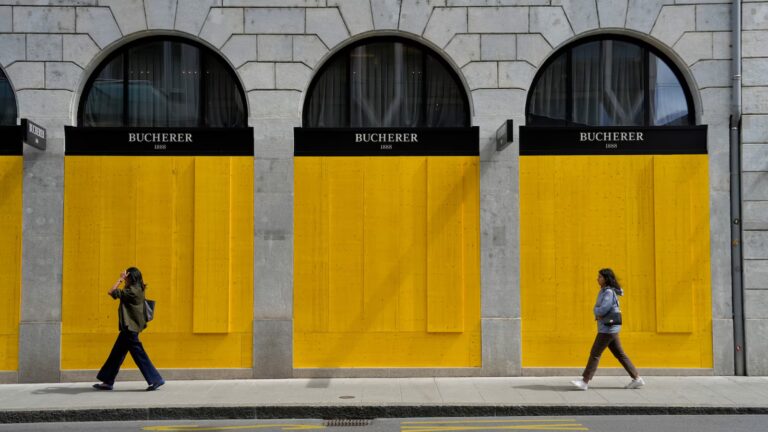
Businesses have been boarding up storefronts in Geneva, a center for United Nations offices, while some institutions like the World Trade Organization, which faced anti-capitalist protests in Seattle in the 1990s, are closing offices and instructing staff to work remotely.

Switzerland, a rich Alpine country, is not among the G7 membership that includes Britain, Canada, France, Germany, Italy, Japan and the U.S.

France and Switzerland have struck a military cooperation agreement on G7 summit security. The arriving leaders will pass through the airport in Geneva, which is 95% surrounded by France and connected to the rest of Switzerland by a strip of land.

The Swiss government said the army will deploy some 4,000 personnel to support police. Operations will include airspace restrictions, patrols on Lake Geneva and roadway restrictions. Seven of the 35 roadway border crossings will remain open. Geneva also is closing a major park where activists wanted to congregate.

France will deploy more than 13,000 police and gendarmerie officers to ensure security in the summit area just over the border. Over 800 French border control officers will be active, up from about 60 normally.

France also has introduced special permits for residents of Evian, perhaps best known for its bottled water, and environs while cordoning off a zone around the Hotel Royal where the leaders will meet.

There is an authorized march on June 14. Public gatherings not previously planned are banned.

Cedric Dupont, a professor of international relations at the Geneva Graduate Institute, said authorities were “overreacting” with such stringent security measures that will impact the economy and people, alluding to the long lines at the border during the COVID crisis.

“It seems that they have not learned the lesson,” he said, noting that protesters can find their way to Geneva by traveling from other parts of Switzerland. “It’s just creating more problems than actually solving them.”

Over 110,000 cross-border workers commute daily from France to Geneva, France’s Foreign Ministry says.

French authorities have advised people to postpone nonessential travel and work from home when possible.

Lake crossings by boat, also used by commuters, have been moved from Evian to other ferry landings outside restricted areas. Recreational water activities, including paddleboarding and swimming, will be allowed outside the summit area as the summer season begins, authorities said.

The Geneva canton, or state, has set up a 6 million Swiss franc ($7.6 million) fund for businesses that incur damage related to G7 protests.

“Unrest cannot be ruled out,” authorities have said.

___

Corbet reported from Paris.


Source link

‘King of the North’ seeks path to becoming Britain’s next leader in special election


ASHTON-IN-MAKERFIELD, England — About 75,000 voters in a pocket of northwest England are about to make a momentous decision. They will cast ballots in a contest that may well pick the U.K.’s next prime minister, or plunge Britain’s febrile politics into even more turmoil. Possibly both.

Some of them aren’t too enthusiastic.

“I think they’re all a waste of time,” said Shirley Prior on the choice of candidates in Makerfield, where a special election on June 18 has drawn interest from journalists around the world. That level of attention is all-but unheard of for a midterm by-election to fill one of the 650 seats in the House of Commons.

If Andy Burnham from the center-left Labour Party wins, there’s a strong chance he will replace embattled Prime Minister Keir Starmer as leader of both party and country. He’s up against Reform UK, a hard-right party hoping to prove that this longtime Labour stronghold is fertile ground for its anti-immigration message, with potentially seismic consequences for British democracy.

This district has elected Labour lawmakers for 120 years, but Burnham is not a shoo-in. Reform, led by the veteran anti-immigration politician Nigel Farage, won 24 of the 25 council seats up for grabs in local elections in this area last month.

“I always voted Labour because my dad, my grandad, everybody voted Labour then,” Prior said. “I’ve never done that for a lot, a lot of years.”

The election is taking place amid heightened tensions over immigration. A stabbing in Belfast this week, for which a Sudanese man has been charged with attempted murder, triggered violent protests in Northern Ireland in which cars and houses torched.

In the constituency’s main town of Ashton-in-Makerfield, 200 miles (320 kilometers) northwest of London, some voters echo Reform claims that recent arrivals are straining housing and public services.

“Immigration’s too high, all the services are being put under pressure and Labour just keep inviting more and more people into the country and it’s the taxpayer who has to pay for them,” said retiree Phil Arrowsmith.

Annual net migration to the U.K. reached more than 900,000 in 2023, under the previous Conservative government, before falling to 171,000 last year.

That decline has done little to boost a Labour government that has floundered since winning election in July 2024.

Starmer has struggled to deliver promised economic growth, repair tattered public services and ease the cost of living, and been hamstrung by repeated missteps, including his decision to appoint Peter Mandelson, a scandal-tarnished friend of Jeffrey Epstein, as Britain’s ambassador to Washington.

A dismal performance in local elections last month sparked a clamor from Labour lawmakers for Starmer’s resignation. He has refused, but Cabinet minister Wes Streeting quit so he can run in a leadership contest that could come soon.

Burnham, the popular mayor of Greater Manchester, also harbors leadership ambitions, but needs a seat in Parliament if he wants to challenge Starmer. An opening emerged when Josh Simons, the Labour lawmaker for Makerfield, stepped down to trigger a special election.

Burnham said he understands that voters are “fed up” and calls the large Reform UK vote “a cry for real change” that Labour must heed.

The Makerfield constituency is a capsule of British history, a collection of former coal-mining communities turned commuter suburbs. The slag heaps and slum housing in the area described by George Orwell in his 1937 book “The Road to Wigan Pier” have been replaced by suburbs of tidy modern houses amid Victorian workers’ cottages, interspersed with farmers’ fields.

Though far from the city center, it is part of Greater Manchester, and Burnham gets honks and thumbs’ ups from passing drivers as he walks down the street in his smart-casual uniform of dark jeans with a navy blue shirt and jacket.

The 56-year-old has been mayor of the region of 3 million people since 2017, a period that has seen central Manchester boom, with skyscrapers blooming on postindustrial sites. Many residents praise him for championing the city, and for taking a piecemeal public transport system under municipal control as the Bee Network.

For a decade and a half before that he was a lawmaker in Parliament, and a minister in Labour governments. He doesn’t emphasize that part of his CV, preferring the outsider status that has seen him nicknamed the King of the North.

“What we’ve built in Greater Manchester needs to go national,” Burnham told reporters during a campaign event this week. “I know what it is to turn places around.”

The campaign is an odd mix of the local and the international. Some voters cite immigration as a top concern. Others mention struggling main street shops, potholes and petty crime.

Burnham’s main rival is Reform UK candidate Rob Kenyon, a 41-year-old plumber and local councilor who came second to Labour here in the 2024 national election. He says he’s an unpolished regular bloke, though opponents have criticized him over crude, sexist and anti-vaccine comments on social media.

Reform voters are also being targeted by Restore, an even more hardline anti-immigration party.

Michael Poultney, a retired teacher and Labour supporter, thinks the unpopularity of Starmer’s government means Burnham faces a stiff challenge.

“Without his personal vote, I think we would struggle,” he said. “Keir Starmer has done reasonably well on the international stage, but the government are yet to be in control of the economy.”

Burnham insists he is running for the people of Makerfield, not his own ambition, and is not taking victory for granted.

“I am making no assumptions beyond the 18th of June,” Burnham said.

But he stressed that “this is a change byelection.”

“I will take the fight for the changes I want to see in politics as far as I can take it,” he said.


Source link