

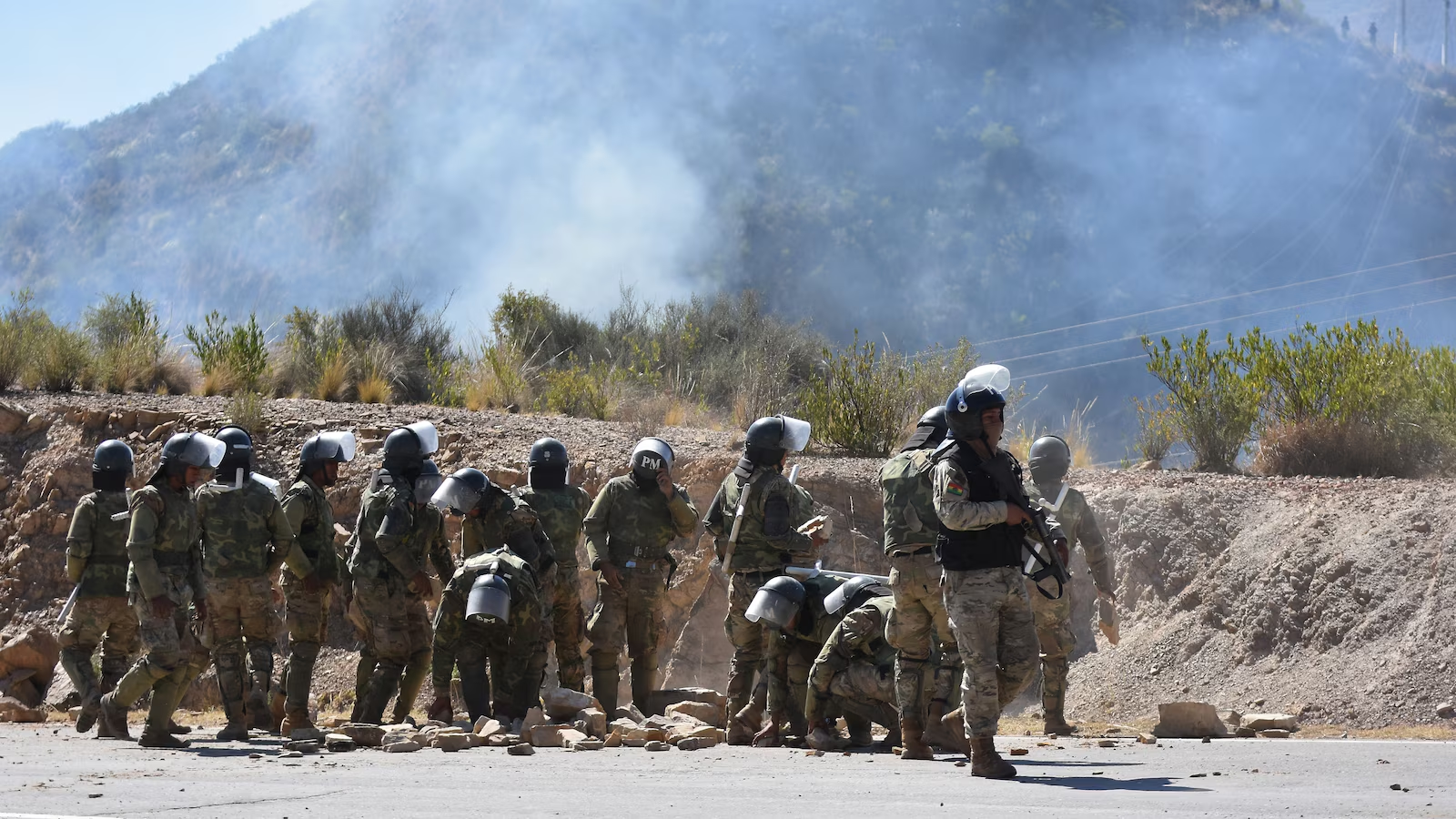
LA PAZ, Bolivia — Anti-government roadblocks that have isolated Bolivia’s capital La Paz and other major cities were still being cleared Sunday, a day after President Rodrigo Paz declared a state of emergency that was later overwhelmingly ratified by parliament.
Also Sunday, six people, including Bolivian Air Force officers, were killed in the crash of a light aircraft that had been conducting aerial patrols over a blockaded highway. The aircraft had been monitoring sections of the highway linking La Paz and the city of Cochabamba.
An investigative board has been activated to determine the causes of the incident, Bolivia’s Air Force said.
Although road blockades have been suspended across much of the country, they continue in parts of the Cochabamba region, led by coca growers’ unions allied with former President Evo Morales (2006-2019). The government accuses Morales of encouraging the protests with the aim of destabilizing the administration, according to presidential spokesman José Luis Gálvez.
Morales has been entrenched in his coca-growing stronghold in the Chapare region since 2024 and has refused to appear before the courts. The government accuses Morales of instigating and financing the demonstrations to secure impunity from a judicial investigation into the alleged abuse of a minor while he was president.
Security forces, which have been clearing highways since Saturday, have not entered Chapare, where road blockades remained in place on Sunday. Coca growers’ unions maintain control over the region, where drug trafficking-linked criminal groups also operate, according to the government and police.
But one of the largest rural unions behind the road blockades that had strangled La Paz on Saturday called for a pause in the conflict and ordered protesters to withdraw until next week to assess the situation following the declaration of a state of emergency.
During the conflict, hundreds of trucks were stranded on highways. Truck drivers were able to return home on Saturday. Business groups estimate losses at more than $2 billion, while cities were left short of fuel and food, further complicating the country’s fragile economic recovery as it faces its worst economic crisis in four decades.
The state of emergency will last 90 days, but could be lifted earlier if “violence and threats against the population come to an end,” the government said in a statement Saturday.
___
Follow AP’s coverage of Latin America and the Caribbean at https://apnews.com/hub/latin-america