


Kaushal Vikas, the textbook for Skill Education for Grade IX, has been developed in alignment with the vision of the National Education Policy 2020 and the National Curriculum Framework for School Education 2023.
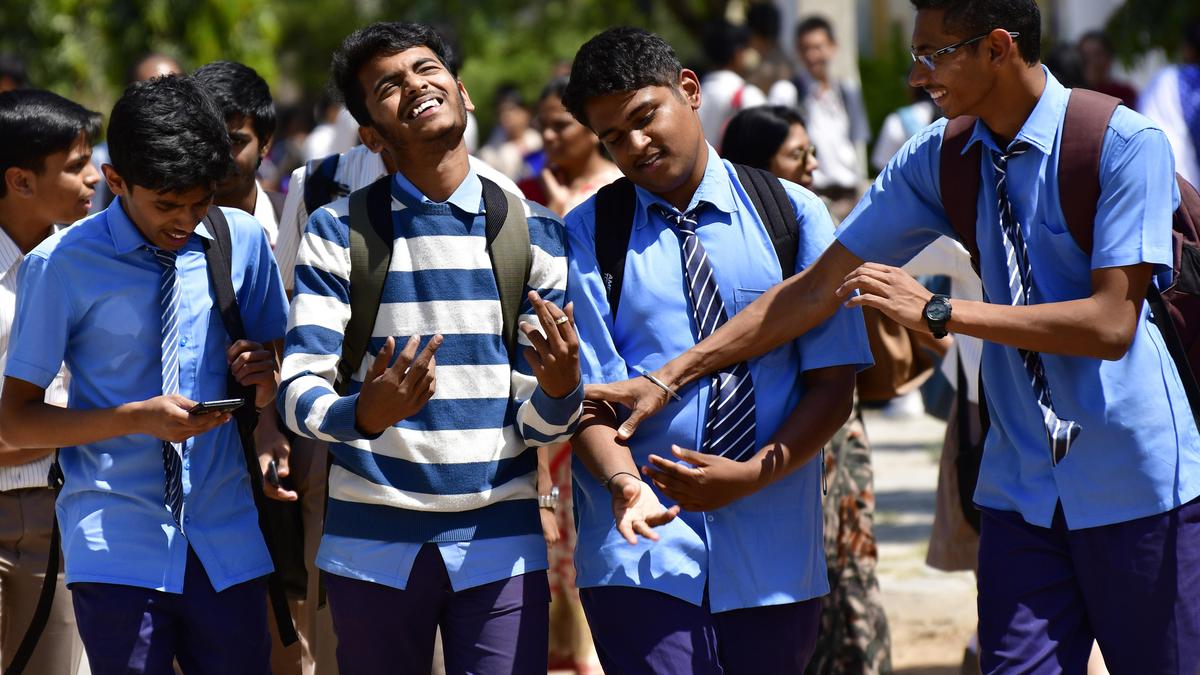
| Photo Credit: K. MURALI KUMAR
After the Central Board of Secondary Education (CBSE) made Kaushal Vikas (Vocational Education) mandatory for class IX students after the 2026-27 academic year began, many schools in Bengaluru have expressed concern at its ramifications .
Kaushal Vikas, the textbook for Skill Education for Grade IX, has been developed in alignment with the vision of the National Education Policy (NEP) 2020 and the National Curriculum Framework for School Education (NCF-SE) 2023.
The CBSE, under its NCF-SE, has introduced Kaushal Vikas as a mandatory subject for class IX students, rather than keeping it optional. The same will continue when these class IX students move to class X for the academic year 2027-28, and the marks will be included in the board exams.
The principal of a CBSE school in Sarjapura Road, said, “In our school, we plan the finance and budget in October and November for the next academic year. We hire teachers for the vacant posts after many rounds of interviews and a lot of scrutiny. An academic calendar and lesson plans are assigned to respective subject teachers even before the school begins.
We received the circular a few days ago and we are still figuring out who has to be recruited to teach the Kaushal Vikas subject. We must also include it in our weekly timetable and adjust it as per the total number of hours of teaching.”
Another principal of a CBSE school in Yelahanka, said, “Students will be in trouble because they choose what career they would like to pursue and start preparing for various competitive exams like NEET, JEE, CET and others at this stage. Adding one more mandatory subject is a burden . We already run 14 various clubs that teach students, innovation, public speaking, art and theatre and others. But scoring marks was never mandatory . These clubs were handled by the respective subject teachers. .”
Meanwhile, the principal of a CBSE school in Padmanabha Nagar questioned the abrupt announcements of the CBSE board, “All the CBSE schools in Bengaluru must come together on a single forum and write to the CBSE in the larger interest of students. To teach Kaushal Vikas, the CBSE states that a Skill Education Teacher would ideally be required. But it might not be feasible to immediately appoint multiple teachers with different specialisations. Do you think schools have time to go in search of external resource persons who can teach agriculture, pottery, tailoring and ask them to train our teachers? Our teachers already have enough academic work to focus on. When they can find time to learn vocational courses?”
What is in the in Kaushal Vikas Textbook?
The Kaushal Vikas textbook includes three units and there are four chapters under each unit:
Work with life forms, Work with machines and materials and Work in Human Services.
Under the Work with life forms, the chapters include all types of agriculture practiced in India, cultivation of crops, terrace gardening. In the Work with machines and materials, the chapters include tailoring, packaging and shipping of stitched clothes and textiles. The Work in Human Services includes health care, tourism, personal and lifestyle services, food processing, pottery among others.
Each child has to select one or two vocation from each unit, form groups based on the vocation, work on the vocation within the stipulated time and present it to their teachers in the presence of other classmates in their schools.
The total time allotted to the Vocational Education is 110 hours or 132 periods in one academic year, excluding time for assessment, school events, and similar activities. These periods may be distributed across the week; the total number of periods per week is five.
Mode of Assessment or Weightage
In a total of 100 marks, paper-pencil test is given 25% weightage, the demonstration and oral presentation/ viva is given 20%, site visit report/observation notes 5%, portfolio of student and their project is assigned 30% and teachers’ observations 20%.
Published – June 25, 2026 08:36 pm IST