


The programme is AICTE-approved and has a total sanctioned intake of 66 seats including 60 regular seats and six super numerary seats.
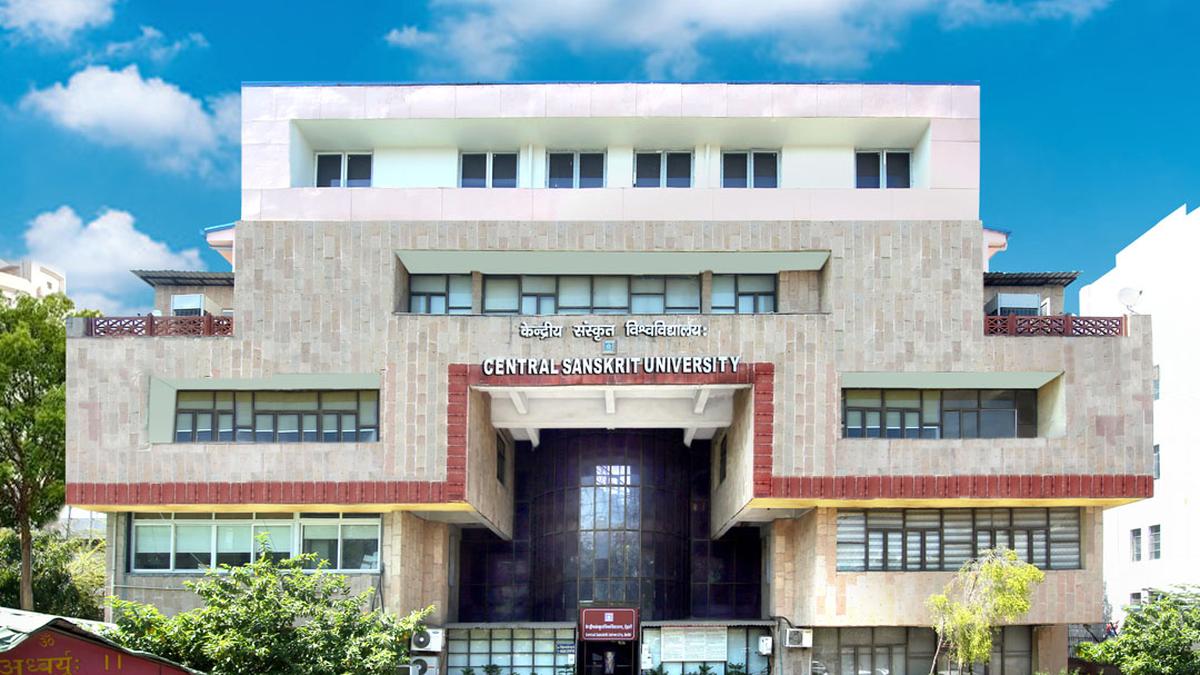
| Photo Credit: sanskrit.nic.in
In a first instance of a Sanskrit university in India entering engineering education, the Central Sanskrit University has introduced a B.Tech programme in Artificial Intelligence and data science from 2026-27.
Prime Minister Narendra Modi in his Mann ki Baat address on Sunday (June 28, 2026) stated that this is a significant effort to prepare the youth for new technology while keeping them rooted in their heritage.
The B.Tech programme, on lines of National Education Policy 2020, is designed to transform Sanskrit institutions into multi-disciplinary centres of learning. The programme is AICTE-approved and has a total sanctioned intake of 66 seats including 60 regular seats and six super numerary seats.
Support development of AI tools
The programme is expected to support development of AI-enabled tools for Sanskrit and Indian languages, strengthen language technologies, enable digitisation and preservation of manuscripts and classical texts and promote inter-disciplinary research linking AI with Indian Knowledge Systems.
“This marks a crucial step towards integrating modern technology with India’s traditional knowledge. It will facilitate the development of new AI tools for Indian languages and accelerate the digitisation and preservation of our ancient texts and manuscripts,” stated Mr. Modi.
It will also provide opportunities to apply modern computational techniques to traditional domains such as Ayurveda, Yoga, Jyotisha, Nyaya and other classical disciplines.
The programme combines mainstream engineering education with India’s linguistic and knowledge traditions, creating a new pathway for students from Sanskrit and traditional learning backgrounds to pursue modern technical education, an official spokesperson of Education Ministry stated.
The technical components of the programme include Artificial Intelligence, machine learning, data science, python programming, statistics, cloud computing, data analytics and deep learning, the spokesperson further said.
The language and knowledge system components include natural language processing, computational linguistics, machine translation, speech recognition, conversational AI, language technologies, knowledge representation and optical character recognition (OCR) for ancient manuscripts.
Published – June 28, 2026 09:46 pm IST