

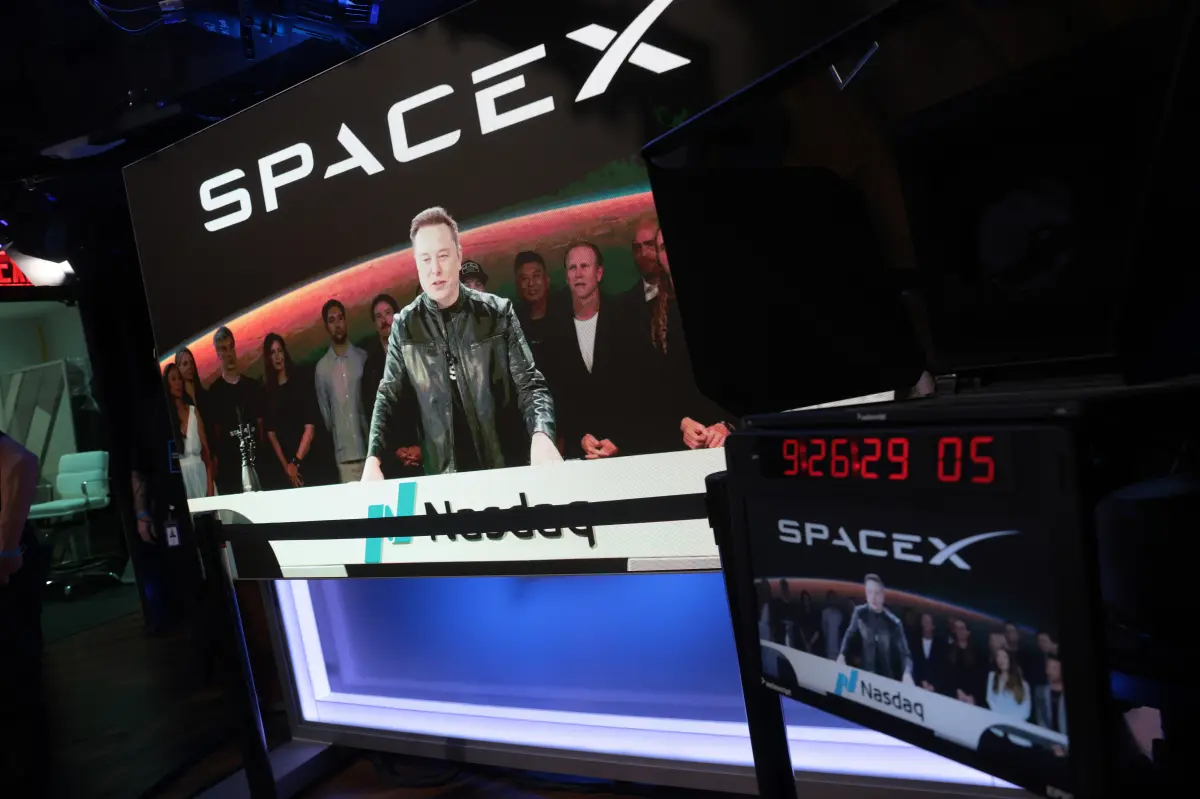

What do you do when your brokerage firm notifies you that you can get in on the deal of the century, the initial public offering of Elon Musk’s SpaceX?
For me, it was easy: Ignore it.
Mind you, the note was enticing. I was offered a “one-day indication of interest,” a window where I could tell the firm I wanted a piece of the AI-satellite-and-rocket conglomerate that aims to colonize Mars. Then, if I was lucky, I could get stock at the IPO price as opposed to the “pop” that comes after the deal is priced at $135 a share.
One problem: I’m a reporter who covers such stocks. I don’t buy individual shares because I can move prices and I don’t want to end up like Andrew Left, the famed short seller who just got convicted of stock manipulation in California.
The bigger problem: If this thing is so great, why come to me?
OK — I’m not quite the bottom of the barrel when it comes to investors; I am a “qualified investor,” which means I have enough savings to meet certain risk thresholds the SEC imposes on such stock sales. But if you know those limits, you also know that I didn’t make this year’s who’s who on Wall Street or in Silicon Valley.
SpaceX was the largest IPO ever. Musk & Co. raised $75 billion and the market valued SpaceX at more than $2 trillion. The deal was supposed to be so sought-after by the “smart money,” it was designated as four times “oversubscribed,” Wall Street parlance for more buyers than sellers.
And yet I have my doubts about the quality of the oversubscription and how long the pop in the stock will last. That’s when the irrational exuberance wears off and shares crater, as they so often do with these “hot IPOs.” The PR offensive to drum up interest had been going on for weeks, with lots of touting that everyone wants in on the next new thing. It picked up steam Thursday when the offering price was set to begin trading on Friday.
‘Dumb money’
What scares me is that it was also targeting the so-called “dumb money,” aka retail investors like me who are easy prey for Wall Street dealmakers and hedge fund flippers when they sell after the spike.
Look at the continued allure of meme stocks, companies with suspect balance sheets that online investors push as the next Apple and Amazon. Some have folded, others have crashed after the irrational exuberance of 2021, and all are well off their highs. Yet, the meme community still exists, hoping to make it big on some miracle when they would have been better off keeping whatever they had in the bank.
SpaceX isn’t a meme stock — far from it — but at least some of the same dynamics apply. Yes, Musk has a lengthy track record defying critics and swarms of short sellers predicting the demise of Tesla. The electric-car maker is now a $1.27 trillion company and among the market’s best performers, up over 30,000% since its IPO years back.
Musk himself was also worth more than $1 trillion after the SpaceX IPO started trading Friday — and more power to him. We need to reward visionary entrepreneurs who create stuff, making our lives better and more prosperous. Musk built his wealth; he weathered ups and downs along the way — and he produced. Tesla is profitable and it wasn’t always. It took him years to convince Wall Street he wasn’t a fugazy.
But that’s not the point of this column. The financials of SpaceX may or may not follow the same trajectory as Tesla. AI is the future, but so was the internet. Recall all those dot-coms that soared in price after their IPOs only to crash and burn when it came time to produce real earnings.
Last year SpaceX lost nearly $5 billion after turning a small profit in 2024 as it began to build out its AI infrastructure that is supposed to be the glue that holds this disparate conglomerate together.
It also might be worth looking at what this company does. Yes, it sends rockets to space and yes, it does operate satellites for broadband usage. And yes, this will be powered by AI, Musk’s company xAI, to be precise. Buried inside this company is also the social media platform X, formerly known as Twitter, which for all Elon’s headcount shaving still isn’t believed to be profitable.
Maybe this will work, although I’m not sure. There’s also the question of when it will work. On Friday, the IPO went great out of the gate; underwriters Goldman Sachs and Morgan Stanley are the best in the business and they know how to work their book of investors.
There will be hedge funds and other savvy trading types who got in on the offering price, who will flip on the pop. Some smart people on Wall Street also believe shares will drop some 20% over the coming months because that’s how these things work.
I’m also pretty sure the underwriters know all of the above, which is why retail investors (like myself) got that call last week.