

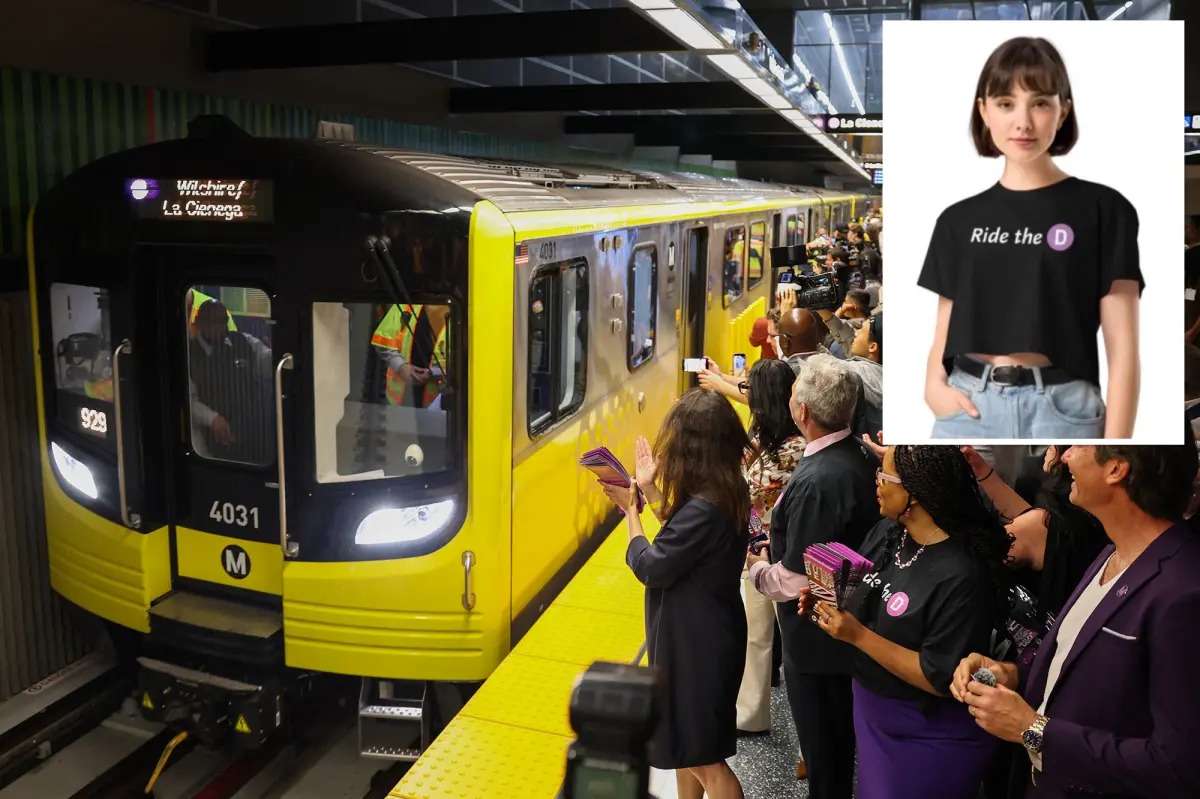
“Ride the D,” the LA Metro said, cheekily. But not even the X-rated slogan (or the racy merch that came with it) has enticed Angelenos to ride the newest extension of the light rail system.
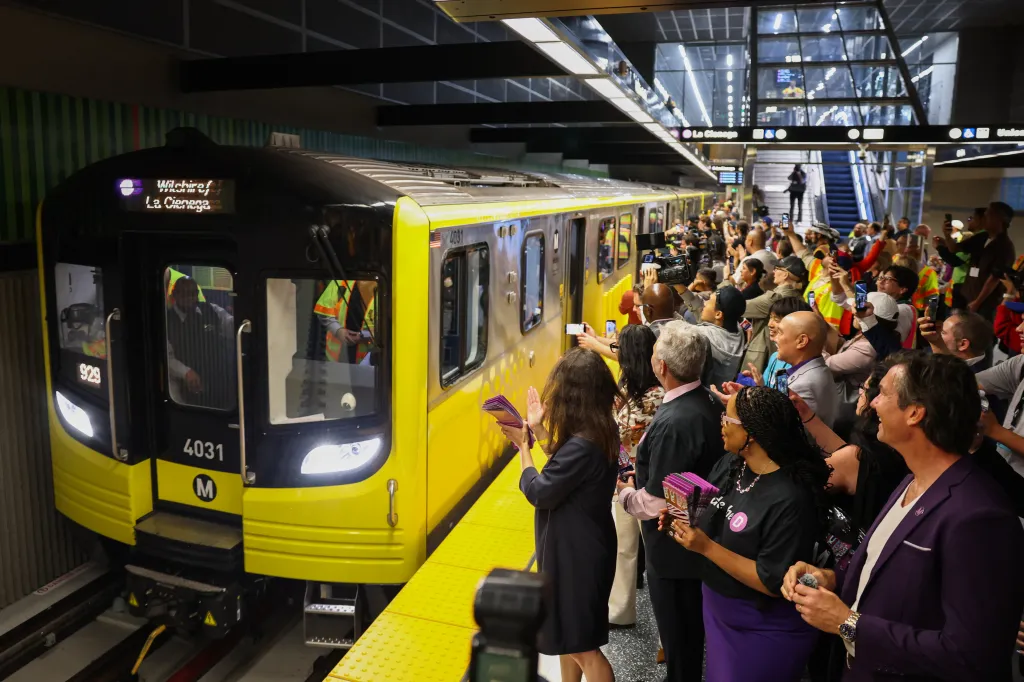
The California Post visited the new D Line extension last Thursday, on rush hour — and the date of the opening of the World Cup.
We found it virtually empty. There were Metro staff, and some homeless people — and that was it, in the gleaming, newly-opened stations.
Public transportation has a role to play in LA. But it is less important in LA than in San Francisco or in East Coast cities, which are far more dense.

LA developed around the automobile. And while Angelenos complain about traffic, locals enjoy the freedom of having their own wheels.
Trains are useful, especially when you want to get from the beach in Santa Monica to a concert downtown during the evening rush hour.
But most people don’t use them for commuting.
And while trains might help for the World Cup, or during the 2028 Summer Olympics, these events represent, at most, a few weeks every couple of years.
The money might well be spent better on our roads, which are in a terrible state.
Trains suffer from what is called the “last-mile problem.”
Once you arrive at a station, you usually still have one last mile — or several — to go.
Given how spread out the city is, that can be a long distance to cover. And hopping on an electric scooter parked near a station is not an option for anyone carrying anything, or for the elderly. (Or anytime it rains.)
The LA Metro trains are also known for being overrun with homeless people, drugs and crime.
Officials say homelessness is down on the LA Metro. But it’s still impossible to ignore.
So are the constant warning messages on the PA system about guarding your belongings against theft, and discouraging sexual harassment, which apparently is enough of an issue on the trains that people need to be reminded that it’s forbidden.
Buses cover more ground than trains, and bus lines can be moved around more easily to meet demand.
Unfortunately, buses also move slowly than cars or trains. They are a cheap way to navigate LA, but not if you want to be somewhere on time.
Building new LA Metro stations and lines, at huge cost, is not the answer to congestion on LA’s roads. Nor is it the best way to save our planet from climate change.
Too often, however, public transportation becomes an end in itself for city planners — just like high-speed rail has been a bottomless money pit for the state.
No one is clamoring for another, faster train between Bakersfield and Merced — yet that is what Newsom is spending billions to build (in theory, at least, since there’s no track yet).
Officials say Angelenos are still “figuring out” how to use the train.
Maybe officials should try “figuring out” that people aren’t that interested.