

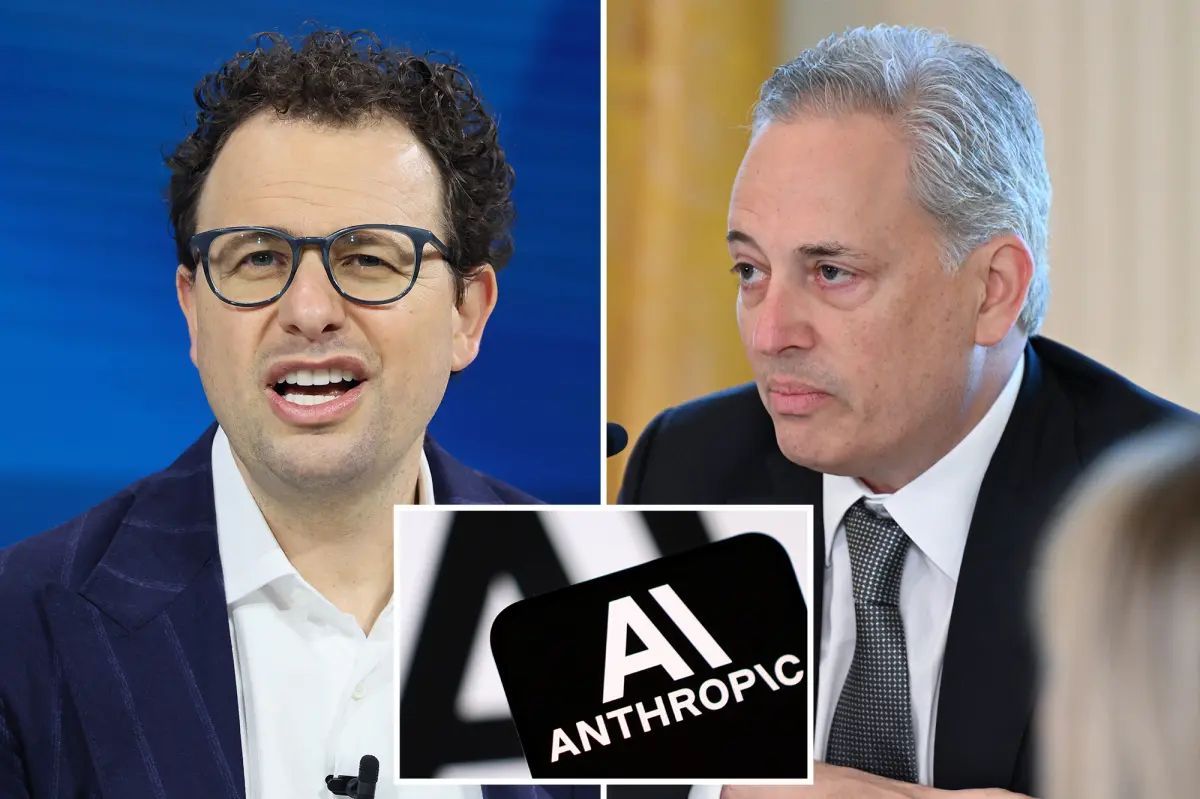

Anthropic is downplaying risks that led the White House to ban foreign use of its powerful “Mythos” and “Fable” AI models – and US officials claim it’s proof that CEO Dario Amodei has a one-sided, self-serving approach when it comes to cybersecurity.
Late last week, Amazon CEO Andy Jassy reportedly alerted the Trump administration that its researchers had managed to “jailbreak” Fable – or bypass its safety guardrails – in a way that could threaten national security.
The White House responded by slapping Mythos and Fable with export controls – restrictions that prevent the models from being used by foreign nationals and customers outside the US. Anthropic, in turn, responded by taking Mythos and Fable offline entirely.
That’s despite the fact that Anthropic claimed the flaw was a “narrow potential jailbreak” that was not unique to Fable, adding that it disagreed with the White House’s handling of the matter.
The company’s seemingly contradictory words and actions drew scorn from Trump officials who noted Anthropic has spent months stoking fears about potential AI doomsday scenarios.
“They seem obsessed with safety for everyone except themselves,” a senior Trump administration official told The Post. “If I was an Anthropic investor, I would be extremely concerned.”
A second senior official with knowledge of the situation said the Trump administration had heard from “nearly half a dozen” companies that raised concerns about Fable before it took action – not just Amazon. The official declined to share which companies.
“Had Anthropic taken it seriously and, rather than dismissing it as isolated, moved to fix or pause access, this never would have happened,” the second US official said.
Key administration leaders felt they couldn’t trust Anthropic to manage their concerns – and those worries only grew after the call between Trump officials and Amodei on Friday, the Wall Street Journal reported. Company leaders reportedly pushed back on requests that they work with government experts.
As recently as last week, Amodei published a controversial blog post declaring that the US government “should have the power to block” AI models that it deemed too dangerous.
A source close to Anthropic claimed the Trump administration contacted key officials on Friday and gave them just 90 minutes to pull its models offline.
The source also pushed back on reports that said Amodei was difficult to reach, asserting that both he and other senior staffers were available within 15 minutes of the White House’s outreach.
“There was no refusal to fix an issue. We were not presented with any details,” the source said.
Anthropic is eager to get its models back online and is working around the clock to address the administration’s concerns, the source added.
In a blog post, Anthropic claimed it had little choice but to take down the models in order to comply with the export controls and noted that some of its own employees are foreign nationals, meaning they would have been unable to work on the model.
Treasury Secretary Scott Bessent and White House Cyber Director Sean Cairncross were among the officials who participated in frantic discussions with Anthropic leadership.
White House AI adviser David Sacks, a vocal critic of Anthropic, said he was “frankly bewildered that Anthropic hasn’t wanted to comply with safety requests that it previously said were its highest priority.”
“The Admin’s hope now is that Anthropic remediates the safety issue, the export control is lifted, and Fable goes back into general release,” Sacks wrote on X.
The White House’s decision was partly motivated by concerns that a China-linked group had surreptitiously accessed Mythos, Semafor reported. Anthropic already bars access to its products in China.
Anthropic initially made Mythos available to about 40 top corporations, including Apple and JPMorgan, as part of a pilot program, warning it could cause a wave of devastating cyberattacks if given a wide release. Less than two months later, it released what it claimed to be the “safe” version of Mythos, dubbed Fable 5, for public use.
“If you’re Anthropic, what other outcome did you expect? You keep telling people your work is dangerous, you constantly talk in public about how you want the government to stop you, well, congratulations,” said Perry Metzger, chairman of Alliance for the Future, a Washington, DC-based AI policy group.
Since April, Anthropic executives also have publicly claimed that “Claude Mythos” AI model was too dangerous to be released to the public and argued it would be “good for the world to have the option to slow or temporarily pause” development.
Amodei himself has a penchant for making terrifying predictions about AI – including that it has a 25% chance of destroying humanity. He has warned that AI could cause national unemployment to spike to 20% and said President Trump’s decision to allow sale of advanced AI chips to China was like “selling nuclear weapons to North Korea.”
Ben Narasin, a general partner and founder of Tenacity Venture Capital, said Anthropic’s dire warnings about AI had backfired.
“He has become way too predictable with constantly crying wolf,” Narasin said. “All of a sudden, you got what you asked for, but you didn’t realize you didn’t really want it.”
At the same time, Narasin said Anthropic may still emerge from this latest dustup as a winner.
“It’ll inconvenience Dario and it’ll inconvenience OpenAI, but it’ll massively hinder any new competitor that comes along,” Narasin said. “So, he just built a new fortress wall protecting the castle.”
The warnings have sparked allegations from Sacks and others that Anthropic was using fear-mongering tactics as a method of “regulatory capture” – or crafting regulations in a way that benefits its interest at the expense of rivals.
The dire warnings come, skeptics note, even as Anthropic has been scrambling to supercharge its growth.
Earlier this month, the firm confidentially filed for an IPO ahead of its archrival OpenAI. Anthropic cofounder Daniela Amodei, Dario’s sister, has said the company aims to tap the public markets for cash to wrangle massive amounts of computing power in data center deals with the likes of SpaceX and Google.