


Here’s a question almost nobody wants to answer out loud: What’s the most you’d be willing to spend to save your dog’s life?
A new study went ahead and asked, and the number is lower than you’d guess.
According to “Love vs. Limits: The New Economics of Pet Care,” a study from Healthy Paws Pet Insurance that surveyed more than 1,500 U.S. cat and dog owners found that 77% of us say our pet is “like a child.” Yet 76% of those same owners admit there’s a price at which they’d decline a treatment their vet recommends.
For about a third of them, that line falls below $1,000.
We have never loved our animals more, but it seems we have never been more willing to put a dollar figure on that love.
I cover consumer spending of all shapes and sizes for a living, and I’ve also lost two senior rescue dogs in the last three years. I’ve signed the emergency invoices at 2 a.m. I’ve also had to make the gut-wrenching call to stop treatment. So when a study tells me most owners have a financial breaking point, I don’t hear it as cold. I hear it as honest.
What makes this really worth taking a look at is what that breaking point looks like, and how much you spend getting there, which turns out to depend a whole lot on the year you were born.
Gen Z will reportedly sell an organ, while Boomers just keep some cash on hand. Here’s the full picture, and, as a Millennial, what I wish I’d done differently.
The quick version
- Americans spent $158 billion on pets in 2025, an all-time high, per the American Pet Products Association (APPA).
- Gen Z spends the most, at roughly $6,103 per owner per year. Boomers spend the least, at $2,454, even though, statistically, they have far more money.
- The majority of owners, 77%, call their pet “like a child,” but 76% have a cost ceiling at which they’d decline recommended care. For one third, that ceiling is under $1,000.
- Vet costs are up about 60% over the past decade. A serious emergency can run from a few hundred dollars to well over $10,000.
- Insurance changes the decision, not just the bill. Insured owners are far more likely to pursue every recommended treatment (47%) than owners overall (32%).
- The single biggest mistake owners make is waiting. Pre-existing conditions are excluded, so the enrollment window is prior to the problems that would preclude care.
How much does it cost to own a pet in 2026?
It costs a lot more than it used to, and certainly more than most budgets are built for.
According to the APPA’s 2026 State of the Industry Report, Americans spent a staggering $158 billion on their pets in 2025. That’s up 3.7% in a single year, and APPA projects the industry will clear $165 billion in 2026. Only about 2% of that growth is inflation. The rest is us, choosing to spend.
But don’t worry. Us crazy pet parents, we’re not slowing down. Even with record-high rents and gravity-defying grocery prices squeezing every household in the country, 95 million American homes owned at least one pet last year.
Zoom in from the macro number to a single animal, and it stings just as much. Routine care for one dog or cat, food, checkups, grooming and supplies, now averages $4,272 a year, according to an earlier Healthy Paws research. All in, that’s over a 12-year lifespan, that’s more than $50,000 per pet. That’s a down payment. A new car (and a nice one at that). Four years of in-state tuition. And that’s before anything goes wrong.
I felt this in my own grocery cart long before I saw it in a report. The senior-formula food I fed my dogs for years doubled, from about $31 a bag to $61, during the course of purchasing it on Amazon. Same bag, same brand.

Where do pet owners draw the financial line?
Where pet parents draw the line financially is the part of the new Healthy Paws research that stopped me cold.
Devotion isn’t the question anymore. Affordability is. In the “Love vs. Limits” survey, 73% of owners said they’d sacrifice personal luxuries to cover their pet’s medical care, and 62% said they’d take on debt to save their pet’s life. Love is basically universal.
But so are the limits. More than half of owners said a surprise vet bill under $1,000 would cause “significant financial stress,” and nearly one in five said that any unexpected vet expense, of any size, would strain their finances.
And this isn’t only a lower-income story. Among middle-class households earning more than $100,000 a year, 44% said a vet bill below $2,000 would cause significant financial stress.
So owners improvise. Almost a quarter (24.1%) said they’ve carried a credit card balance to pay for pet care. Of those who financed a bill, roughly 29% said paying it off took seven months or longer, or worse, that they’re still paying it down.
Then comes the line itself. About three-quarters of owners said there’s a cost at which they’d decline a treatment their vet recommends, and roughly a third put that number under $1,000. A swallowed sock. A bad fall. A lump that wasn’t there last month. For a lot of families, that’s the moment love and the bank balance collide.
Which generation spends the most on pets?
Gen Z. By a wide and slightly bewildering margin.
A Harris Poll survey of more than 2,100 adults found that average annual pet spending breaks down as simply as a staircase from youngest to oldest:
| Generation | Avg. annual spend | Pet-related debt | Primary view of pet | Extreme emergency move | Has pet insurance |
|---|---|---|---|---|---|
| Gen Z | $6,103 | 29% | Child / trial child | Sell an organ (18%) | 14% |
| Millennials | $5,150 | 34% (highest) | Fur baby | Take a loan (36%) or sell the car (21%) | Middle |
| Gen X | $3,878 | Moderate | Best friend | Spend roughly $6,000, paid outright | Middle |
| Boomers | $2,454 | Low | Pet / support system | Use cash on hand (46%) | 7% |
Sources: The Harris Poll (spend, debt); Talker Research for Vetster (emergency measures, views); J.D. Power (insurance uptake).
The generation with the lowest median income is outspending the generation with the most accumulated wealth by nearly $3,700 a year, per pet. That’s the headline. But the “Love vs. Limits” data adds a genuinely counterintuitive wrinkle underneath it.
When you ask who emotionally considers their pet a “child,” agreement actually runs highest among older owners. In that survey, 81% of owners 45 and up said their pet is like a child, versus 72% of those 18 to 34. So the youngest owners spend the most and go to the most extreme lengths, while the oldest owners are likeliest to use the language of parenthood.
Different generations, same love, wildly different spending behavior.
Why does Gen Z spend the most (and risk the most)?
For Gen Z, a pet is rarely just a pet, and the data on how far they’d go could read as a little alarming.
Gen Z came of age during a pandemic with an economy that felt stacked against them. When a separate Talker Research survey for the vet-telehealth company Vetster asked owners what they’d do to cover a lifesaving bill, the Gen Z answers escalated fast: 43% would ask family and friends, 40% would start a fundraiser and 24% would drain every account they have.
Then it goes somewhere most generations won’t. Nearly one in five Gen Z owners (18%) said they’d sell an organ to save their pet.
That’s not recklessness. It’s a worldview. In the same research, 48% of Gen Z said they see no real difference between a pet and a human child. They treat pet ownership as a trial run at parenthood, an accessible way to practice caretaking with or without a partner while houses and kids stay out of reach. They’re also the most likely to lean on telehealth, online forums and even AI tools before booking a physical vet visit.
The bill for all that love lands hard. Among owners carrying pet-related debt, 29% of Gen Z say their animals put them there.

Are millennials really the most in debt over their pets?
Yes, and it’s not particularly close.
Millennials are the largest single bloc of pet owners, spending an average of $5,150 a year. This is the generation that turned “fur baby” from a punchline into a record-profit product category. The buying logic is simple, albeit expensive: Whatever wellness standard they hold for themselves, they hold for the dog. Organic, grain-free, single-source protein – the works.
And it costs them. Despite out-earning Gen Z, millennials carry the highest pet debt rate of any generation, at 34%. Faced with an emergency, the Vetster data found 36% would take out a loan and 21% would sell their car.
I’ll own up to where I land in all this. I’m the guy who insisted my beautiful Miniature Schnauzer, Gloria, get the full, proper groom because I loved how she it looked on her, plus I wanted her smelling clean, even though she wasn’t a show dog by any stretch.
My partner, meanwhile, used to come home with a new coat or sweater or, I’m not even kidding, a full-on Adidas tracksuit for our other dog, Margot, convinced if it wasn’t added to our collection, we would regret it.
So it should go without saying, I understand the impulse to spend on these animals as if they’re direct descendants awaiting the family inheritance. I’ve lived it, receipts and all.

How do Gen X and Boomers handle pet money?
Gen X is the sensible middle child of the pet economy, spending about $3,878 a year. As their human kids leave home, plenty are refilling the empty nest with animals, and they’re more adventurous about it, branching into fish, birds and reptiles.
But don’t read “practical” as “cheap.” When Vetster asked what owners would pay to save a pet’s life, Gen X came in ready to spend nearly $6,000, the highest of any group. No fundraisers, no organ sales. They’ll just write the check.
That’s the cohort whose mindset I understood best when my dog Margot got sick. She was a Jack Russell bull terrier mix, nearly 17, sweet and relentlessly energetic until she suddenly wasn’t.
She started having seizures, and the vet suspected liver disease or a brain tumor, but said the seizures themselves weren’t causing pain. Because the diagnostics were expensive and she was so old, we chose not to chase a diagnosis that wouldn’t change the outcome. We just kept her comfortable. She passed at home, with a vet’s help, in the summer of 2023.
I don’t regret the decision. I regret that discussing the money was even in the room for it.
Boomers spend the least, an average of $2,454 a year, and reading that as indifference would be a real mistake. Boomers are simply the most financially prepared owners in the country.
When that surprise bill hits, 46% of them already have the cash on hand. They don’t fundraise or finance. They pay. They also frame the relationship differently: 51% describe their animal simply as “a pet” and 39% as a support system. For many older owners, that dog is a genuine pillar of daily health, a reason to get up and walk every morning. It’s love, just in a steadier key.
Why are vet bills rising so fast?
Because the medicine got better, the overhead got more expensive and inflation hit the animal hospital just like everywhere else.
Veterinary costs have climbed roughly 60% over the past decade, according to the “Love vs. Limits” research, with the steepest acceleration in recent years: Vet care rose about 43% in just the five years between 2021 and 2026.
The average Healthy Paws claim hit around $392 in 2025, up 32% since 2020. Some conditions jumped far more. Cancer treatment costs are up about 49%, and care for foreign body ingestion is up around 45%.
Not to be outdone, major surgeries, hospitalizations and complex cases can easily sail past $10,000 in no time.
Here’s the consequence almost nobody says out loud. Research from Gallup and PetSmart Charities found that more than half of pet parents have skipped or declined necessary veterinary care, almost always because of cost.
On the other side of the exam table, 94% of veterinarians say cost limits the care they can provide, and nearly half got no formal training on how to even discuss money with a client.
There’s a quiet name for the worst version of this: economic euthanasia, when an animal is put down not because of the prognosis but because the family can’t afford the treatment. It’s far more common than people realize.
Dr. Rachel Pound, lead veterinarian at Paradise Animal Hospital in Catonsville, Maryland, has watched it happen in real time. She says appointment volume rises and falls with the economy, and that there have absolutely been times a pet didn’t get ideal care because of what it cost.
“It only takes one extensive hospitalization, emergency procedure [or] complex case that requires extensive testing to diagnose … for [pet insurance] to pay for itself,” Pound told Morning Consult in the survey on behalf of Healthy Paws Pet Insurance.
(PetSmart Charities has pledged $100 million to widen access to care and has deployed $61 million so far, funding 51 low-cost clinics that have served more than 819,000 pets. It helps. It is nowhere near enough.)
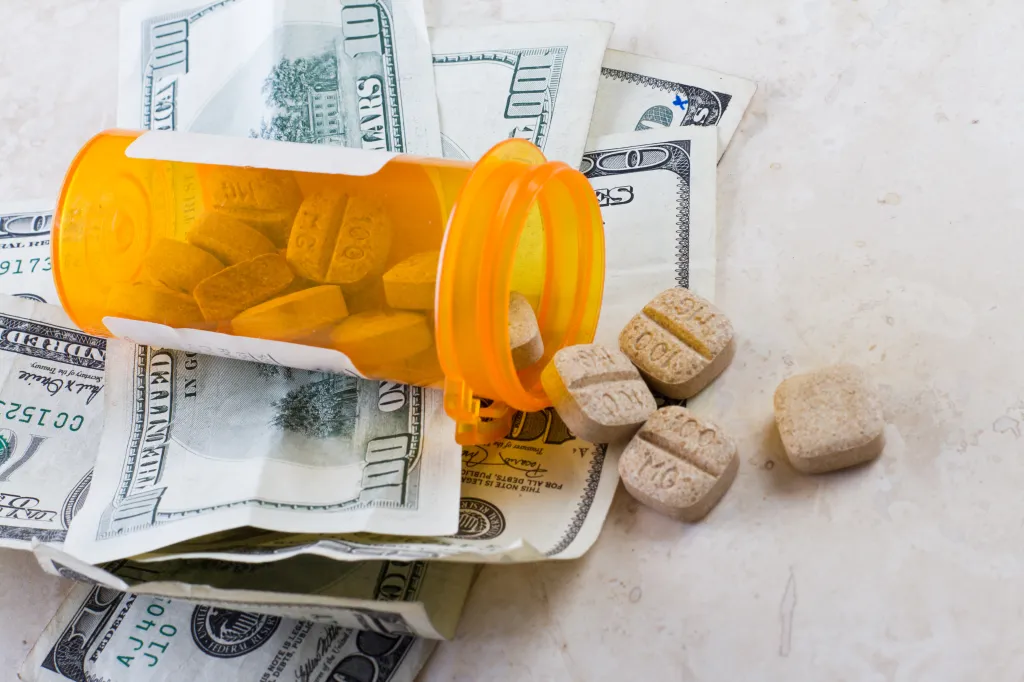
Does pet insurance actually save money?
For owners who hit a major emergency, the math is hard to argue with. And the more interesting finding is that insurance doesn’t just change the bill. It changes the decision.
Premiums run about $62 per month for a dog and $32 per month for a cat, according to NAPHIA. That adds up fast. But set it against a $3,000 emergency or a $7,000 surgery, and the picture flips.
In the Love vs. Limits survey, 54% of insured owners said their plan reimbursed at least half the cost of a significant vet expense. In earlier Healthy Paws research, 75% of insured owners said coverage significantly cut their out-of-pocket costs, and 87% said it gave them peace of mind when their pet’s health was on the line.
However, the number that says the most, I think, is this one: Insured owners are far more likely to pursue every recommended treatment, regardless of cost (47%), than owners overall (32%). Coverage doesn’t just soften the invoice. It gives you the freedom to say yes.
Two real stories from the research drive it home.
Sage Curtis, a copywriter in San Jose, told Morning Consult that she watched her dog rack up two chronic illnesses, a surgery, multiple ruptured glands, a parasite and several ER trips. Uninsured, she figures the bill would have topped $8,000, completely out of reach. With coverage, her out-of-pocket came to under $1,600. Still expensive, she says, but survivable.
For Noah Stone, a Los Angeles photographer and entrepreneur, insurance changed the very nature of care. When his dog Buddy needed radiation, coverage made the choice simple. “[Pet insurance] more than halved the cost and bought him another two pain-free years,” he told Morning Consult.
When my Gloria spent her final days in an oxygen tent, the only question that should have mattered was whether she could get strong enough to come home. Instead, since I didn’t have insurance of any kind, cost was part of the mental math from the moment we walked in the door.
That’s a terrible place to be, and it’s the place a plan from Healthy Paws is built to keep you out of. Depending on your reimbursement level, Healthy Paws can pay back up to 90% of the vet bill for new accidents and illnesses, the swallowed sock or the sudden diabetes diagnosis that blindsides you.

When is the best time to get pet insurance?
The short answer? Day one. Full stop.
Almost every policy excludes pre-existing conditions, which means the window to enroll is before anything is diagnosed. The plan most people make, to get covered “once something starts going wrong,” is precisely how you end up without coverage. Young, healthy animals are the ideal candidates: lower premiums, and a safety net built before a diagnosis can slam the door.
There’s a hopeful note buried in the research, too. While just 2% of adopters actively seek out senior pets, 64% of owners said they’d be far more likely to adopt an older animal if it came with subsidized care or a discount on insurance.
That tracks for me. Every dog I’ve loved has been a senior rescue, including Mingo, my long-haired chihuahua, who is still happily kicking with no teeth at 13.
He came out of a puppy mill with a crooked snout, a history of low-blood-sugar seizures we now manage with that morning paste instead of medication.
We took him in for a cleaning around age 10 and told the vet to pull whatever bad teeth she could, joking, “You can just take them all out.” She said she’d never do that.
Hours later, he came out, and she sheepishly admitted he’d had about two good teeth left, so she did, in fact, take them all out. Now he looks like a total weirdo with his tongue hanging out, and he has never been happier.
Two friends of mine just adopted a rescue chihuahua and signed up for Healthy Paws on day one. They’re completely sold. So whenever the next dog picks us, and in my experience, they always arrive on their own schedule, the insurance is the very first call I’m making.
We waited too long with Margot. We waited too long with Gloria. The studies all point to the same quiet truth, and so does my own history: The love was never the hard part; the limits were.
Get your coverage on day one, so that whatever comes next, you never have to do the math while your dog is looking up at you from a cold, metal vet table.
Frequently asked questions
How much does it cost to own a pet per year in 2026?
Routine care for a single dog or cat, including food, vet visits, grooming and supplies, averages about $4,272 a year, according to Healthy Paws research. Over a typical 12-year lifespan, that adds up to more than $50,000, and that figure does not include major emergency surgery or end-of-life care.
Which generation spends the most on their pets?
Gen Z. A Harris Poll survey found Gen Z spends an average of $6,103 a year, followed by Millennials at $5,150, Gen X at $3,878 and Boomers at $2,454, even though Gen Z has the lowest median income of any adult generation.
Why are so many pet owners going into debt for their pets?
Because soaring vet costs are colliding with thin cash reserves. In the Love vs. Limits study, 62% of owners said they would take on debt to save their pet’s life, and about 24% have carried a credit card balance for pet care. Millennials (34%) and Gen Z (29%) report the highest rates of pet debt.
Why are veterinary bills rising so fast?
Vet costs are up roughly 60% over the past decade, driven by inflation, higher operating costs and major advances in veterinary medicine. Treatments that were rare a decade ago are now common, and they tend to involve specialized procedures and advanced diagnostics that cost more.
Does pet insurance actually save money?
For owners who face a major emergency, usually yes. In the latest Healthy Paws survey, 54% of insured owners said their plan reimbursed at least half of a significant vet bill, and insured owners are far more likely to pursue all recommended treatment (47%) than owners overall (32%). A single serious emergency can easily cost more than a full year of premiums.
What does pet insurance typically not cover?
Most standard policies exclude pre-existing conditions, routine wellness care like annual exams and vaccines, elective procedures and breeding-related costs. Some providers offer optional wellness add-ons for an extra monthly fee. Always read the fine print closely before enrolling.
When is the best time to get pet insurance?
Day one. The younger and healthier the animal, the lower the premium, and anything diagnosed before you enroll is almost always excluded as pre-existing. Waiting until something is wrong usually means it’s too late to cover it.
What is “economic euthanasia”?
It’s when a pet is put down, not because of its medical prognosis but because the owner cannot afford the treatment. Gallup and PetSmart Charities research found more than half of pet parents have skipped or declined needed care over cost, which is why many veterinarians and financial planners now treat pet insurance as a baseline part of responsible ownership.