

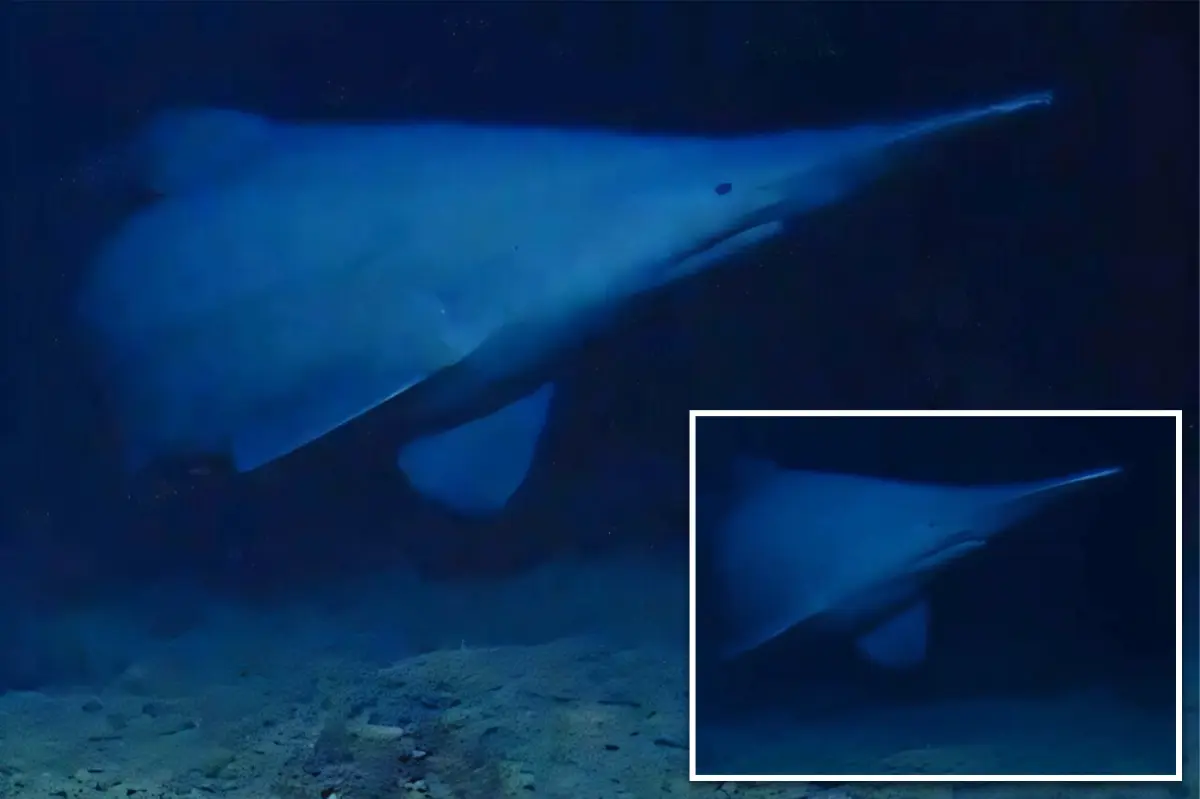
The elusive and “iconic” deep-sea goblin shark, for the first time ever, has been spotted in its natural habitat — thousands of feet below the ocean’s surface with no natural light.
The shark species was discovered over 100 years ago, and up until recently had only been sighted when accidentally caught by fishermen.
Using a remote baited camera, scientists spied the shark in the South Pacific Ocean’s Tonga Trench, one of the deepest parts of the sea in 2024, according to a study published last month.
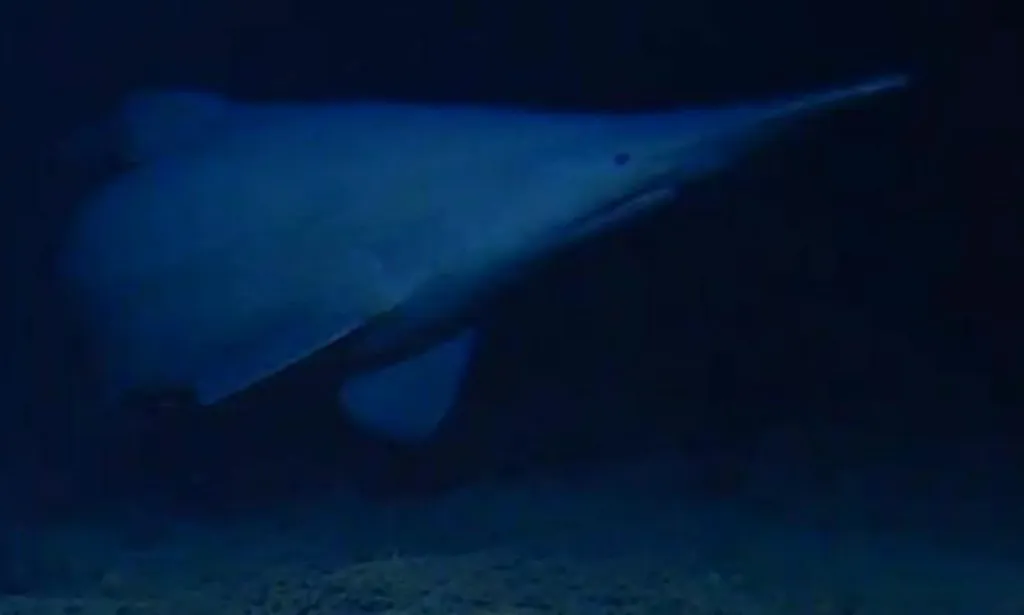
“The Goblin Shark is one of these deep-sea charismatic animals that I never thought we’d see alive, and then to do so was amazing, but to then learn that colleagues in Hawaii also saw one was just incredible,” said marine biologist and director at Minderoo-UWA Deep-Sea Research Center, Alan Jamieson, in a press statement released earlier this week.
Scientists didn’t know it at the time, but another sighting most likely happened in 2019, when the underwater research vessel M/V Nautilus recorded a goblin shark thousands of miles away near Jarvis Island and the Palmyra Atoll in the central Pacific.
“Seeing the most iconic of all the deep-sea sharks alive and looking healthy in its natural habitat is a unique honour,” said Aaron Judah, a researcher at the Department of Oceanography at the University of Hawaii, said in a statement regarding the two discoveries.
“I was also very surprised about how deep this species was found. The observation from the slope of the Tonga Trench is nearly 700 meters deeper than this species was known to live.”
The 2019 and 2024 discoveries were complimentary in that the mid-Pacific footage blew open the map on where these creatures roam, while the Tonga Trench encounter shattered previous depth records for the species by 108 meters.
The bizarre predator — averaging about 12 feet long with an almost gelatinous body, oversized snout and razor-like teeth — is a living fossil.
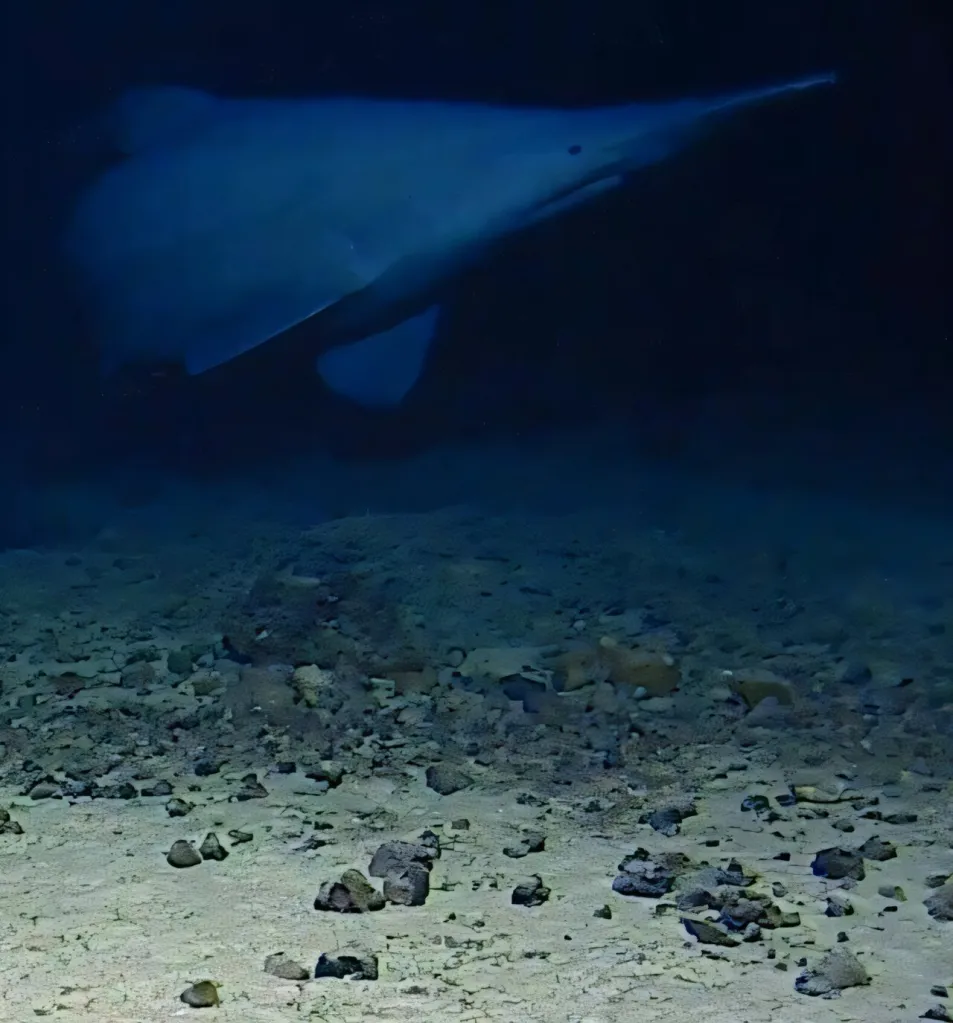
It remains the sole survivor of a family lineage dating back 125 million years, according to the US Fish and Wildlife Service.
Now that researchers have proof of life in these zones, the shark can finally be added to official regional biodiversity lists and wildlife management plans.
“New discoveries like this demonstrate that there is still so much to explore in our deep ocean home,” Judah said. “Beforehand we didn’t know it was even there!”