

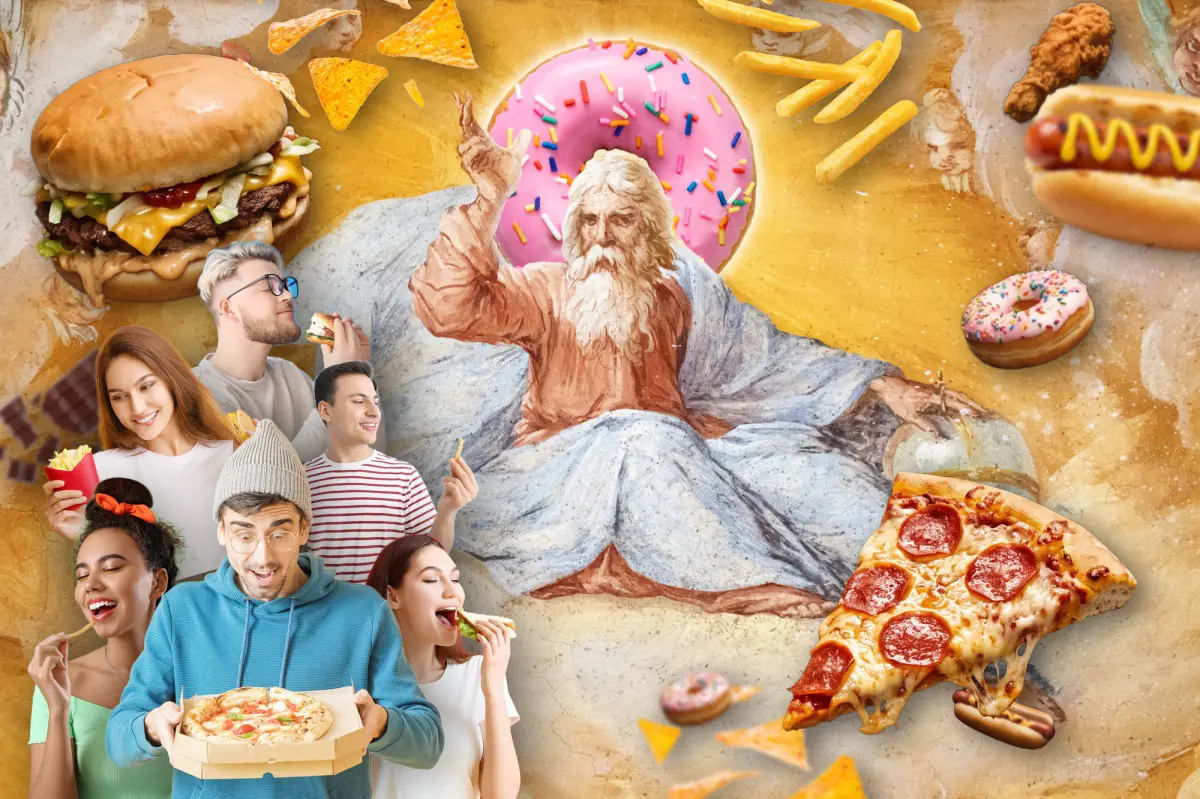
Thank you, cheese-us.
Multiple studies have found that consuming ultra-processed foods like chips, ice cream and pizza can increase the risk of multiple health conditions like type 2 diabetes, cardiovascular disease, depression and other chronic diseases.
But now when you reach for the unholy (and unhealthy) trinity of fat, salt and sugar, you might just be able to chalk it up to the man upstairs’ doing.
It’s not a matter of the deep-fried devil on your shoulder pushing you to make unhealthy junk food choices over healthy ones.
Instead, a new study published in Psychology & Marketing suggests that spiritual cues create a belief in divine healing — which lowers self-control around eating.
In other words, our Father, who art in the snack aisle, will make sure everything’s OK health-wise after indulging in unhealthy eating habits.
While almost 40% of Americans pray to God for health improvements or cures for diseases, even subtle reminders of religion or spirituality can influence choices.
The phenomenon is referred to as “God salience,” or a momentary activation of thoughts related to God brought on by environmental cues.
To understand how people justified eating ultra-processed food, researchers looked at compensatory control theory, in which people seek external sources of order — like God — when they face physical vulnerability (say, a snack craving) or internal psychological stress.

They had participants to different activities: read religious texts or neutral sentences, listen to religious or secular music, or write about God or their day. Then, they had to choose either non-processed or highly processed foods.
Those filled with divine light, so to speak, were more likely and willing to also be filled with divinely delicious junk food
The findings confirmed that religious reminders shaped preferences for junk food, while healthy foods needed less divine protection in queso emergency.
Spiritual or religious people often rely on non-medical mechanisms when facing illness, like prayer.
A reminder of a higher power could lead some to be less worried about the health risks of certain foods or that a deity will intervene in any negative health issues.
The researchers note their findings have real-world implications, blending nutritional education with spiritual teachings to combat obesity or the use of secular music in grocery stores to subconsciously promote healthier choices.
Even seemingly healthy options — like peanut butter — made unhealthy with the addition of cookie dough and chocolate chips, were chosen after participants viewed a sermon.
So next time you’re seeking peace in a bag of chips or praying for a calorie-free miracle, you might really need a “come to Jesus” moment about the realities of what junk food can do to your health.
Amen.