
3 min readJun 30, 2026 05:02 PM IST
At monsoon gatherings in UP and Bihar, women have often sat together and sung kajris, the monsoon songs of longing and love. By the time a song is done, no one can say who wrote it. And that has been taken as proof that no one did. A research paper by three Indian authors – Abhinav Agrawal, Mudit Chaturvedi, and Gaurang Agrawal – is trying to change that.
Titled “Co-designing culture: A grounded theory of participatory practice in Indian folk music”, the trio presented the paper at the Design Research Society (DRS) conference in Edinburgh on June 10, seeking to redefine what has been known to us as folk music.

After working for 13 years with more than 10,000 folk musicians as part of Anahad Foundation and interviewing 23 first-generation folk artists from 14 Indian states, they found that UNESCO’s definition of folk music systematically overlooks authorship and individual agency, which does more harm than good to folk musicians across the Global South.
“Having our own India-specific, practitioner-rooted definition we wanted to study folk music on its own terms, not through a borrowed lens,” says Agrawal, the paper’s lead researcher, currently pursuing a PhD in Design at IIT Delhi, in a press statement.
For over a century, predominantly Western theoretical frameworks have defined folk music globally — as the domain of the uncultured classes, rooted in oral transmission, rural isolation, and anonymous communal creation. The prevailing view assumes audiences are passive listeners, treats the purpose of folk music as preservation of tradition, and erases individual creative agency.
In fact, one Karnataka-based artiste told the researchers that “the term ‘folk’ is often used to avoid saying music from a marginalised community.” Since folk music has historically been labelled anonymous, Western intellectual property systems have categorised folk songs as “public domain,” stripping creators of any right to ownership or compensation.
“Moreover, because folk music is treated as a community resource, the law treats it as public domain,” says Chaturvedi in a statement. “Which means the artists who actually write these songs, real people with names and families to feed, get no copyright, no royalty, no ownership. Their work belongs to everyone except them,” he adds.
Story continues below this ad
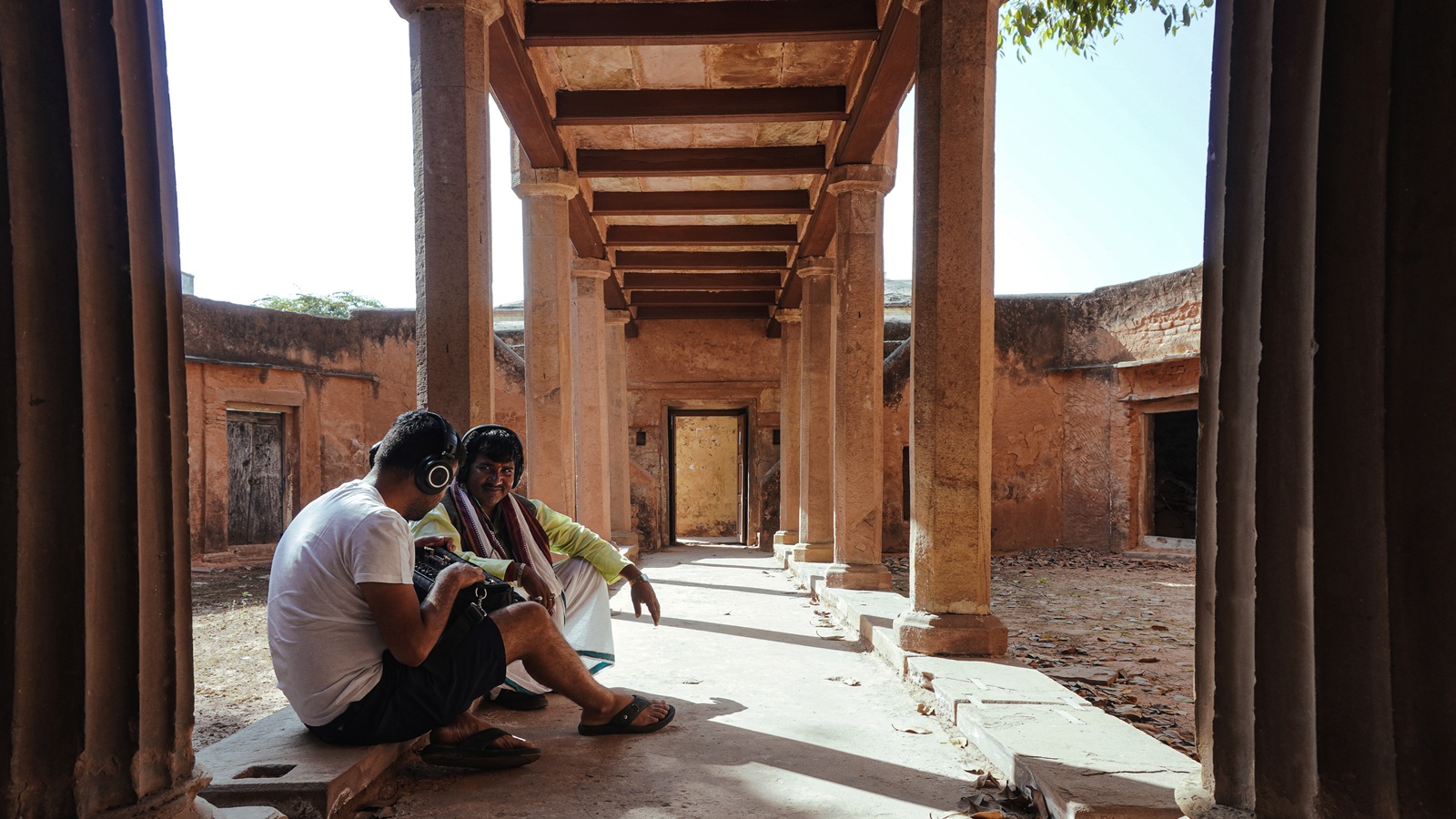 Bablu Yadav listening to his songs
This paper proposes a new definition: “folk music is a living cultural artefact, created by an artist who lives within a community, draws from their own experience and the beliefs around them, refines the song with the people who listen to it, and uses it to build identity and push for change”.
According to the researchers, changing the definition also changes how folk artists see themselves. According to Agrawal, this change can tell a kajri singer in Bihar or a Baul musician in Bengal that she is no less a creator than any urban independent musician. “It opens the door to fair collaborations and gives folk artists the same dignity, the same copyright protections, and the same creative authority that the rest of the music industry takes for granted,” he says in his statement.