

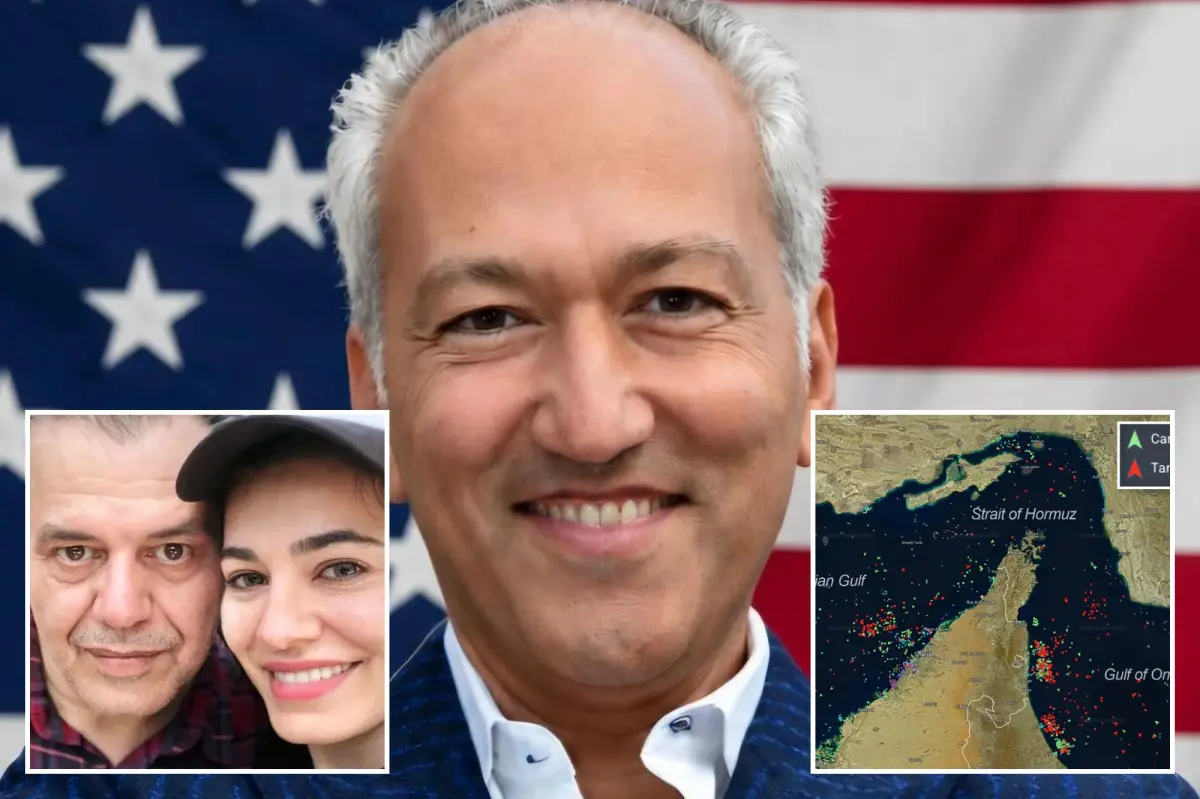

Iranian dissidents are warning the Trump administration to stay tough and be wary of the Islamic Republic’s deception as it tries to end the war there.
Last week’s 14-point memorandum of understanding (MOU) between the US and Iran ended fighting and set the stage for 60 days of broader talks aimed at dismantling the regime’s nuclear program and reopening the Strait of Hormuz.
But members of the disapora say the US risks emboldening a regime that has repeatedly violated past commitments and has a long track record of repression and regional destabilization.
“This agreement hands Iran a victory it could never win on the battlefield, just as Hamas and Hezbollah have repeatedly used ceasefires, not as peace, but as leverage to attack again,” said Pedram Bral, Iranian-born Republican Mayor of Great Neck.
The fragile peace was tested Thursday as Iran attacked a Singaporean cargo ship in the Strait of Hormuz, which it has largely closed since the war, and threatened further action against “violators” who didn’t obey its routes.
Babak Khodaparast, a cleantech entrepreneur and inventor born in Isfahan and currently based in Canada, said he felt let down by the Trump administration, which had previously expressed support for the Iranian people over engaging with the regime.
“I feel trust in the United States has been broken,” he said. “It brings me back to the view that Israel is [the Iranian people’s] only true friend, a relationship rooted in decades of history. The US has never fully understood the region, while Israel has lived with these realities and knows the players far better.”
Several Iranian interviewees expressed concern that the state-to-state negotiations — which somewhat bafflingly did not include Israel — omitted the aspirations, plight and agency of ordinary Iranians.
Maryam Banihashemi, a women’s right advocate based in Switzerland who was born and lived in Iran for 34 years, said she found it “deeply disappointing that the Iranian people themselves remain absent from conversations about Iran.”
“If policymakers had truly done their homework and understood who they were dealing with, they would not see any form of engagement with the Islamic Republic as a viable path to long-term stability, security or even economic interests, which appear to be a central driver behind this MOU and the negotiation process,” she added.
Gazelle Sharmahd, a California-based advocate whose father, Jimmy Sharmahd, was kidnapped by the regime in 2020 and executed in 2024, went further. She argued the regime is an occupying force acting against the Iranian people.
“There is no deal between the United States and Iran,” she said. “There is only a deal between the United States and the ayatollahs – an Arab Islamist occupation force that has spent nearly half a century waging war against its biggest enemy: the Iranian nation.”
Sharmahd added: “Not a single Iranian is represented in these negotiations. Not a single Iranian is mentioned in the deal. This MOU represents the financing of an occupying force with the stolen assets of the nation it subjugates. Iranians are not subjects – they are sovereign and no one can sideline them to make deals with their killers.”
However, not every Iranian voice was dismissive of diplomacy between the Islamic Republic and the United States.
Betty Emamian, a community activist based in the city, expressed “cautious hope” about the negotiations but reiterated human rights cannot be sacrificed for diplomatic progress or economic interests.
“Diplomacy can be a path to reducing tensions, but there are concerns human rights and accountability for past and ongoing abuses will be sidelined,” she said.
In recent months, authorities in Iran have used the cover of war to execute dozens of political dissidents and arbitrarily arrest at least 6,000 more including journalists, lawyers and human rights advocates, according to Amnesty International. They have also turned off internet access for its citizens numerous times since January.
Emamian added “many Iranians feel heartbroken and disappointed that, during periods of unrest in Iran, people were encouraged to stand up for change with the promise of help being on the way, but ultimately felt abandoned, while internet shutdowns cut them off from the world leaving them unable to share what was happening.”
For Simon Michael Aslanpour, an Assyrian Christian who left Iran in 1999, negotiations are not inherently problematic, as long as any agreement produces tangible benefits for ordinary Iranians.
“I support inclusive diplomacy that protects civilians and respects Iran’s sovereignty, and I hope negotiations bring sanctions relief, better economic opportunities for Iranians and more cultural and academic exchanges,” said Aslanpour, who now serves as a national board representative for the Log Cabin Republicans of Dallas, an LGBT conservative group based in Texas.
Pedram Bral, the Mayor of Great Neck who is fiercely critical of any diplomatic engagement with the Islamic Republic, remains hopeful the Trump administration has a trick up its sleeve.
“Unless President Trump is employing the same bait-and-switch strategy that Iran, Hamas and Hezbollah have used for decades, signing agreements with counterparts who have no intention of honoring them is a serious mistake,” Bral said. “I hope there is a deeper plan behind what is being put on the table.”