
3 min readNew DelhiJun 28, 2026 11:01 AM IST
For 46 years, Ankur Warikoo’s mother has asked him the same question every day: What did you have for lunch? As a young adult, he found it annoying. By 35, he laughed about it. At 46, however, he sees it differently.
In his recent post on X, the entrepreneur and content creator opened up about how a simple question he once brushed aside has become one of the most enduring expressions of love in his life. Many internet users found it relatable, sharing how their mothers do the same. Others missed this relentless questioning from the mothers they lost.

For many people, the post felt instantly familiar. Whether it’s “Have you eaten?”, “What did you have for lunch?” or “Did you reach home safely?” Most parents seem to have a set of questions they ask on repeat.
When we’re younger, those questions can feel intrusive, just like Warikoo did. As we get older, however, they often become a source of comfort.
DISCLAIMER: This article is based on information from the public domain and/or the experts we spoke to. Always consult your health practitioner before starting any routine.
Why we see things differently with age
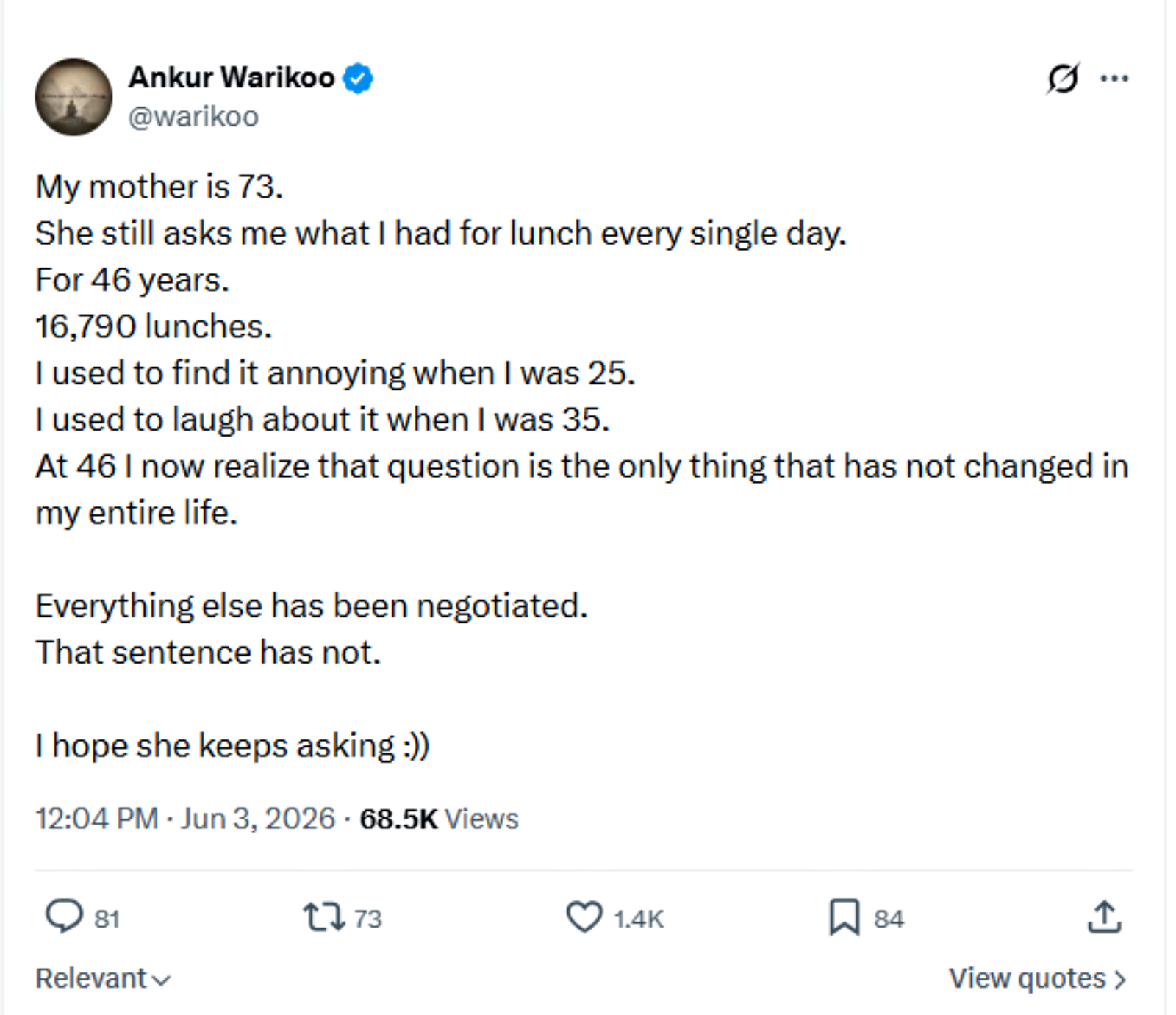 Many internet users found Warikoo’s experience relatable (Screenshot of his X post)
According to Dr Abhinit Kumar, Senior Consultant – Psychiatry, ShardaCare-Healthcity, the change has a lot to do with perspective.
“When we are younger, we often see our parents’ questions as interference because we are focused on independence and making our own decisions. As we grow older, we better understand the intention behind those questions,” he tells indianexpress.com.
Story continues below this ad
“What once felt like nagging is often recognized as unconditional love, care, and emotional support that remains constant through different phases of life.”
For many parents, asking about meals is one of the simplest ways of expressing affection. “They may not always openly talk about their emotions, but checking whether their child has eaten, rested, or reached home safely is often their way of showing concern, affection, and staying connected every day,” says Dr Kumar.
In that sense, “What did you have for lunch?” is rarely just about food. It is a daily reminder that someone is thinking about you.
The comfort of being checked on
The significance of these small interactions often becomes clearer with age. “Regular check-ins from parents can provide a strong sense of emotional security, regardless of age,” says Dr Kumar.
Story continues below this ad
“Knowing that someone consistently cares about your well-being can help reduce feelings of stress, loneliness, and uncertainty.” He adds that these conversations often become a source of comfort, stability, and reassurance as people grow older.
Perhaps that’s why Warikoo’s post resonated with so many people. Sometimes, the things we once dismissed as nagging turn out to be the most reliable expressions of love we have in our lives.
DISCLAIMER: This article is based on information from the public domain and/or the experts we spoke to. Always consult your health practitioner before starting any routine.