
3 min readNew DelhiJun 28, 2026 11:00 PM IST
India’s palaces are often associated with hilltops, deserts and sprawling forts, but some of the country’s most fascinating royal residences are surrounded by water. Built as pleasure retreats, summer residences or strategic royal hideaways, these water palaces combine engineering ingenuity with aesthetics.
Here are five remarkable water palaces that offer a glimpse into India’s royal past.

1. Jal Mahal, Jaipur
Rising gracefully from the middle of Man Sagar Lake, Jal Mahal is one of Rajasthan’s most iconic landmarks. Constructed in the 18th century by Maharaja Madho Singh I, the palace served as a hunting lodge and leisure retreat for the royal family.
What makes Jal Mahal extraordinary is that four of its five storeys remain submerged when the lake is full, creating the illusion of a floating palace. Built in the Rajput style with Mughal influences, it features a symmetrical design, chhatris, and elegant terraces, making it a striking architectural masterpiece. While visitors cannot enter the palace, the views from the lakeside promenade are among Jaipur’s most memorable sights.
2. Taj Lake Palace, Udaipur
Set in the middle of Lake Pichola, the Lake Palace appears to float on water. Built between 1743 and 1746 by Maharana Jagat Singh II, the white marble palace was originally known as Jag Niwas and served as a royal summer residence.
The palace’s location offers panoramic views of Udaipur’s City Palace, the surrounding hills, and the shimmering waters. Delicate marblework, ornate courtyards, and beautifully carved balconies exemplify the grandeur of Mewar architecture. Today, it operates as one of India’s most luxurious heritage hotels, attracting visitors from around the world.
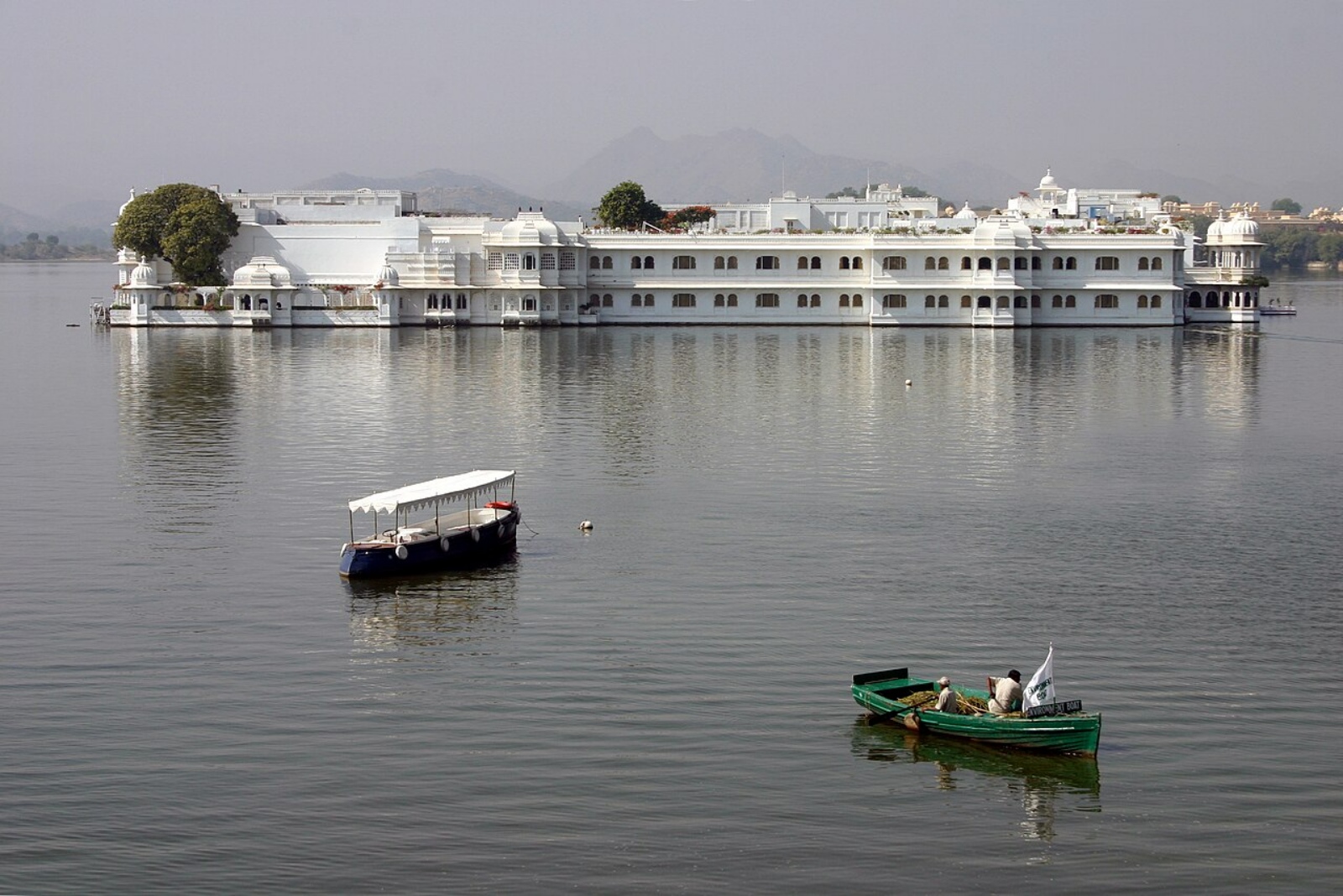 Lake Palace, Udaipur (Photo: Wikipedia)
3. Neermahal, Tripura
Located in the middle of Rudrasagar Lake, Neermahal is India’s largest water palace in eastern India. It was commissioned in 1930 by Maharaja Bir Bikram Kishore Manikya Bahadur, the last ruling king of Tripura.
Story continues below this ad
The palace presents a mix of Hindu and Mughal architectural styles. Divided into royal residential quarters and entertainment spaces, Neermahal once hosted cultural performances, theatrical events and royal gatherings. Visitors reach the palace by boat, adding to its charm. The annual Neermahal Water Festival further highlights its cultural significance.
4. Jal Vilas Palace, Gwalior
Though not entirely surrounded by water today, the sprawling Jai Vilas Palace in Gwalior was designed with elaborate water features, fountains and ornamental pools that reflected European palace aesthetics. Constructed in 1874 by Maharaja Jayajirao Scindia, it remains one of India’s grandest royal residences.
The palace is renowned for its fusion of Tuscan, Italian and Corinthian architectural styles. Its Durbar Hall houses massive chandeliers reputed to be among the largest in the world. The palace demonstrates how water elements were incorporated into royal architecture to create cooling effects and visual splendour.
5. Bekal Palace, Kerala
Kerala’s waterways have long inspired distinctive architectural traditions. Among them are historic palatial residences and mansions built along lakes and backwaters, where water served both practical and aesthetic purposes.
Story continues below this ad
Situated amid landscapes and overlooking waters, these heritage structures highlight how rulers adapted architecture to the region’s humid climate. Traditional wooden craftsmanship, sloping roofs and waterfront settings distinguish Kerala’s royal residences from the marble palaces of northern India.