


Curbless bathrooms, advanced filtration systems, mobility assistance and red-light therapy are the new “it” amenities among uber-rich homeowners and buyers.
Ultra-high-net-worth buyers — young and older — are taking the long view, seeking to age in place, according to Sotheby’s International Realty’s newly released 2026 Mid-Year Luxury Outlook report. While older buyers may retrofit their homes, younger buyers will acquire ones that are already “future-proofed.”
Longevity expert Claudia von Boeselager, a partner in Lumara luxury wellness consultancy, told The Post, “You have to be the CEO of your own health.”
“A few appointments a year can’t compete with the place where you spend 91% of your life, breathing the air, drinking the water, sleeping under the lights,” she added. “So the question buyers are asking has changed — instead of optimizing for a few hours a month at a clinic, why not have my home regenerate me every night?”
Other longevity options include fall‑prevention layouts, circadian lighting and integrated telehealth.
These changes represent a fundamental lifestyle and economic shift among affluent homeowners.
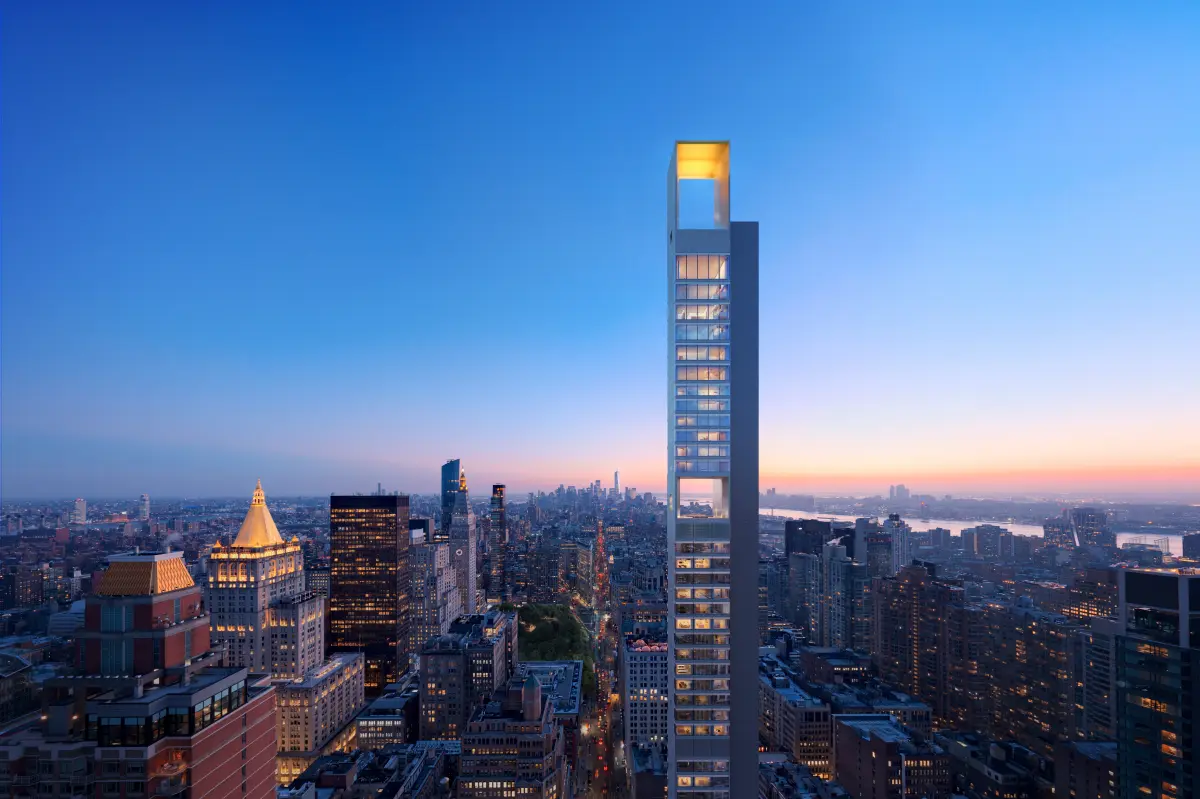
“They’re investing in residences that protect their time, enhance their well-being and remain relevant across generations,” said Nikki Field of Sotheby’s, who recently launched sales at 262 Fifth Ave. in NoMad, a 26-unit condominium that is incorporating a fitness center and high-performance air filtration.
Wellness real estate is expected to be worth more than $1.114 trillion by 2029, per the report.
Wellness real estate is fast growing. It has “more than doubled in size in just five years,” said the authors of a November 2025 report by the Global Wellness Institute, referenced in the report. It is expected to grow to $8 trillion by 2030 from $5.3 trillion in 2023, according to UBS Global Wealth Management, as cited in the report.
Nearly 40% of real estate professionals cited in the 2026 Mid-Year Sotheby’s International Realty agent survey said aging in place is a growing concern among homebuyers.
“Wealthy homebuyers increasingly view their homes and communities as primary wellness assets,” the report indicates.
At HQ Residences Miami, the latest wellness features to be added are “innovations in red light therapy, contrast therapy and robotic massage, [which] are especially popular because they make recovery and regeneration more accessible and personalized,” said nightlife visionary Sam Nazarian, founder of SBE. His new hospitality company, HQ, is making its residential debut with the Miami deveolopment.
Lumara is working with individuals and buildings to transform their spaces into wellness cocoons.
In Cabo San Lucas, Mexico, for example, Lumara is working on two connected projects. One is the Canyon, an 86-residence community where the company is integrating longevity elements into the homes — like purifying the air and water, as well as installing circadian lighting — and the shared spaces, anchored by a dedicated longevity lounge with red-light therapy, a cryotherapy chamber, vibroacoustic therapy, intermittent hypoxia-hyperoxia (altitude) training and PEMF recovery, plus an infrared detox sauna and HDO cold plunge at the gym.
The second part of the project is The Canyon Reserve, an ultra-exclusive collection of just five residences in a gated community with ocean views. Targeting atheletes and high performers, Lumara is outfitting the to-be-built homes and communal spaces with every wellness and recovery amenity the buyers request.
The cost for the foundational tier, which adds an “invisible biological infrastructure,” is roughly $22,000 per unit depending on the size, according to wellness pro Alexandra Cochrane, a partner in Lumara and the founder of wellness brand Scandilabs.
By adding longevity elements, said von Boeselager, who has a longevity podcast, there is a 10% to 25% “perceived value uplift” and the developers are tacking on a 30% premium for the units.