

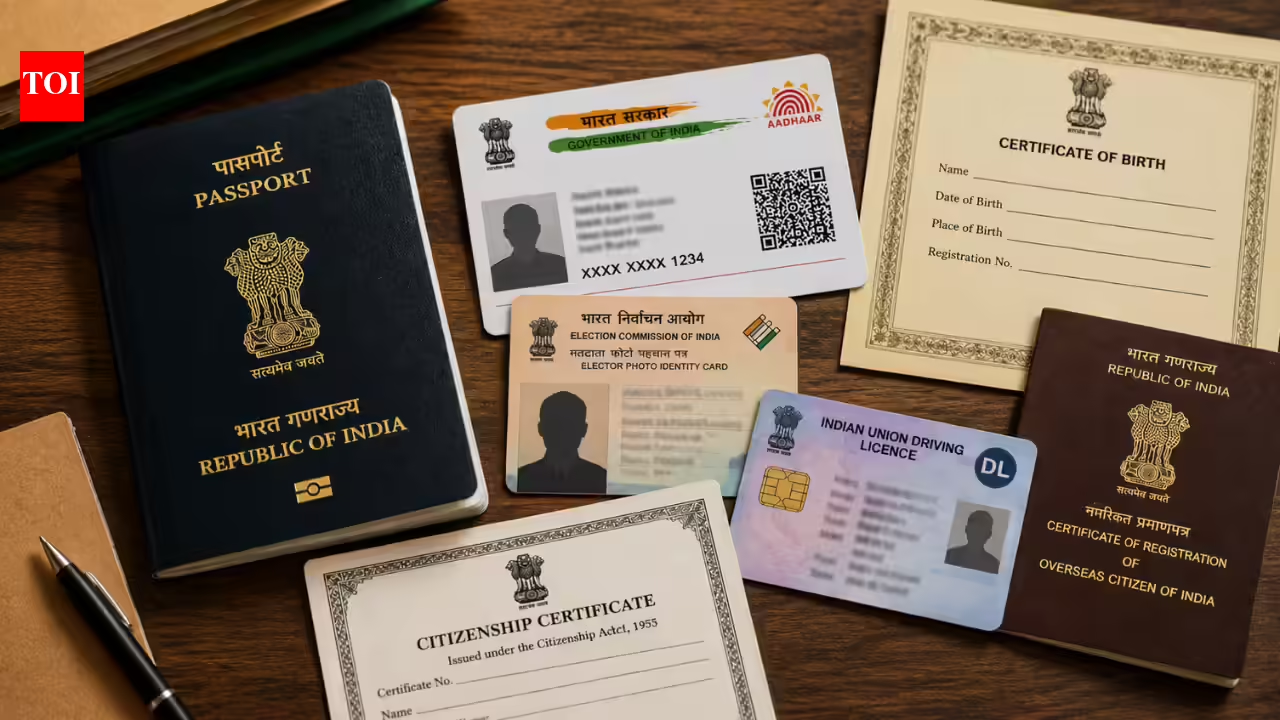
NEW DELHI: For many Indians, obtaining a passport is more than just completing a bureaucratic process in – it is often associated with aspiration, opportunity and, for some, a milestone achievement. Whether for overseas education, employment, pilgrimage or tourism, the document carries a sense of prestige and is widely regarded as one of the most authoritative credentials issued by the government.That is why a recent clarification by the ministry of external affairs that a passport is not conclusive proof of citizenship has sparked fresh interest in a question many assume has a simple answer – if not a passport, then what documents establish that a person is an Indian citizen?
How did the controversy start
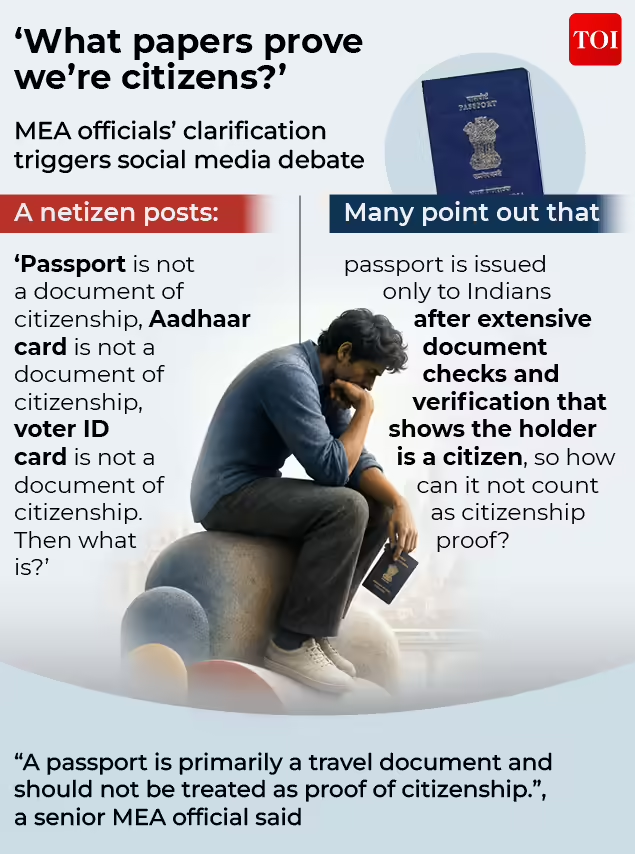
The debate was triggered by a statement from the ministry of external affairs (MEA) that an Indian passport is “primarily a travel document” and should not be regarded as proof of citizenship. Speaking at an event marking the 14th Passport Seva Divas, a senior MEA official said that while a passport attests the nationality of Indians when they are abroad, citizenship is determined under separate legal provisions.
How people reacted
The MEA’s clarification drew sharp reactions from opposition leaders and public figures, many questioning how a document issued by the government after extensive verification could not be treated as proof of citizenship. Senior advocate and Rajya Sabha MP Kapil Sibal linked the clarification to concerns over electoral roll verification. In a social media post, he questioned which document would then serve as proof of citizenship and warned that citizens could face challenges to their status during voter-list verification exercises.“MEA June 24, 2026: ‘A passport is a travel document, and not a document of citizenship.’ Which document then is proof of citizenship? BLO can doubt my citizenship. Deprive me of my vote. Result- BJP wins the election. Over to Supreme Court!” he said.AIMIM chief Asaduddin Owaisi also took a swipe at the Centre, claiming that the government’s position implied that no document was conclusive proof of citizenship. Sharing an AI-generated image of a card labelled “Bharatiya Janata Party”, Owaisi sarcastically suggested that by 2030, party affiliation might become the only accepted proof of citizenship.Lyricist and screenwriter Javed Akhtar called the position “absurd”, asking whether passports were being issued without authorities being fully satisfied that the holder was an Indian citizen.“The ministry of external affairs says that a passport is a document travel not the proof of citizen ship. Really ??? So are they providing this travel document to some people with out being totally convinced that this person is an Indian citizen ?? It is absurd,” he said.Also read: Passport has never been proof of citizenship, govt clarifies; cites 1967 Act, Bombay HC ruling
Centre issues clarification
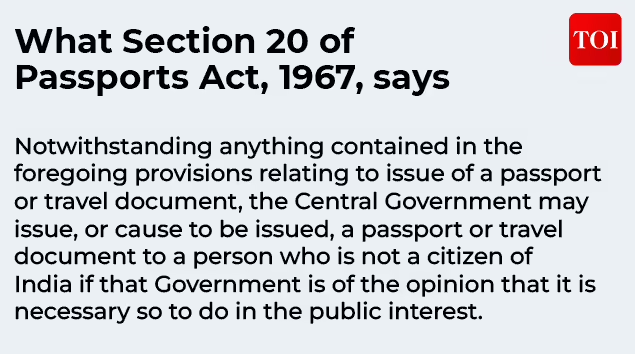
The government issued clarification on the same on Thursday referencing Section 20 of the Passports Act, 1967, which provides for the issuance of passports to non-citizens.“Notwithstanding anything contained in the foregoing provisions relating to issue of a passport or travel document, the Central Government may issue, or cause to be issued, a passport or travel document to a person who is not a citizen of India if that Government is of the opinion that it is necessary so to do in the public interest,” Section 20 of the Act states.Last September, the Supreme Court declined requests from political parties seeking a direction to the Election Commission (EC) to treat Aadhaar as a standalone document for establishing citizenship during the special intensive revision (SIR) of electoral rolls in Bihar. The court observed that Aadhaar’s legal status could not be expanded beyond what is provided under existing law and refused to mandate its acceptance as sole proof of citizenship for voter enrolment.
Some FAQs on citizenship:
Q. How can Indian citizenship be acquired?
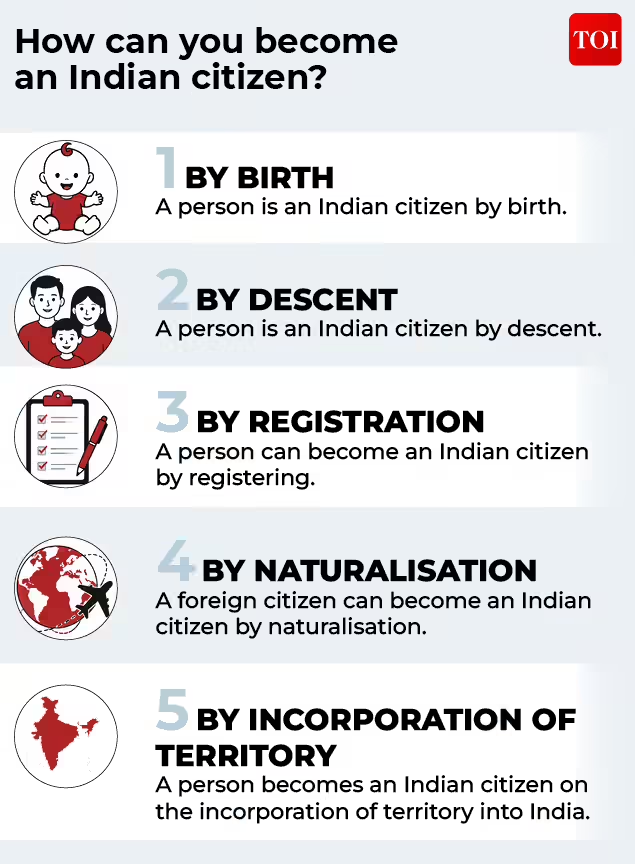
According to a PIB Q&A on the National Register of Citizens (NRC), Indian citizenship can be acquired in five ways under the Citizenship Act, 1955:
- Citizenship by Birth
- Citizenship by Descent
- Citizenship by Registration
- Citizenship by Naturalisation
- Citizenship by Incorporation of Territory
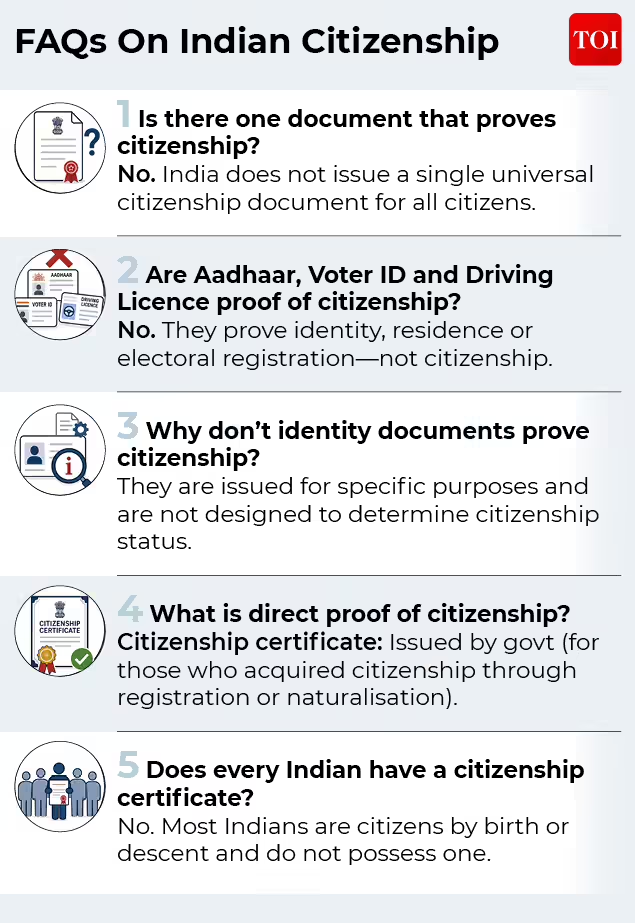
Q. Is there a single document that proves Indian citizenship?
No. India does not issue a single, universally held document that serves as definitive proof of citizenship for all citizens. Citizenship is established based on how it was acquired and the supporting records available under the Citizenship Act.
Q. What is direct proof of Indian citizenship?
For people who became Indian citizens through registration or naturalisation, a citizenship certificate issued by the government serves as direct proof of citizenship.
Q. Is a citizenship certificate issued to every Indian citizen?
No. Citizenship certificates are generally issued to people who acquire Indian citizenship through registration or naturalisation. Most Indians who are citizens by birth or descent do not possess a citizenship certificate.
Q. What about Indians who acquired citizenship by birth or descent?
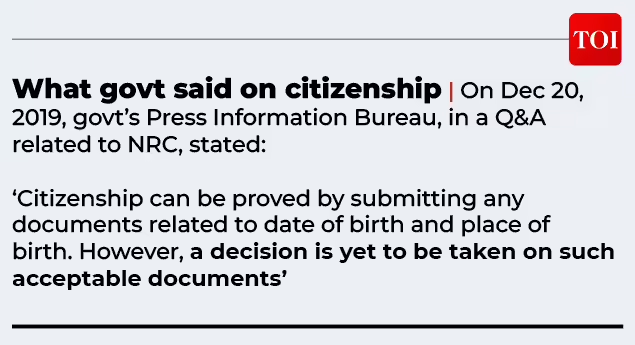
Most Indians acquire citizenship by birth or descent and may never possess a citizenship certificate. In such cases, citizenship is established through a combination of documents relating to date and place of birth, parentage and nationality.
Q. Which documents can help establish citizenship?
Depending on the case, these may include:
- Birth certificates
- Citizenship certificates of parents
- Records showing a parent’s Indian citizenship
- Indian passports of parents
- Other records relating to birth, parentage and nationality
Q. Can an Indian passport be used in citizenship-related applications?
Yes. The ministry of home affairs’ citizenship guidelines refer to Indian passports and citizenship certificates as proof of Indian citizenship in applications involving spouses, children or parents of Indian citizens.
Q. Are Aadhaar, voter ID and driving licence proof of citizenship?
No. Aadhaar cards, voter IDs and driving licences primarily establish identity, residence or electoral registration. They are not considered conclusive proof of citizenship on their own.
Q. Why don’t identity documents automatically prove citizenship?
Documents such as Aadhaar, voter ID and driving licence are issued for specific purposes such as identity verification, electoral registration or driving privileges. They are not designed to determine citizenship status and therefore are not treated as conclusive proof of citizenship on their own.
Q. Why did the MEA say a passport is not proof of citizenship?
The MEA clarified that a passport is primarily a travel document that attests the holder’s nationality abroad. Legally, citizenship is determined under the Citizenship Act, while a passport is issued under the Passports Act and does not by itself constitute definitive proof of citizenship in all circumstances.
Q. Can an OCI cardholder become an Indian citizen?
Yes. An Overseas Citizen of India (OCI) cardholder who has been registered as an OCI for at least five years and meets other eligibility requirements can apply for Indian citizenship by registration.
Q. Does India allow dual citizenship?
No. India does not recognise dual citizenship. While the OCI scheme provides certain benefits to foreign nationals of Indian origin, OCI cardholders are not Indian citizens.