

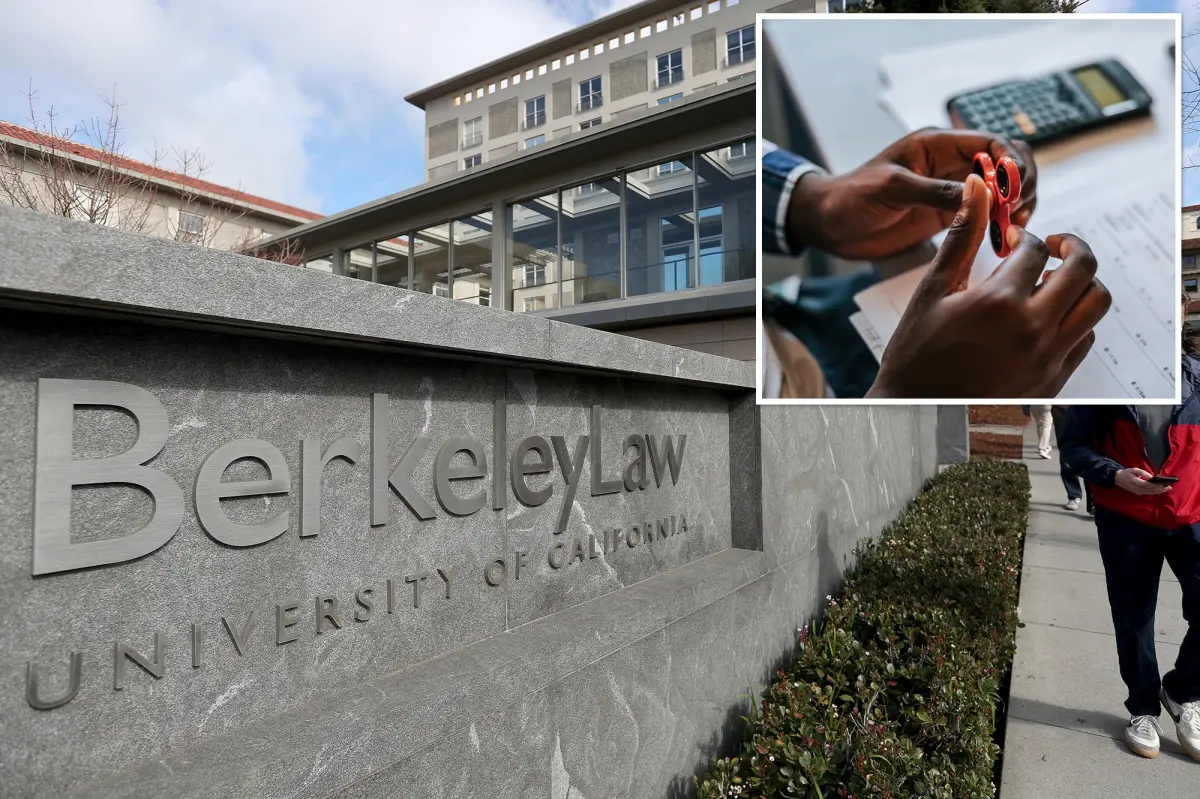

An eye-popping number of students at the elite UC Berkeley School of Law claim to have a “psychological” or other mental disabilities, according to university data — leading critics to accuse pupils of trying to game the system to get more time for their exams.
There are 378 law students in UC Berkeley’s Disabled Students’ Program, approximately a third of enrollment. That marks a massive shift from just five years ago, when only 3% of Berkeley’s graduate students claimed a disability.
University-wide, the number of students in the disability program have steadily increased — going from 4,153 in 2020 to 5,711 last year. The school claims to be “one of the first campuses in the U.S. to begin accommodating students with disabilities.”
The leading disability types across campus are classified as psychological or emotional disorders, as well as ADHD. Significantly less are the number of physical disability claims.
Critics claim the numbers evidence of a “sham” by students to take advantage of woke considerations by educators to gain a leg up in school.
The numbers are preposterous, said Andrew Testerman, a graduate at the law school who looked into the numbers.
“At Berkeley Law, there are more disabled law students than there are male law students,” said Berkeley law student Andrew Testerman, who looked at the numbers.
“We are asked to believe that students at elite law schools are significantly more likely to be disabled than our nation’s senior citizens.”
The disability status unfairly gives students advantages, Testerman said.
For instance, those classified as disabled had significantly more time to take exams. According to university data, proctoring service requests to accommodate disabilities have skyrocketed from less than 4,000 in 2021-2022 to more than 14,000 in 2024-2025.
Professors and other critics have slammed the disability accommodations as untrustworthy and gaming the system.
“I have heard from many people that this is the way that rich people scam the system to help their kids,” a computer science professor at a West Coast state school who asked to remain anonymous told The Post.
Giving these students more time for their exams is supposedly “fair, but it’s anything but,” added George Leef, of the higher-education think tank James G. Martin Center for Academic Renewal.
“This is even more absurd when you realize that most students in law schools come from successful families and have done well throughout their years of education,” he explained. “Apparently, the world of ‘social justice’ means that we can’t have fair exams.”
UC Berkeley’s disability program was apparently aimed at addressing physical disabilities when it was first created. But in 1982, the word “physical” was dropped from its name to encompass learning disabilities, the school’s website said.
It’s in line with the school’s diversity programming, where a disability is formally treated as a diversity classification, according to the university’s Diversity, Equity & Inclusion data dashboard.
Other schools across the nation have seen similar trends. At nearby Stanford University, for instance, 38% of students have registered with the Office of Accessible Education.
Even high school students seem to be leaning into the “scam.” The number of high schoolers getting extra time on college-entrance exams has more than tripled in the last decade.
Dean of Berkeley Law Erwin Chemerinsky told Testerman that the law school has no authority over accommodations and simply complies with the law.
The Post contacted the university for comment.