

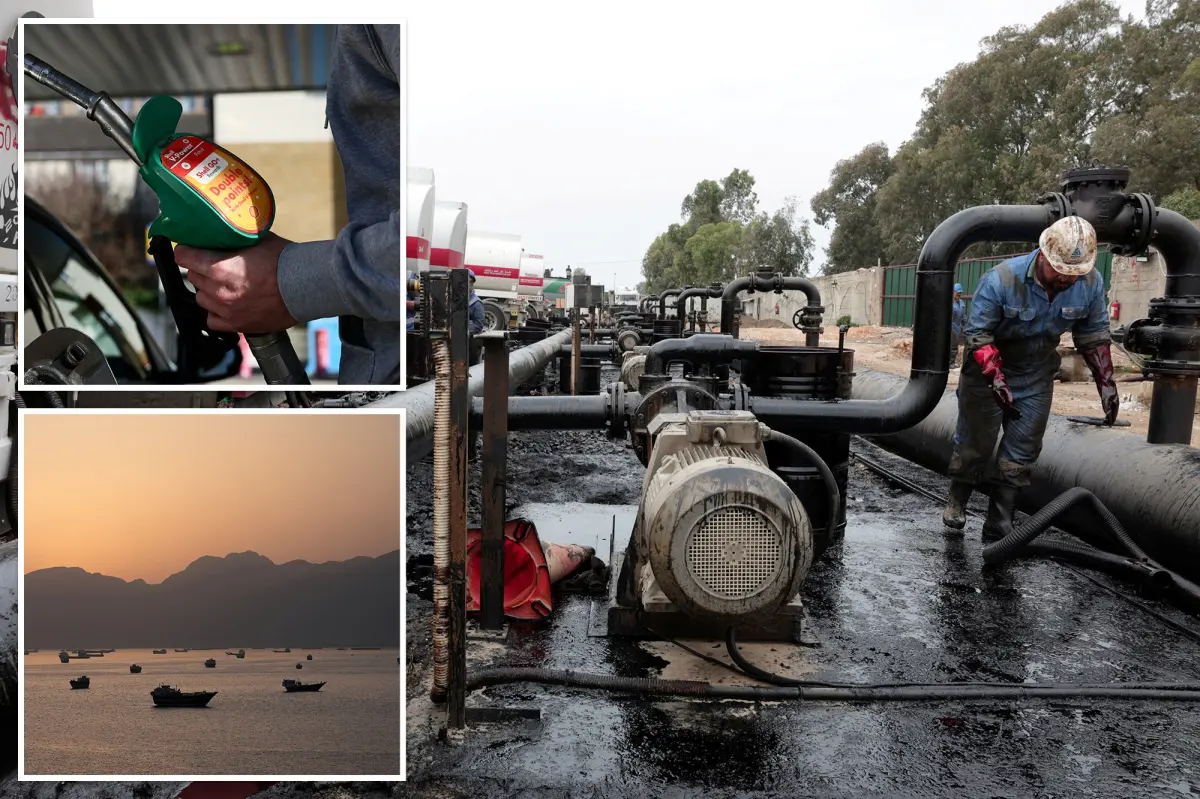

BENGALURU — Oil prices were on Thursday at levels last seen before the start of the Iran war, as expectations of rising supply from the Middle East outweighed demand concerns.
Prompt-month Brent crude futures LCOc1 for August delivery were down 25 cents, or 0.34%, to $73.49 a barrel by 1327 GMT, and U.S. West Texas Intermediate CLc1 lost 24 cents, or 0.34%, to $70.10 a barrel.
Both contracts hit their lowest since February 27, the day before the launch of U.S.-Israeli strikes on Iran.
August Brent was trading lower than September, which was priced at $73.83 at 1327 GMT, signaling ample short-term supply.
“The backlog of vessels in the Persian Gulf is being cleared, which has created a wave of supply, and we see evidence of supply assets restarting soon alongside terminals restarting,” said Rystad Energy analyst Janiv Shah.
U.S. Energy Secretary Chris Wright told a forum that flows through the Strait of Hormuz were close to those before the war began, with at least 20 million barrels having exited the strait in the last 24 hours.
Normalization would take a few weeks, however, because the strait needs to be demined, he added.
“Most of the increase in flows from the Gulf is outbound —ships exiting the Strait,” UBS analyst Giovanni Staunovo said.
However, a significant increase in inbound flows requires shipping confidence to return, including safety assurances and mine clearance to allow insurance premiums to normalize, Staunovo said.
Rising Middle Eastern supply, together with Iran set to boost sales after a temporary reprieve from U.S. sanctions, drove down prices of physical crude oil cargoes around the world.
Goldman Sachs said it does not expect a large pick‑up in Iranian production, even if sanctions relief extends beyond the August 21 expiry.
On the demand side, China is likely to remain the main buyer of Iranian crude, as European Union and British sanctions on Iranian oil and vessels remain in place, the bank added.
An accord agreed last week to end the war has allowed the resumption of traffic through the strait, which Iran had effectively blockaded.
It set up a 60-day period of negotiations to tackle tougher issues, such as Iran’s nuclear program.
Wright said oil would continue to flow through the strait even if the deal did not hold, and that Iran would not be able to close it again.
UBS lowered its Brent price forecasts to $85 per barrel for end-September and end-December, and $80 per barrel for end-March and end-June 2027.