
PP Chaudhary, senior advocate and Lok Sabha MP, on One Nation, One Election, anti-defection reforms and the hidden costs of frequent polls. The session was moderated by Damini Nath, Assistant Editor, The Indian Express
Damini Nath: The Joint Parliamentary Committee (JPC) has had 18 meetings, and you have met several stakeholders. So far, what is the view on making recommendations on the Bills (One Nation, One Election and Delimitation)?
The government accepted the High-Level Committee’s (chaired by former President Ram Nath Kovind) report and made a Bill based on it, which was approved by the Cabinet and came to Parliament. The meaning of Parliament referring a Bill to a committee is that the committee can make the changes it deems appropriate. It’s not that there will be no changes. There are constitutional provisions in case of some inconsistency. More provisions can be incorporated, and recommendations can also be made to amend other provisions of the Constitution.
Damini Nath: What are the inconsistencies that need to be addressed?
There is a clause in the ONOE Bill, Article 82A(5), which says that if the Election Commission is of the opinion that the election of a particular state legislature cannot be conducted, the matter will be referred to the President and that election can be held along with the parliamentary election. Many stakeholders have asked on what basis that opinion will be formed. The Bill is also silent on how long such an election can be postponed. There are similar issues involving Emergency and President’s Rule. Under Article 352, Parliament’s term can be extended during an Emergency, but the Bill does not fully reconcile such situations with the proposed election cycle.
The larger challenge is not only synchronising elections but maintaining that synchronisation for decades. Suppose elections are held, and six months later the PM or CM advises dissolution of the House? That advice is ordinarily binding on the President or Governor. But what if an alternative majority government can be formed? Should there be a provision to form another government before dissolution, since premature dissolution would disturb the election calendar?
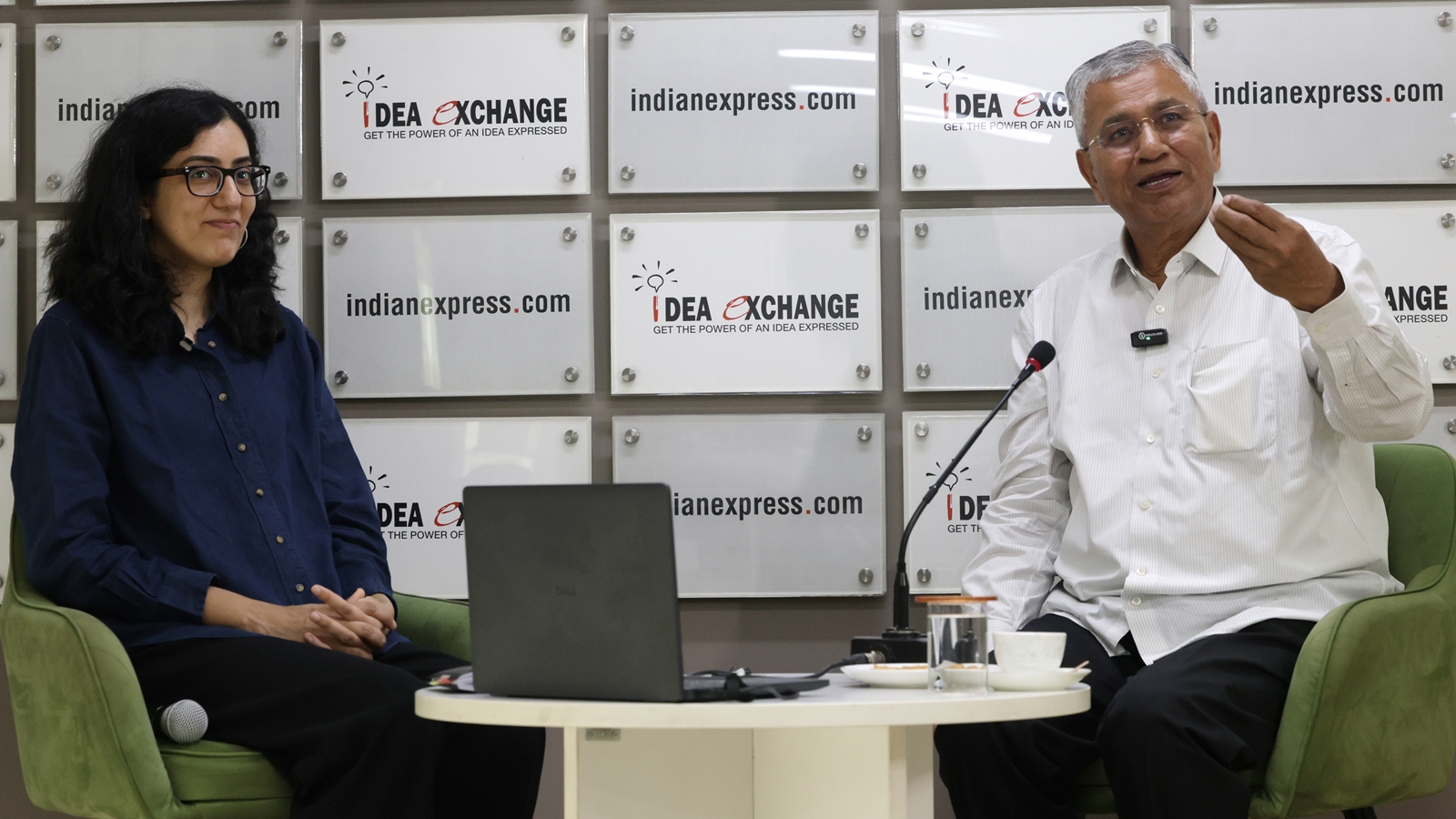 PP Chaudhary, BJP MP and Chairman of the Joint Parliamentary Committee, (right) with Damini Nath, Assistant Editor, The Indian Express (Express photo by Renuka Puri)
Damini Nath: Is the committee considering the German model of positive vote of confidence? Do you think this can prevent governments from falling prematurely?
Story continues below this ad
If a no-confidence motion succeeds and we do not find a middle path, elections would have to be held, but those elections would be only for the remainder of the term, not a fresh five-year period.
In Germany, a no-confidence motion is accompanied by a confidence motion for an alternative government. We can also study other models, such as Japan’s. Sometimes elections happen and yet a deadlock remains. In such circumstances, should there be elections again? Should some relaxation be provided in the anti-defection law? If political actors know that a fresh election will only result in a government serving for one year, that itself may act as a deterrent against destabilising governments. Another possibility is where a state cannot function because no government has a majority. Then, Parliament could exercise the powers of the state legislature for a limited period, similar to certain emergency arrangements. The committee is examining all possibilities.
Damini Nath: In its current state, the first simultaneous election can happen in 2034. Is the committee also considering a phased introduction?
The framework revolves around the appointed date. Once the constitutional amendments come into force and the first meeting of the newly elected Lok Sabha takes place, that date becomes the reference point. From there, elections would move toward a common cycle. Assemblies elected after the appointed date may serve shorter terms so that they align with the national calendar. Under this approach, complete synchronisation would emerge around 2034. If certain state governments agree, their elections could potentially be aligned with Parliamentary elections sooner.
Damini Nath: Can you change this appointed date?
Story continues below this ad
Under Article 368, Parliament has ample powers. A committee can only make recommendations. Ultimately, Parliament decides whether to accept them. If a constitutional amendment is passed with the required majority, Parliament can exercise that power.
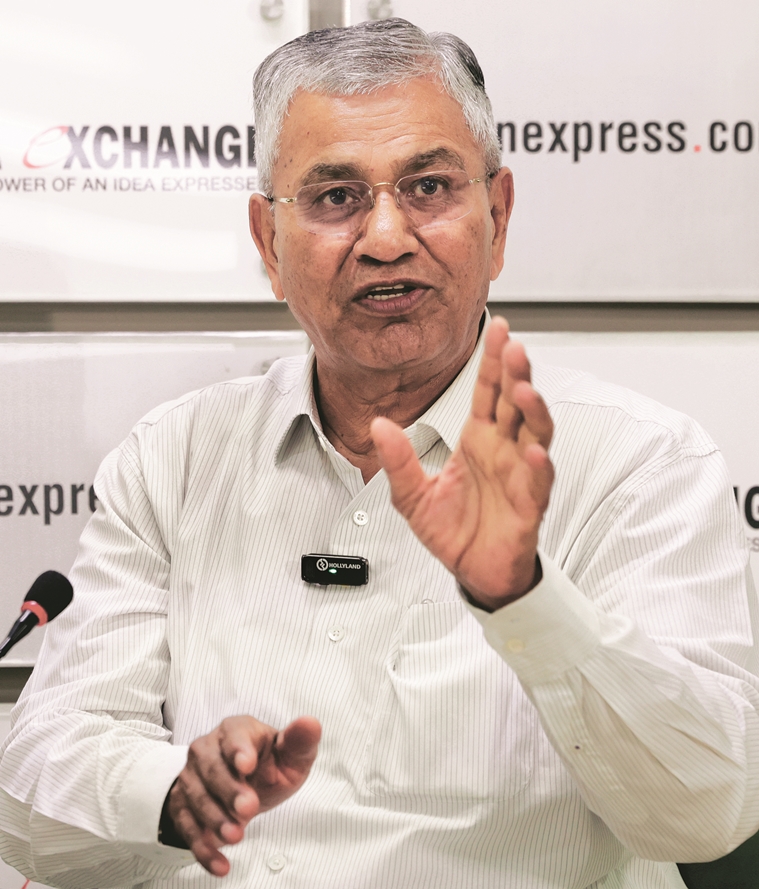 PP Chaudhary, BJP MP and Chairman of the Joint Parliamentary Committee
Sandeep Singh: How do you address concerns over delimitation between southern states and those in the north, where population increase has been the highest?
The states that successfully implemented population control measures should not be penalised. The Prime Minister and Home Minister have indicated that the 1971 Census could continue as the basis for state-wise seat allocation, while a later Census could be used for allocation within states. But that requires a constitutional amendment. If such an amendment is not made, then seat distribution would eventually be based on population, which could mean some states lose seats while others gain them.
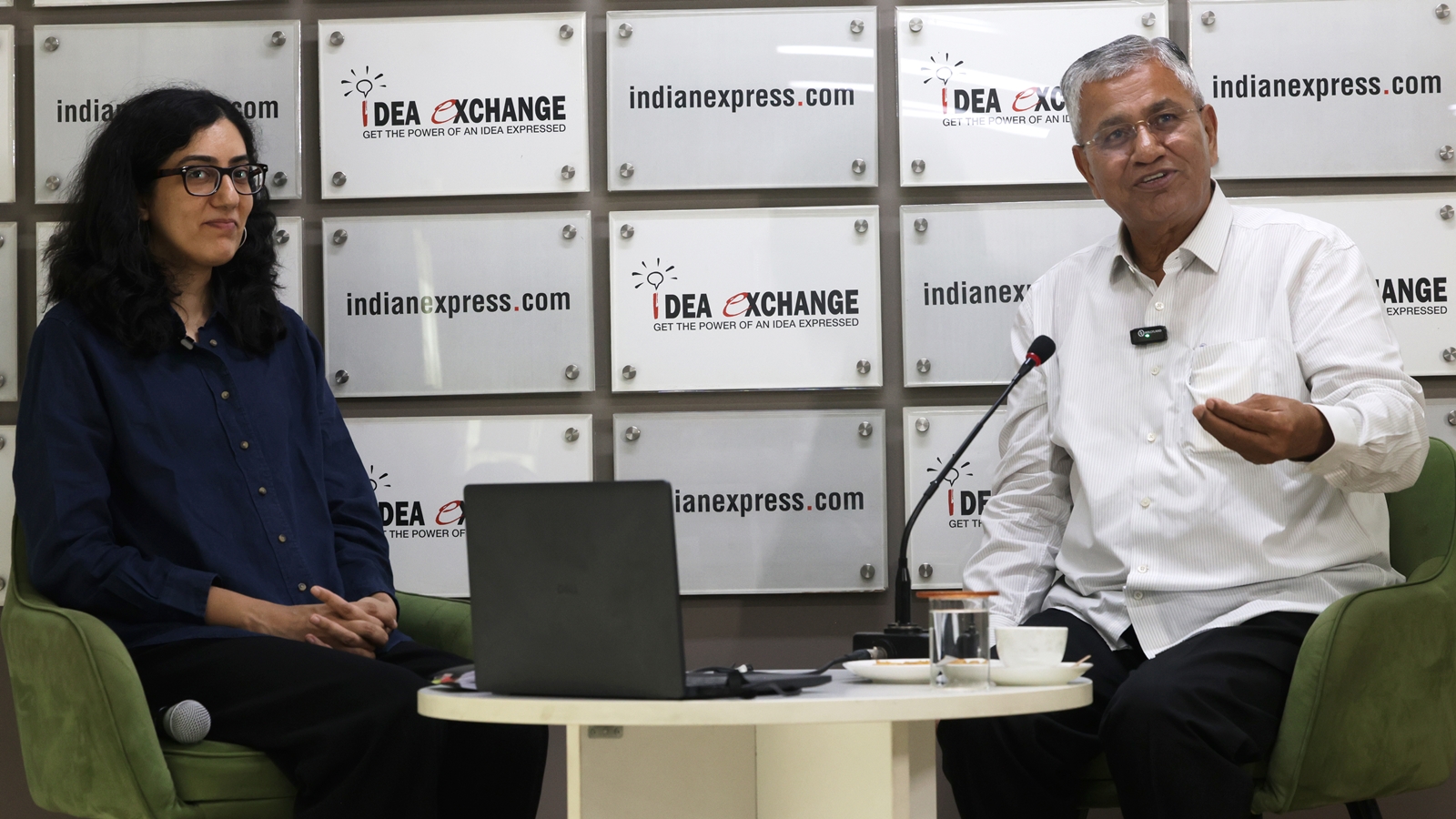 PP Chaudhary, BJP MP and Chairman of the Joint Parliamentary Committee, (right) with Damini Nath, Assistant Editor, The Indian Express (Express photo by Renuka Puri)
Vikas Pathak: You said the 1971 Census should be the national base and the latest Census within states. But the Delimitation Bill referred to the 2011 Census and proposed a 50 per cent increase in seats. Was that technically possible? Because using the 2011 Census would mean applying Article 81, which mandates a population-based allocation, rather than the 1971 Census formula.
Story continues below this ad
In 2002, the Constitution specified that delimitation would be based on the Census after 2026. State-wise seat allocation remained linked to the 1971 Census, while allocation within states was linked to the 2001 Census. The reference to the 2011 Census arose because the government felt the 2026 Census and the subsequent delimitation process might not be completed before 2029. If that happened, women’s reservation could also be delayed. Using the 2011 Census would have allowed the Delimitation Commission to begin work earlier.
The real hurdle is timing. If all parties agree that the 2026 Census will take time, they may decide to return to the 2011 Census. Alternatively, the 2026 Census could be completed quickly and multiple commissions could work simultaneously. Parliament has the power to create such mechanisms. Today, the choice between the 2011 and 2026 Census is ultimately a political decision. It is not for the committee to determine.
Vikas Pathak: You said that if a government falls mid-term, the next government would have a truncated term until the next appointed date. Does this really amount to “simultaneous elections”, or is it mainly about reducing the frequency of elections? Wouldn’t this make the government stronger vis-a-vis the Opposition? Could this weaken checks and balances?
Ours is a parliamentary democracy. The Executive, including the Prime Minister, remains accountable to Parliament at all times. If the government lacks a strong majority and the Opposition is strong, it cannot pass legislation at will. A strong Opposition remains an effective check. Accountability may actually increase because governments would need consensus to pass important legislation. The issues relating to contingencies and safeguards are all under discussion, and the committee continues to receive suggestions.
Story continues below this ad
 PP Chaudhary, BJP MP and Chairman of the Joint Parliamentary Committee
Vikas Pathak: The anti-defection law was strengthened to stop legislators from switching parties, but it has also made party whips so powerful that MPs often cannot express independent views. How do you see this contradiction?
Your concern is valid. In a democracy, an MP should have a voice. Sometimes the party’s position completely dominates the individual representative’s role. That is why any change requires careful balancing. We are discussing how the law should operate in situations where only a short period remains before the next synchronised election. We do not want the law to be misused by either side. This is one of the issues under active deliberation. We are consulting experts and committee members on whether some relaxation should be considered. The broader objective is to ensure that the will of the people is respected. This discussion should not remain confined to the committee, political parties or the government. The media serves as a bridge between the public and the policymakers. Our experience so far has been that, except for a few political parties, almost everyone from civil society — educationists, Padma awardees, institutional heads and ordinary citizens — has broadly supported the idea of simultaneous elections. Their view is that frequent elections affect governance and inconvenience citizens.
People also point to effects on education. Teachers are repeatedly assigned election duties, voter list work and Census work, reducing teaching time. Frequent elections create uncertainty and impose costs on the economy. Labour migration, voter fatigue and repeated mobilisation also have consequences. If India wants to become a developed nation by 2047, major electoral reforms will have to be considered.
 PP Chaudhary, BJP MP and Chairman of the Joint Parliamentary Committee
Liz Mathew: If democracy reflects the will of the people, shouldn’t people have opportunities to express that will more than once every five years? Also, what checks and balances will exist under ONOE?
Story continues below this ad
The first challenge is achieving synchronisation between 2029 and 2034 and then maintaining it thereafter. One issue involves Article 85(2)(b), under which the President or Governor can dissolve the House on ministerial advice. Should safeguards be introduced so that alternative governments are explored before dissolution? Personally, I believe Article 85 deserves reconsideration, though that is not necessarily the committee’s position.
Secondly, if parliamentary terms are extended during an Emergency, the election cycle changes. The Bill currently does not fully address such situations. We need to visualise future contingencies and provide safeguards now rather than face problems later. The existing constitutional framework already provides significant checks and balances. If a government loses support, a no-confidence motion can be moved. If an alternative government can be formed, there is no problem.
The concept of a remainder term is not entirely new. Since 1992, similar provisions have existed in local self-government institutions. Some argue that frequent elections strengthen democracy, while others argue that constant elections encourage excessive spending and distort governance. From 1952 to 1967, Lok Sabha and Assembly elections were held together. Governments remained accountable during that period as well. Taking all these factors into account, it is believed that One Nation One Election would serve the national interest.
Jatin Anand: Don’t simultaneous elections create an unfair advantage for national parties? Won’t national issues overshadow state concerns?
Story continues below this ad
Some argue that regional parties could suffer. Others argue the opposite — that state issues may become even more prominent. My own view is that voters should not be underestimated. When we didn’t have EVMs and voting used to be by paper, the voter understood very well whom to vote for and whom not to. Today, there are EVMs and the voters are more educated than before. They can distinguish between national issues, state issues and individual candidates. Experiences from Odisha, Andhra Pradesh, Tamil Nadu and from earlier elections suggest that voters are capable of making different choices at different levels.
 PP Chaudhary, BJP MP and Chairman of the Joint Parliamentary Committee
Jatin Anand: Will One Nation, One Election require a nationwide Special Intensive Revision (SIR) of electoral rolls first? And what about voting rights for migrant workers?
SIR is a good exercise. We believe in it. The names of people who have died or migrated from one place to another over the last 20-30 years continue to appear on the voter lists of different places. There are many reasons why fake votes get cast. So SIR is a cleanup exercise. And as far as other states are concerned, it is a continuous process. It is the Election Commission’s job to see by when they complete it. But our intention is that the SIR exercise should be done in the whole country as soon as possible. I believe that the SIR process — if One Nation One Election is implemented in 2029 — will be completed throughout the country before that.
Harikishan Sharma: Your party has been rallying behind the idea of simultaneous elections since 1984. There was another idea along with this too — of public funding of elections. Do you think the party will consider that too?
Story continues below this ad
The idea of simultaneous elections has support beyond one political party. The Election Commission, the Law Commission, the Parliamentary Standing Committee on Law and Justice and NITI Aayog have all made recommendations in favour of it. As for public funding of elections, that is a much larger issue. It is outside the scope of this committee. It would require extensive study, data and political consensus before any conclusion can be reached.
Amitabh Sinha: In the Delimitation Bill, the original requirement was that a delimitation commission be formed after every Census and a delimitation exercise shall happen. That wasn’t kept in this Bill. What is the rationale for that?
For clarity, that requirement arises from Article 82 of the Constitution, not from the Delimitation Commission Act itself. The 2002 Amendment provided that delimitation would take place after the Census was conducted after 2026. The Bill primarily deals with the procedure for delimitation, the composition of the commission and how it will function. Parliament is exercising its authority within the framework already laid down by the Constitution.
Jatin Anand: What is your take on the NEET leak?
I am not the person concerned, but I can say that when such problems arise, they are addressed. No system is completely foolproof. The government is vigilant and the Prime Minister is personally monitoring the issue. Beyond that, I do not think it is appropriate for me to comment.
Harikishan Sharma: There has also been controversy over the use of the term ‘cockroach’ in public discourse for people who are critical of institutions. Do you think such language is appropriate in a democracy?
Some issues can become disproportionate compared to their actual significance. I am not commenting on whether a particular statement was right or wrong. But public debate can sometimes magnify matters beyond their real importance.