

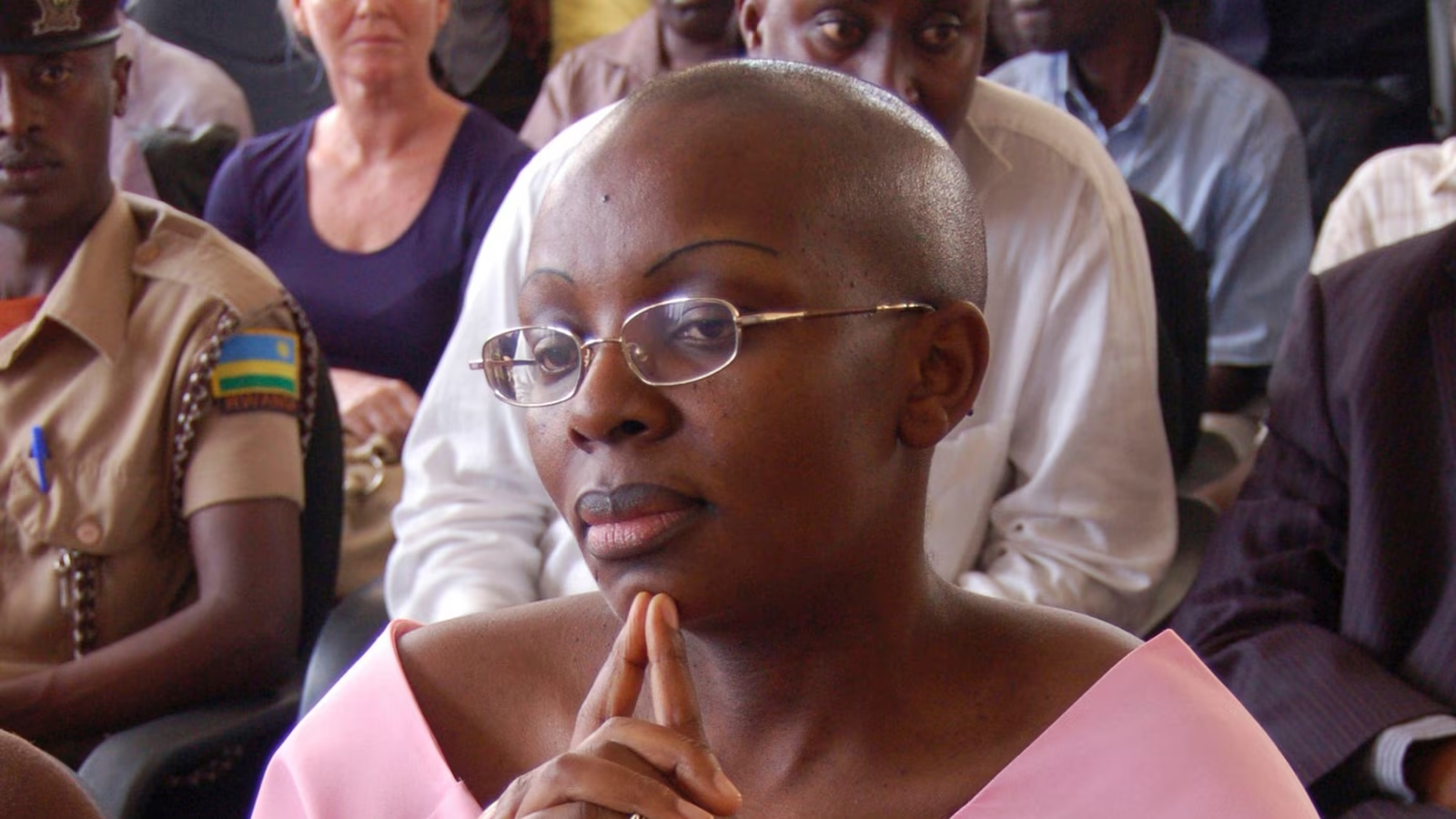
KIGALI, Rwands — The trial of Rwandan opposition leader Victoire Ingabire on charges of plotting unrest against the government was postponed Monday for one day after she told the court she was physically and mentally unprepared for the proceedings after a year in detention.
Ingabire has called the charges against her baseless and a politically motivated case to silence her pro-democracy movement. Prosecutors accuse her of plotting unrest against the government of President Paul Kagame, and she could face many years in prison if convicted.
Ingabire appeared Monday before the high court in Kigali, the Rwandan capital, and said she was not physically fit enough and that her lawyers had told prosecutors in advance to postpone the beginning of her trial.
The presiding judge agreed to postpone the start for one day.
Ingabire also accused authorities of not allowing her to speak with family members who live outside Rwanda. She also cited her inability to speak to her co-accused.
Prosecutors said Ingabire had been in unlawful contact with nine other suspects, including members of the Ingabire-led DALFA-Umurinzi group, which is not recognized by the Rwandan government.
A long-time critic of Kagame, Ingabire has previously been sentenced to prison and has been at times the only government opponent to keep up her activism from within Rwanda. Most of Kagame’s opponents are in exile.
Ingabire had previously led the FDU-Inkingi group, a coalition of opposition parties that also was never permitted to register with the government.
She spent 16 years in exile in the Netherlands and returned to Rwanda in 2010 to launch her political career. She was imprisoned before she could contest the presidential election.
She later was found guilty of conspiracy to undermine the government and of denying Rwanda’s 1994 genocide, charges she has denied. Sentenced to 15 years, she was freed in 2018 after obtaining a presidential pardon.
The government of Kagame, whose party has ruled Rwanda since 1994, has tried to bridge ethnic divisions using legal means and other measures, and has been praised by many for presiding over relative peace and stability.
But he also has faced criticism for what human rights groups say are widespread abuses, a muzzling of independent media and suppression of political opposition. He denies the accusations.