


On the eve of Wimbledon, the sport’s most storied tournament, professional tennis finds itself talking less about champions — and more about checks.
A group of top players announced this week that when the matches begin on Monday, they’ll limit their press conferences to precisely 15 minutes apiece as a form of protest.
What started last month as a debate over prize money is morphing into something else: a story not about fairness, but about naked avarice.
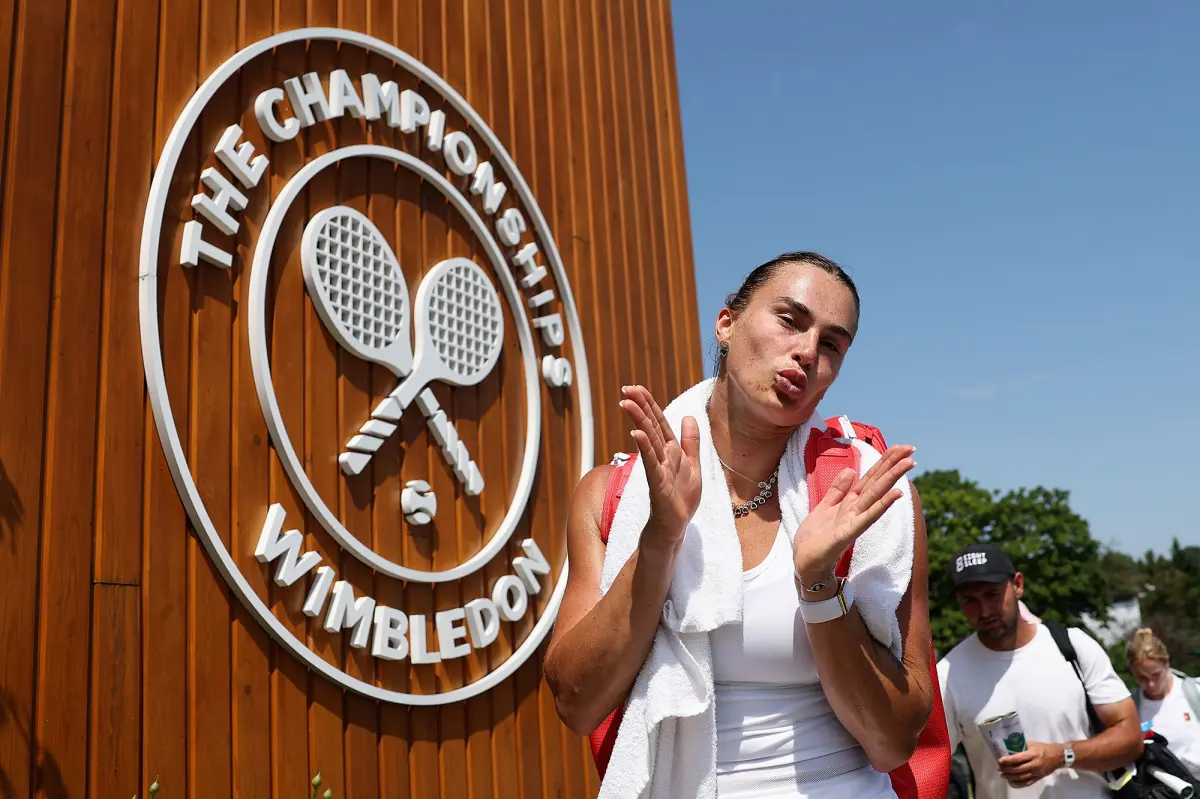
At the center of the battle is top-ranked Aryna Sabalenka, who has been pushing her fellow high-paid players to insist on receiving a greater share of revenues from the Grand Slams, tennis’ four major tournaments.
Her argument is simple enough: no players, no show.
“Without us there wouldn’t be a tournament and there wouldn’t be that entertainment,” she said at this year’s Italian Open. “I feel like definitely we deserve to be paid more percentage.”
Then came a remark that reverberated throughout the sport.
“I think at some point we will boycott,” she declared.
A players’ strike against the sport of kings? Unthinkable.
Yet Sabalenka’s stance has gained significant support from a clutch of top players.
“If everyone were to move as one and collaborate, yeah, I can 100% see” a Grand Slam walkout, American star Coco Gauff said in May.
But the aggrieved athletes are missing an important truth.
Without the golden platforms of the French Open, the Australian Open, the US Open and above all Wimbledon, stars like Sabalenka and Gauff aren’t created in the first place.
Look at Serena Williams, making a return to action at Wimbledon next week.
The 44-year-old’s 23 Grand Slam singles titles her gained international fame, wealth and influence.
She used her clout to expand opportunity for others, fighting for equal prize money and greater respect for women’s tennis.
But Williams has been conspicuously quiet on the payout issue — because today’s fight isn’t about recognition or equality; it’s about already wealthy stars demanding an even larger share of the pot.
The optics are dreadful: Sabalenka, 28, has pocketed $50 million in prize money over her decade-long career, and has lucrative endorsement deals with Nike, Gucci and other luxe brands.
She took to the court at this year’s French Open wearing a $100,000 diamond-and-garnet necklace because “looking good helps me perform better.”
At a time when many fans struggle with the cost of living, hearing some of the world’s wealthiest athletes argue they deserve an even bigger slice of the pie doesn’t inspire sympathy.
Instead, it reinforces every stereotype about elite sports’ detachment from reality.
And the Grand Slams aren’t exactly hoarding cash.
They invest heavily in staging these world-class events and improving facilities — and, crucially, in funding the future of tennis through grassroots participation and development.
In other words, the kind of tennis Sabalenka has left far behind.
Wimbledon, for example, is spending $270 million this year on adding 38 new courts and a new show court to its complex — while giving 90% of any surplus it makes to the Lawn Tennis Association, the game’s governing body in Britain, to train and encourage the next generation of stars.
Tennis is drifting toward the same trap that has bedeviled pro golf in recent years, after LIV Golf tempted players away from the venerable PGA Tour with eye-watering sums of Saudi money.
Some, like Brooks Koepka and Bryson DeChambeau, accepted all too readily; others, like Rory McIlroy and Scottie Scheffler, refused.
Yet almost everyone involved discovered the same thing: There comes a point where another zero on the check no longer enhances your reputation, but trashes it.
Which golfers are regarded most fondly today — those who chased every last dollar, or those who tied their legacies to competition, tradition and sporting greatness?
Nobody objects to elite athletes earning fortunes.
They are exceptional talents, with a short window of opportunity, and deserve to be rewarded accordingly.
But professional sport has always depended on an unwritten contract between players and fans.
Supporters don’t simply admire excellence; they admire sacrifice, commitment and the pursuit of greatness.
If you win $5 million in that pursuit, as Sabalenka did for taking the US Open title last year, then hats off to you.
But the moment star athletes appear to be motivated primarily by the extraction of ever more money, our emotional connection to them begins to erode.
The Grand Slams should be about legacy, rivalries and history.
Instead, thanks to some of their biggest stars, they risk becoming a referendum on greed.
And once a sport loses that argument, repairing the damage is far harder than cashing the next check.
Gavin Newsham is a New York Post contributing writer.