

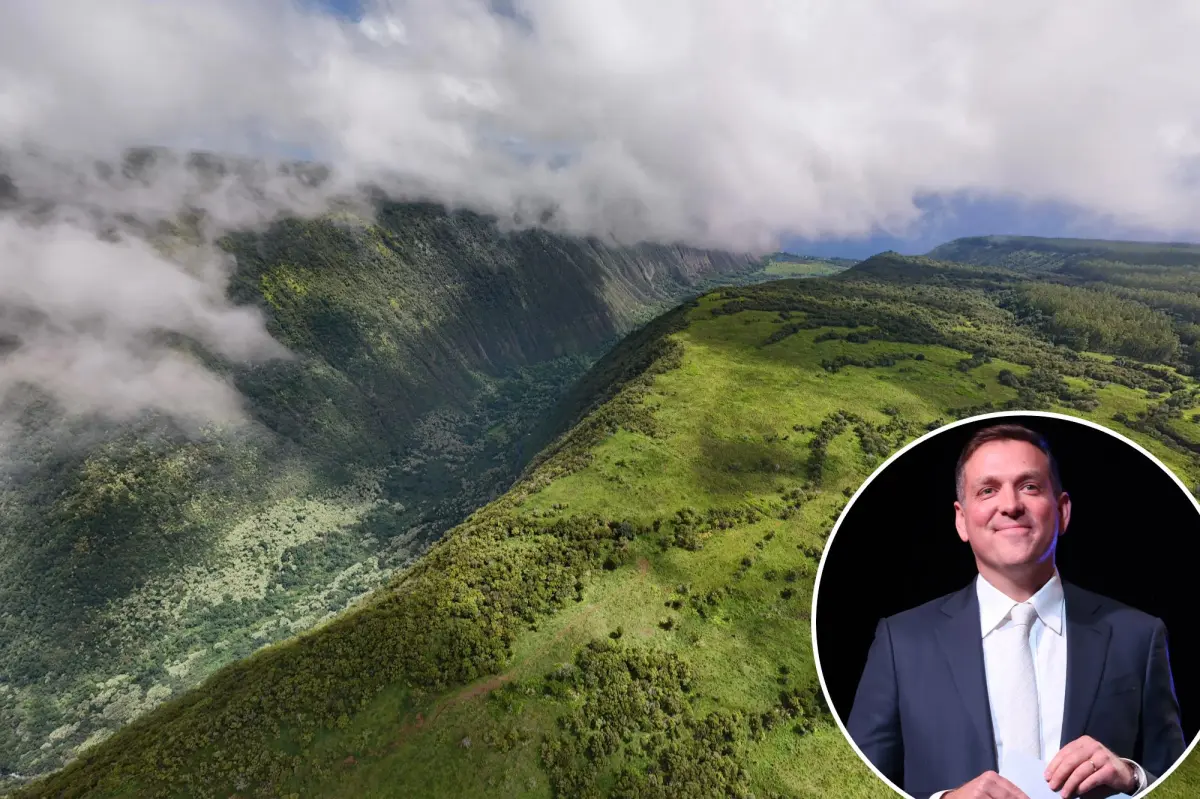

The man behind the Spurs dynasty isn’t chasing another trophy. He’s chasing more grazing land in the middle of the Pacific.
Peter J. Holt, the longtime principal owner of the San Antonio Spurs, has quietly expanded his footprint in Hawaii with an $8 million off-market land purchase that adds another 100 acres to his growing Big Island cattle ranch, The Post has learned.
The transaction increases Holt’s holdings to roughly 900 acres on the slopes above the Waipio Valley corridor — one of the most historically significant regions in Hawaii and an area long tied to the island’s ranching heritage.
The acquisition stands in stark contrast to the approach taken by some of Hawaii’s most prominent billionaire landowners.
Meta founder Mark Zuckerberg has spent years assembling a sprawling compound on Kauai. Oracle founder Larry Ellison controls nearly all of Lanai. Salesforce founder Marc Benioff has amassed extensive holdings near Waimea on the Big Island. And Jeff Bezos is making a dent on Maui’s waterfront.
Holt, meanwhile, is buying pastureland.
The Texas businessman is best known as the steward of one of the NBA’s most successful franchises. Under Holt’s ownership, the Spurs captured five championships and became one of the league’s defining dynasties behind stars including Tim Duncan, David Robinson, Tony Parker and Manu Ginobili.
His wealth, however, was built far from the basketball court.
Holt serves as chairman of HoltCAT, the San Antonio-based heavy equipment company controlled by the Holt family. The business is the largest Caterpillar dealership in the United States and traces its roots back to 1933, when Holt’s father, Benjamin Holt, founded the company. Today, the family-owned enterprise operates across Texas and provides construction, mining, energy and industrial equipment to some of the nation’s largest industries.
The newly acquired parcel was once part of Parker Ranch, a operation that helped establish Hawaii’s place in American cattle ranching history. The property changed hands in a neighbor-to-neighbor transaction that never reached the public market.
Rather than planning a luxury estate or private retreat, Holt is using the land to expand a working cattle operation in a region that has supported ranching for generations.
Paul Stukin, founder and executive director of Deep Blue HI at Sotheby’s International Realty, who represented the seller, said the island’s natural characteristics make it one of the world’s premier ranching destinations.
“The grass never stops growing here, and a serious rancher figures that out fast,” Stukin told The Post. “The volcanic soil, the elevation, the consistent rainfall above Waimea, it produces year-round without the harsh winters that shut down mainland operations for months at a time.”
The parcel’s history is deeply intertwined with the island’s agricultural legacy.
“Parker Ranch did not become one of the largest cattle operations in American history by accident. The land made it possible and it still does,” Stukin said.
For Stukin, Holt’s decision to invest in ranchland rather than build another billionaire compound speaks volumes.
“Anyone can buy land in Hawaii and put a house on it. Peter Holt chose to put cattle on it, and that tells you everything about who he is.”
The purchase comes at a time when wealthy buyers continue to reshape ownership patterns across the Hawaiian Islands, particularly on the Big Island, where large tracts of land have become increasingly sought after by investors, tech moguls and ultra-high-net-worth families.
Yet Holt’s move aligns more closely with the island’s historic identity than with the modern trend of trophy compounds and private enclaves.
“The paniolo tradition has been alive on this island for over 200 years. When you ranch here you are not starting something, you are continuing something,” Stukin said.
Paniolo, Hawaii’s famed cowboys, have worked the island’s ranches since the early 19th century, creating a culture that predates many of the cattle traditions associated with the American West.
Stukin believes Holt may not be alone for long.
“I do expect to see more buyers like him. The compound buyers came first. The serious land stewards are coming next, and that wave is just beginning.”
The Big Island offers a rare combination of attributes that few places in the world can match, according to Stukin.
“This is the youngest land on the planet, still being formed, with active volcanoes, world class ranching, and six climate zones on a single island,” Stukin said. “There is nowhere else like it on earth, and the most important land deal here this year never hit the market. It never needed to.”