


GUWAHATI Odisha’s Satkosia Tiger Reserve has been a tough lesson for the National Tiger Conservation Authority’s (NTCA) big cat conservation programme across 12 tiger reserves in less than two decades.
In collaboration with the Wildlife Institute of India (WII), the NTCA released a publication titled “Reintroduction & Population Recovery of Tigers in India: Field Experiences & Key Learnings” in New Delhi on Sunday (June 28, 2026).
Editorial | Out of the fortress: On protecting India‘s tigers
A comparative chart conveys that the current population of tigers, estimated at 288 across the 12 tiger reserves analysed, is almost 658% more than the 38 recorded over 16 years of the reintroduction programme.

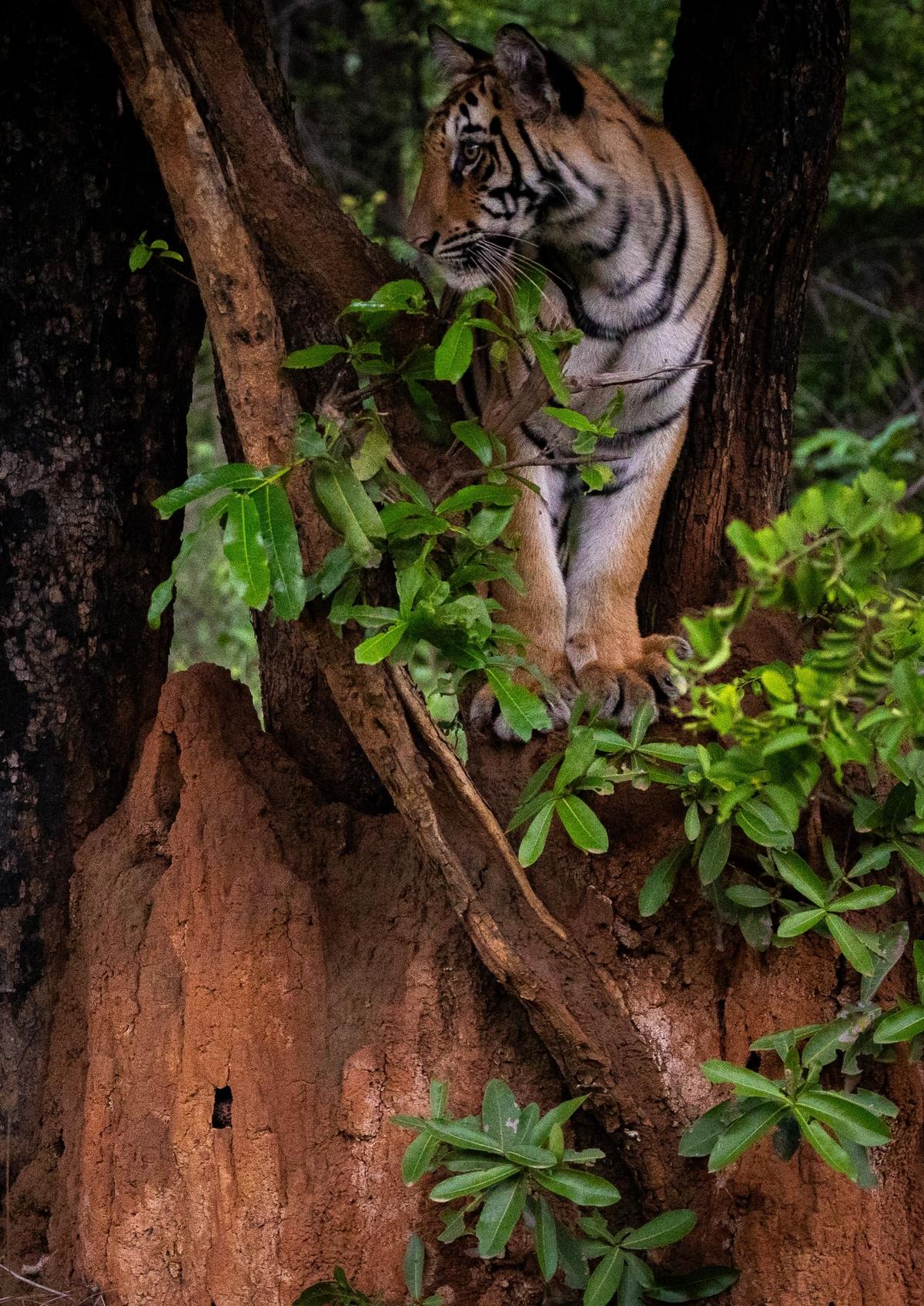
Odisha’s Satkosia Tiger Reserve provides valuable lessons for future tiger recovery initiatives. Photo: Special Arrangement
The first such exercise was the reintroduction of two female and a male tiger from Rajasthan’s 1,334 sq. km Ranthambore Tiger Reserve to the 1,203.33 sq. km Sariska Tiger Reserve in the same State in 2008. The last exercise was in 2024, when 2 female tigers were reintroduced from Maharashtra’s 578 sq. km Tadoba-Andhari Tiger Reserve in Odisha’s 2,750 sq. km Simlipal Tiger Reserve in 2024.
The success of the reintroduction programme, however, has not been uniform across the 12 tiger reserves. While the number of tigers in Simlipal doubled from 15 to 32 in about two years, the striped cat population in Sariska took almost 18 years to record 56 from nought.

The two-female-one-male experiment has been more successful in Madhya Pradesh’s 1,598 sq. km Panna Tiger Reserve, where the current tiger population is 88. Panna had no tigers when the reintroduction programme began in 2009 with a feline each from the State’s Kanha, Bandhavgarh, and Pench Tiger Reserves.
Tiger restoration challenges
According to the NTCA-WII assessment, the 963.87 sq. km Satkosia represents one of the most important case studies highlighting the complexities and challenges associated with tiger restoration in India.
“Satkosia was identified as a potential tiger recovery site due to its extensive forest cover, relatively large protected area, and historical presence of tigers. However, by the early 2000s, the tiger population declined significantly due to habitat degradation, prey depletion, and anthropogenic pressures,” the report said.
The current population of tigers, estimated at 288 across the 12 tiger reserves analysed, is almost 658% more than the 38 recorded over 16 years of the reintroduction programme. Photo: Special Arrangement
The NTCA and the Odisha Forest Department initiated Satkosia’s tiger reintroduction programme in 2018. The programme aimed to establish a founder population and initiate natural breeding within the reserve.
Satkosia had one tiger when a male and a female were introduced from Kanha and Bandhavgarh. This protected area in the Eastern Ghats recorded none in 2026.

“However, the restoration effort faced several challenges soon after the release of the relocated animals. The translocated tigers encountered difficulties in adapting to the new environment, and the landscape experienced considerable human-tiger conflict, including incidents of livestock depredation and negative local responses,” the NTA-WII report said.
One of the relocated tigresses remained in the landscape for an extended period, but the programme failed to establish a self-sustaining breeding population.
“The Satkosia experience demonstrated that successful tiger restoration requires more than the availability of suitable forest habitat. A recipient landscape must possess adequate prey populations, secure and inviolate habitats, effective protection mechanisms, ecological connectivity, and social acceptance among local communities before initiating translocation,” the report said.
“The failure of the programme did not indicate that tiger reintroduction is ineffective, but rather emphasised the importance of addressing the underlying factors responsible for population decline before attempting restoration. Satkosia, therefore, provides valuable lessons for future tiger recovery initiatives, highlighting that reintroduction should be viewed as a long-term ecological process requiring extensive preparation, adaptive management, and continuous monitoring rather than a single conservation intervention,” the report concluded in the section dedicated to Satkosia.
Published – June 29, 2026 03:18 pm IST