

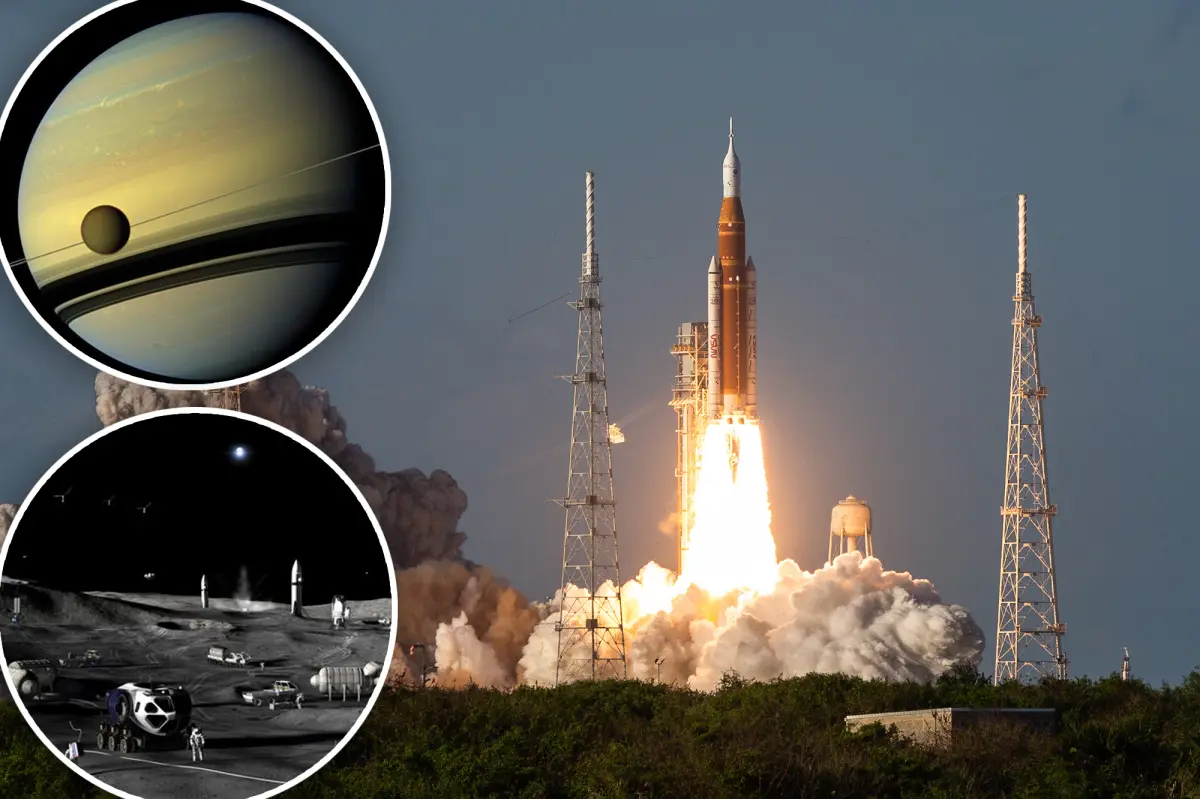
They’re over Saturn’s moon about this idea.
Scientists claim that the “abundant resources” on Saturn’s largest moon could make it the ideal place to establish an interplanetary pit stop for astronauts embarking on deep space voyages. This somewhat out-there proposal was floated in a NASA-backed study that’s currently under review for publication in Acta Astronautica.
“Titan is gushing with hydrocarbons — what we call oil and natural gas on Earth,” the study’s head author Conor Nixon, an astronomer with the Goddard Space Flight Center, told Universe Today.
Indeed, the massive moon — which is about 50 percent wider than Earth’s own rocky satellite –– has many attributes that make it seemingly appealing as a cosmic stopover. It is the only body beyond Earth to have a dense, nitrogen-rich atmosphere as well as rivers, lakes and seas filled with methane and ethane — potential precursors to life.
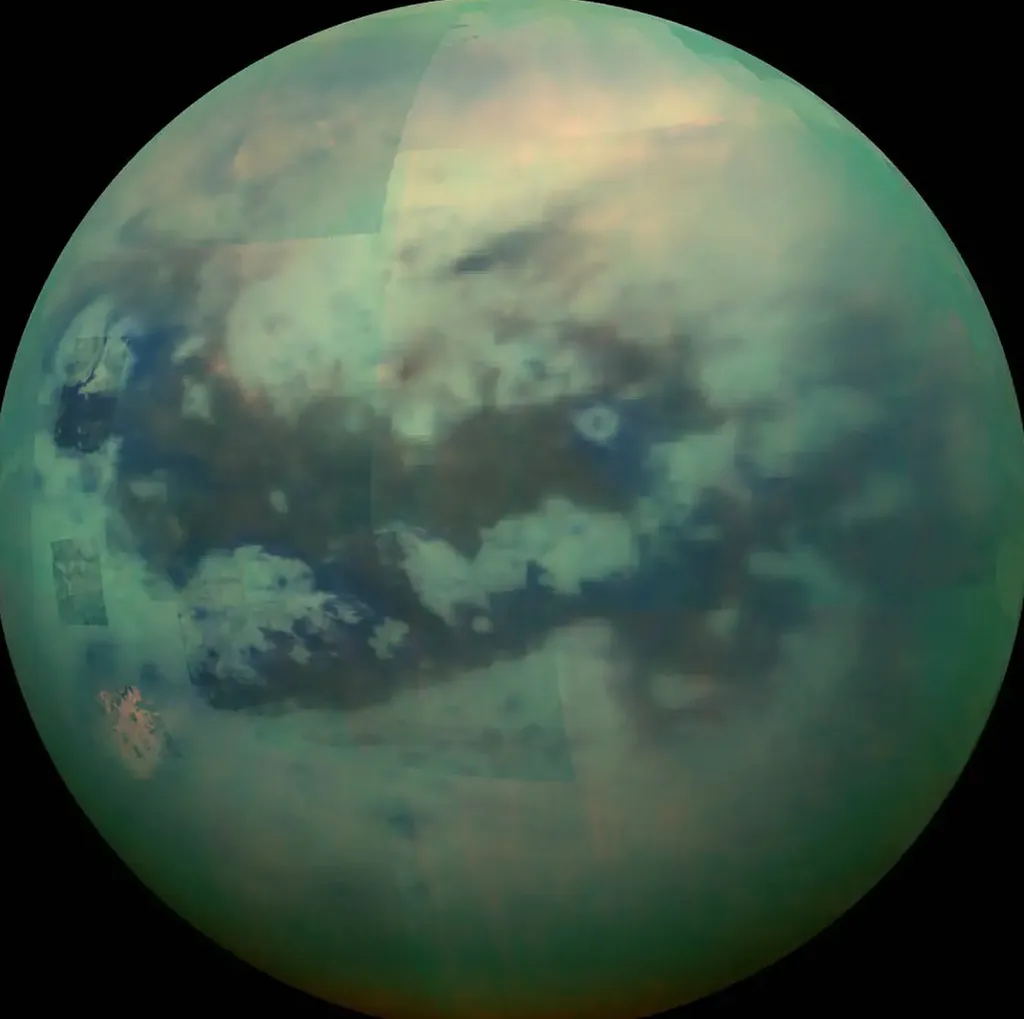
Nixon and his team explored the potential uses for these vast reservoirs of hydrocarbon, concluding that Titan is potentially viable as a home base. Coincidentally, Earth’s moon, which NASA said we could start building a base on as early as 2027, features a far more scant supply of hydrocarbons such as methane, Futurism reported.
“This combination of abundant reduced carbon, along with available nitrogen and oxygen makes Titan an enticing world rich in resources,” their team wrote.
In an email to Universe Today, Nixon noted that it was comprised of 5% methane — which is used in home heating and cooking — while the surface harbors “heavier hydrocarbons” like “propane used in BBQ tanks, butane used in lighters, as well as kerosene and gasoline.
“Besides burning these hydrocarbons, we can also make a lot of products from them: plastics, synthetic rubber, and feedstocks for everything from solvents to pharmaceuticals, and even foods,” he said.
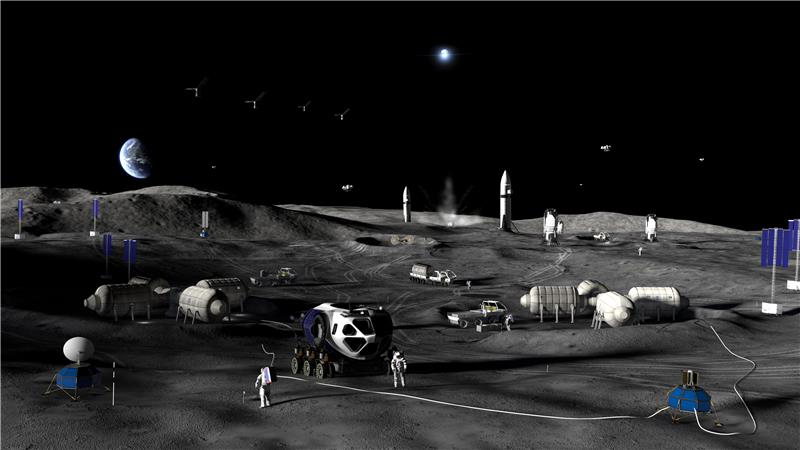
From this, the astronomer deduced that it could either serve as a more permanent settlement or as an intergalactic gas station.
According to his memo, astronauts could refuel while either returning to Earth or voyaging to the far-flung reaches of our solar system such as Neptune, Uranus or even the other Saturnian moons.
When a spacecraft touches down for a lunar layover, per Nixon, they’d be replenishing not just fuel but “raw ingredients for food, perhaps for 3D printers used to make spare parts, textiles, utensils, and more.”
Of course, Titan presents some, well, Titan-ic challenges to setting up a cosmic pit stop. Temps average a frigid negative 290 degrees Fahrenheit, the atmospheric pressure is also 50 percent higher than on our planet, and the force of gravity is one seventh of what humans are accustomed to, among other deterrents.
Nonetheless, establishing a cosmic stopover could be essential if we plan to voyage ever-deeper into space.
“While such visions are speculative for the time being the unique resources available on Titan in the outer solar system imply that eventually missions will be be developed to take advantage of them.” the paper concluded.
In 2028, NASA is planning to launch operation Dragonfly, a recon mission to see if Titan has the necessary ingredients to support life.