
5 min readNew DelhiJul 1, 2026 12:33 PM IST
Artificial intelligence is everywhere, from the apps you use every day to your email, web browser, and shopping sites. Now, AI is making its way to your smartphone keyboard, courtesy of Singapore-based startup Acti. The startup has launched an AI-powered keyboard that works across iOS and Android apps, letting users build custom AI shortcuts using plain English.
The idea behind Acti is simple: the keyboard, perhaps the most frequently used feature on your smartphone, can become even more intuitive and useful with AI agents. Think of the mobile keyboard as the natural user interface for interacting with AI on your smartphone. Not the apps or even the operating system, but the humble keyboard, a core part of the smartphone experience that hasn’t been evolved in years and has largely been neglected.

Acti is making the smartphone keyboard not only more intelligent but also transforming it into an AI companion: one that many users may not have realized they needed. Instead of forcing people to switch between apps, the startup is bringing AI assistance directly into the typing experience.
Young Wang, Acti’s founder and CEO, is the driving force behind the AI-powered keyboard, which is available as a free download from the Apple App Store and Google Play Store in major markets, including India.
Acti eliminates the need to switch between apps by bringing AI agents directly into the smartphone keyboard. Simply put, you can invoke AI agents directly from the keyboard. Users can create custom shortcuts in natural language, enabling personalized AI-powered workflows without any coding.
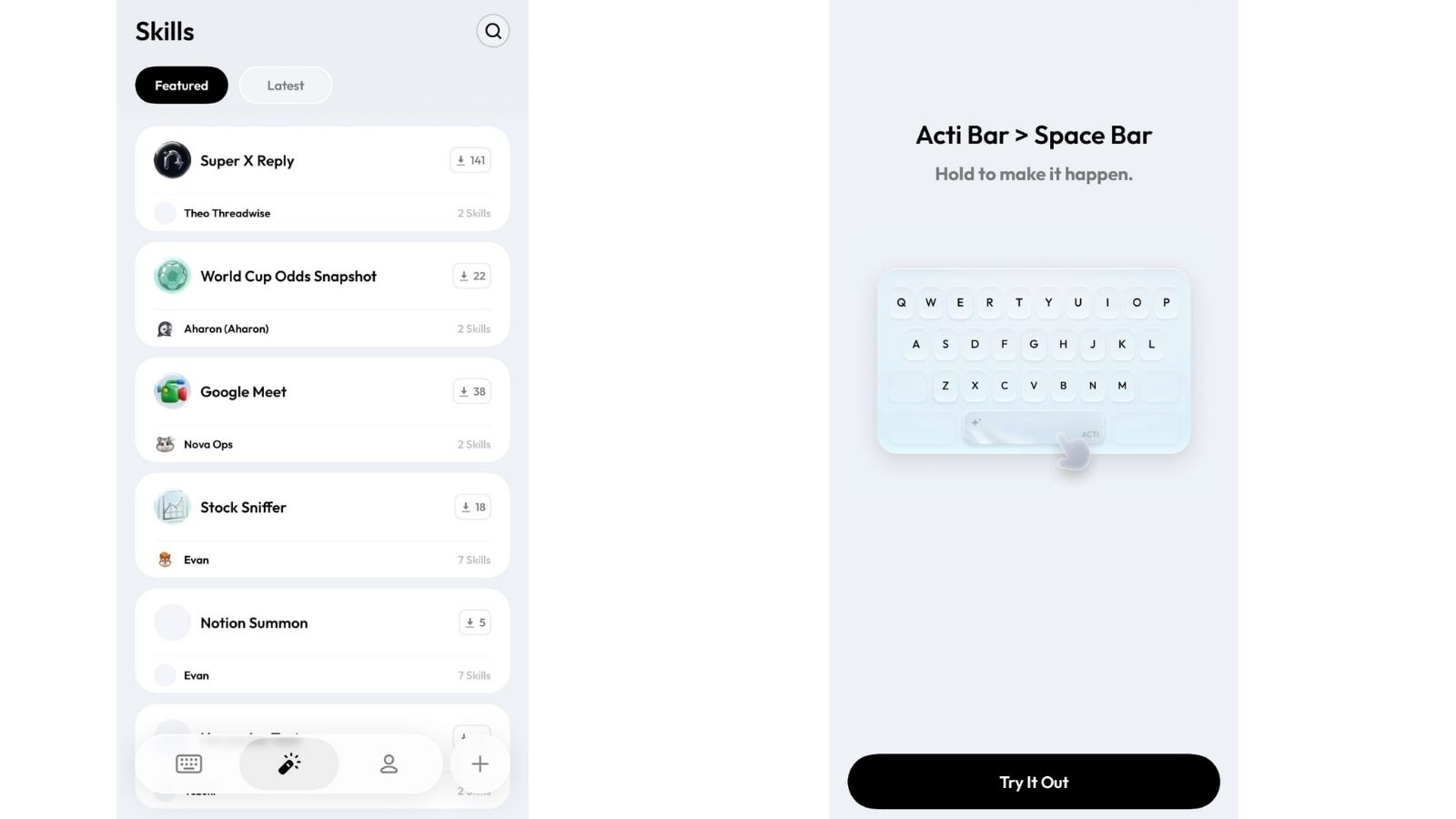 Acti aims to make AI more accessible by integrating it into the smartphone keyboard instead of standalone apps. (Image: ACTI)
While AI is clearly making its way into consumer devices and apps, tech companies are still taking time to build a seamless AI user experience on personal devices. Even Apple, a company known for its focus on user experience, has struggled to fully integrate AI into its software in a smooth and cohesive way. While we all use ChatGPT, its smartphone interface doesn’t feel truly personal. Acti addresses these constraints and removes friction by meeting users where they already are- in messaging apps, email clients, notes, or browsers.
The intent behind Acti is to create a smartphone keyboard that works across apps, without which mainstream adoption can be difficult. Although many users are already using AI chatbots and AI agents, Acti demonstrates how AI can be embedded into the interfaces we already use. Acti enables users to get contextual information like restaurant recommendations or stock prices directly within chats, eliminating the need to switch between apps or search engines.
Story continues below this ad
Acti uses Google’s Gemini models to power its AI features. A key feature, called Skills, lets users create custom keyboard shortcuts that automate tasks like translating messages or sharing meeting links. It uses a local-first approach, keeping user data on the device by default for privacy. It does not access or store private messages or personal context unless a user explicitly triggers a feature that requires external processing.
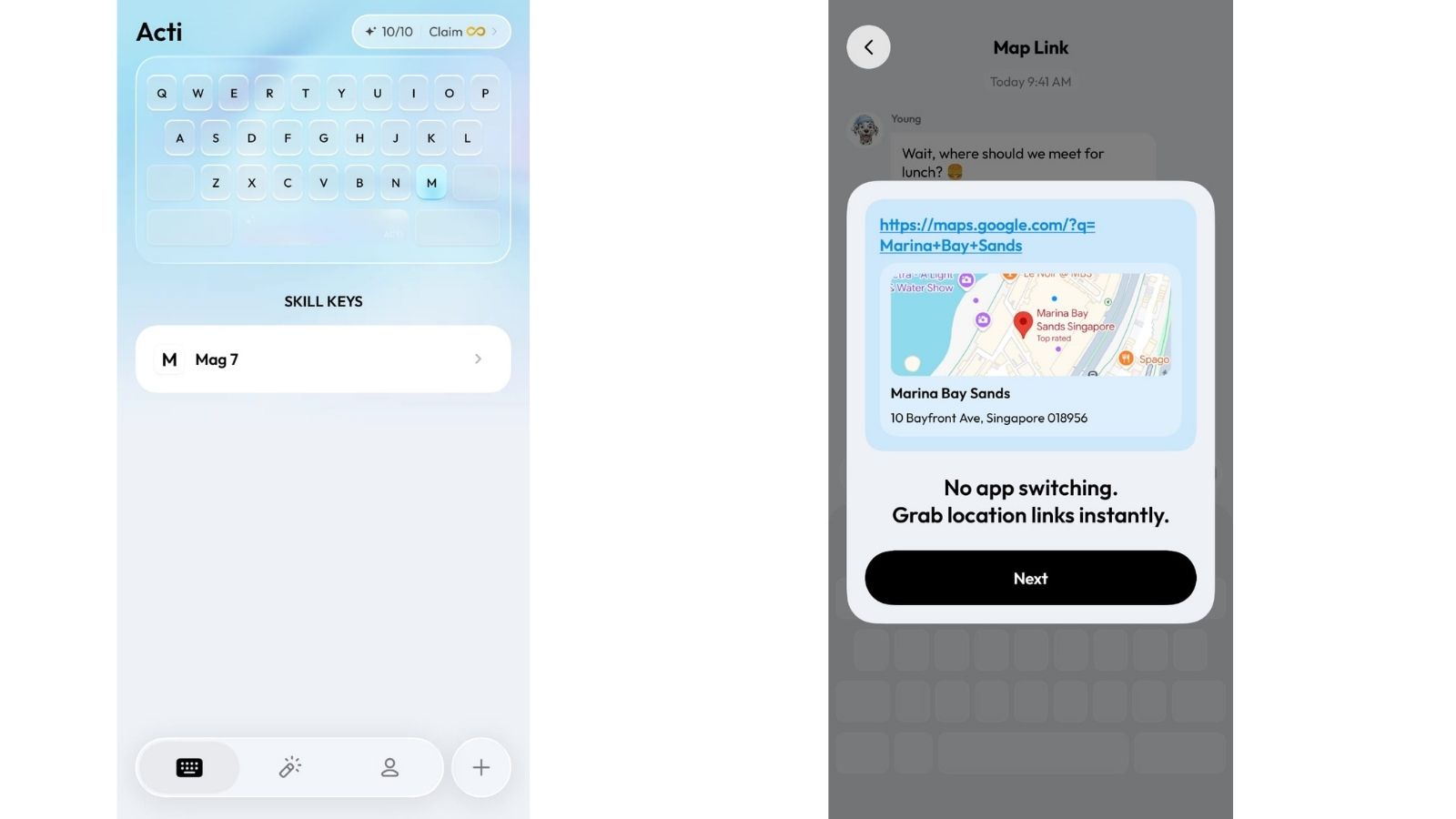 Acti allows users to create custom AI shortcuts in plain English, automating everyday tasks directly from the keyboard. (Image: ACTI)
The startup argues that the smartphone keyboard is the perfect interface for mobile AI; it is more natural than widgets, more accessible than apps, and more contextual than system-level assistants. However, the challenge is that users stick to a keyboard for a long time and do not change it frequently, as they develop muscle memory.
Acti’s biggest differentiation is that it is reimagining the smartphone keyboard: a tool most users are already familiar with by embedding AI into it. This could encourage users to try AI by integrating AI agents directly into the tools people already use every day, rather than requiring them to switch to new interfaces. This also addresses a key issue with consumer AI, which is not quickly adopted as tech companies originally expected.
Although the Singapore-based startup is trying to solve mobile AI, the question is whether average consumers will agree that AI agents belong directly in a phone keyboard – not a dedicated app or system-level assistant. By adding AI directly into the typing interface and allowing users to create custom shortcuts using natural language, Acti offers an interesting approach to the mobile AI problem. However, the challenge for the small startup is not just adoption, but also addressing privacy concerns and monetisation.