

Seattle cleaned itself up to host the World Cup the way a child cleans his room before his parents come upstairs: by shoving the dirty laundry under the bed and stuffing everything else into the closet.
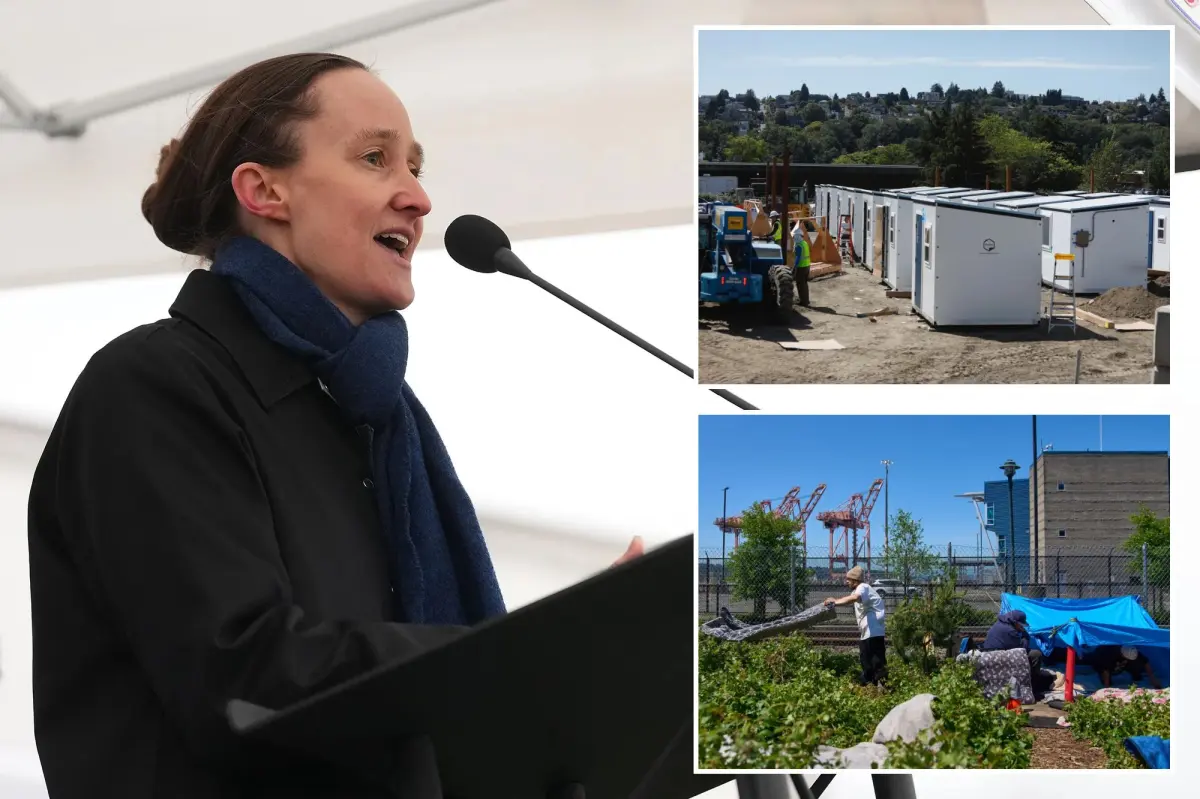
Socialist Mayor Katie Wilson herded thousands of drug addicts away from the SoDo neighborhood’s Lumen Field football stadium and nearby Downtown’s hotels, then bragged that “Seattle is ready” for the massive influx of international visitors.
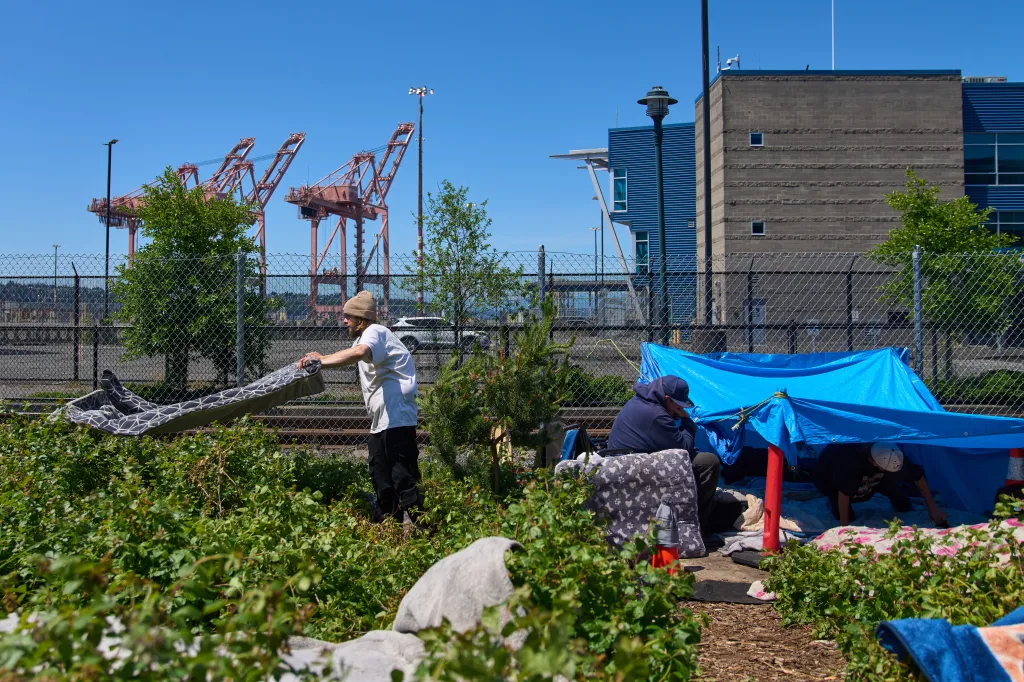
But walk just a few blocks, and the truth crowds the sidewalk — hunched over and smoking fentanyl.
This week I joined Jonathan Choe, senior fellow at the Discovery Institute, and Andrea Suarez, founder of homeless outreach group We Heart Seattle, for what we called a “Doom Loop Tour” through the parts of Seattle that officials hope World Cup visitors never see.
It was just a few hours before Monday’s Belgium-Egypt face-off, the first of six matches to be held in the Emerald City.
At 12th and Jackson, in the Chinatown-International District that overlooks the stadium, hundreds of people clustered on corners to openly smoke fentanyl and staggered through the streets like a horde from “The Walking Dead.”
Drug deals went down in plain view.
Minority business owners, especially the district’s Asian shopkeepers that have been abandoned by the city for years, were left to fend for themselves.
Many had boarded up their storefront windows.
One had to intervene to stop a drugged-out vagrant from breaking into his car while we watched.
A pair of people who we took to be charity workers distributed food to the addicts.
But when we tried to speak with them, the reality became clear: The food appeared to be bait to draw in new customers for their illegal drug sales.
We spoke with a dazed-looking girl who looked no older than 15, wearing a loose-fitting bra and torn, unbuttoned jeans.
In one hand she held a straw. In the other, fentanyl foil.
Suarez, who personally interacts with homeless people on the streets and gets them into housing and treatment without the city’s help, told me she believed the girl was a victim of trafficking.
The teenager declined her offer of assistance, but accepted a hug.
Next we attempted to walk through Lewis Park — a natural area with a hiking trail that’s become a no-go zone.
In the twilight, I could make out the flicker of dozens of lighters burning fentanyl along the path.
Suarez called out to see if anyone needed services.
Addicts pelted her and Choe with expletives and half-eaten pints of Ben & Jerry’s ice cream in response.
A few of those wandering nearby warned us not to go farther in, saying it was too dangerous: Honduran drug gangs are said to operate inside the park.
By abandoning the addicts and the homeless to the gangs, the city is feeding an ecosystem of exploitation and violence.
Outside the park we came across a mostly naked, emaciated body on the ground. I could not tell if it was a man or a woman. Suarez immediately called 911.
We could see the lights of Lumen Field, where hundreds of thousands of soccer fans will be flocking in the coming weeks, sparkle as the sun went down.
Our view was obstructed by a barely clothed prostitute watching the sunset.
Wilson pledged to house 500 homeless people by the start of the World Cup.

Last week, she celebrated the opening of a tiny-home village with space for only 75 people in small shacks.
But as Suarez discovered, no one has actually moved in to the taxpayer-funded village.
Staffers were there, but units sat empty.
For more than a decade, Seattle has followed the “housing first” model, which treats housing as the primary response to homelessness without demanding treatment, mental-health care or accountability.
Scott Turner, secretary of the US Department and Housing and Urban Development, recently cut off the “housing first” experiment and pulled its federal funding, declaring it a failure and prioritizing treatment and psychiatric services instead.
Since 2021, when the King County Regional Homelessness Authority began operations, homelessness in Seattle has gotten worse — while millions of taxpayer dollars have gone up in smoke.
On an average sunny day all up and down Rainier Avenue between South Seattle and downtown, addicts crowd bus stops and medics respond to overdoses, often too late.
This isn’t just a Chinatown problem. It’s citywide.
Except right in front of the stadiums and hotels, where soccer fans can enjoy the World Cup fanfare without distress.
But among locals, the fear running through Seattle is that when the games are over, Katie Wilson’s hidden mess will spill back out onto every street corner, like it did before.
Ari Hoffman hosts “The Ari Hoffman Show” on Seattle’s Talk Radio 570 KVI and is the Post Millennial’s West Coast editor.