

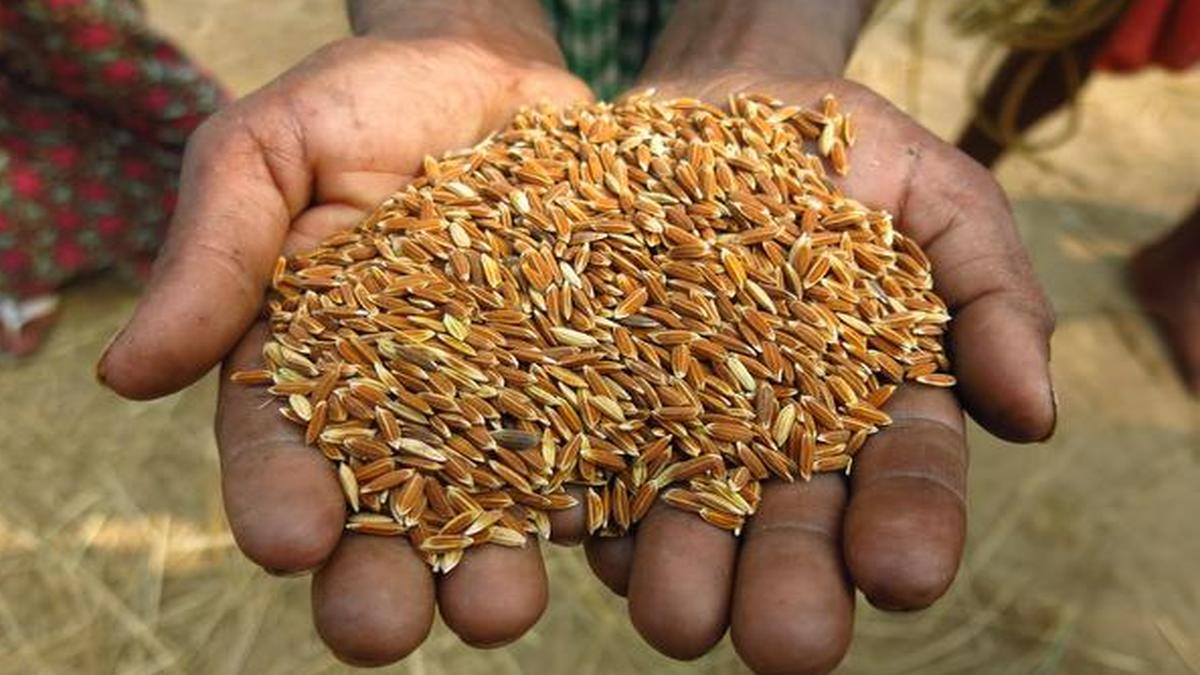

Representational image only. File
The story so far: The Union Food and Public Distribution Department on Wednesday (June 24, 2026) published a draft of the proposed amendments to the National Food Security Act (NFSA). The draft is uploaded on the department’s website. The public can comment on the amendments till July 13.
The amendment: A new provision In Section 3 of the National Food Security Act, 2013, proposes that every person belonging to households covered under the Antyodaya Anna Yojana (AAY) shall be entitled to 7 kg of foodgrains per person every month to a maximum of 35 kg per household. For AAY cardholders, this allocation will be free of any charges. Earlier, it was 35 kg per AAY household, irrespective of the number of members in the household.
Reason: The reason the Union government has given in the notice, along with the draft amendment, is that the existing household-based entitlement under the AAY, though intended as a protective measure for the most vulnerable families, results in significant inequities depending upon the size of the household.
“Smaller households receive a higher per-capita entitlement, whereas larger households receive a lower per-capita entitlement, which may fall below the entitlement available to priority households,” the notice adds. The government also maintains that the aim and purpose are to remove “intra-category inequities, provide for more rational food grain allocation and better align entitlements with nutritional requirements.”

Criticisms: Certain Opposition-ruled States and activists of the Right to Food Campaign have voiced concerns over the amendment. Kerala Food Minister Anoop Jacob has told the media that the State government will write to the Union government against the proposed amendment. He said the allocation of 35 kg per AAY households must continue. He said the removal of this will result in decreased allocation to States such as Kerala.
Anuradha Talwar, an office bearer of the Right to Food Campaign said the amendment will bring a “North-South divide” in food-grains allocation. She said the number of people in a household in families in South is less than the north Indian families and the smaller families will get lesser allocations. “Also number AAY has not been revised as the census was delayed. A large section of the population, who must come under AAY, are not getting the benefits of the Food Security Act despite the increase in population,” she said adding that instead of increasing the allocation, the government is decreasing it.
Another issue the activists are flagging is that they have been demanding allocation of 14 kg per person. They argue that if the government wants to base the allocation on the recommendations of the Indian Council of Medical Research, then pulses and edible oil must also be provided to the deserving families. “Poorest of the poor doesn’t have market access to buy essentials in the market rate. So the government must provide pulses or cooking oil for them,” Ms. Talwar added.
The next step: After considering the comments from the public, the government is likely to place a fresh draft before State governments and other departments. After these consultations, a final draft will be brought to Parliament. The process is unlikely to happen in the upcoming Monsoon Session of Parliament. Since the matter is politically sensitive, the government is likely to take careful steps as elections to States like Uttar Pradesh are also round the corner.
Published – June 26, 2026 03:08 pm IST