

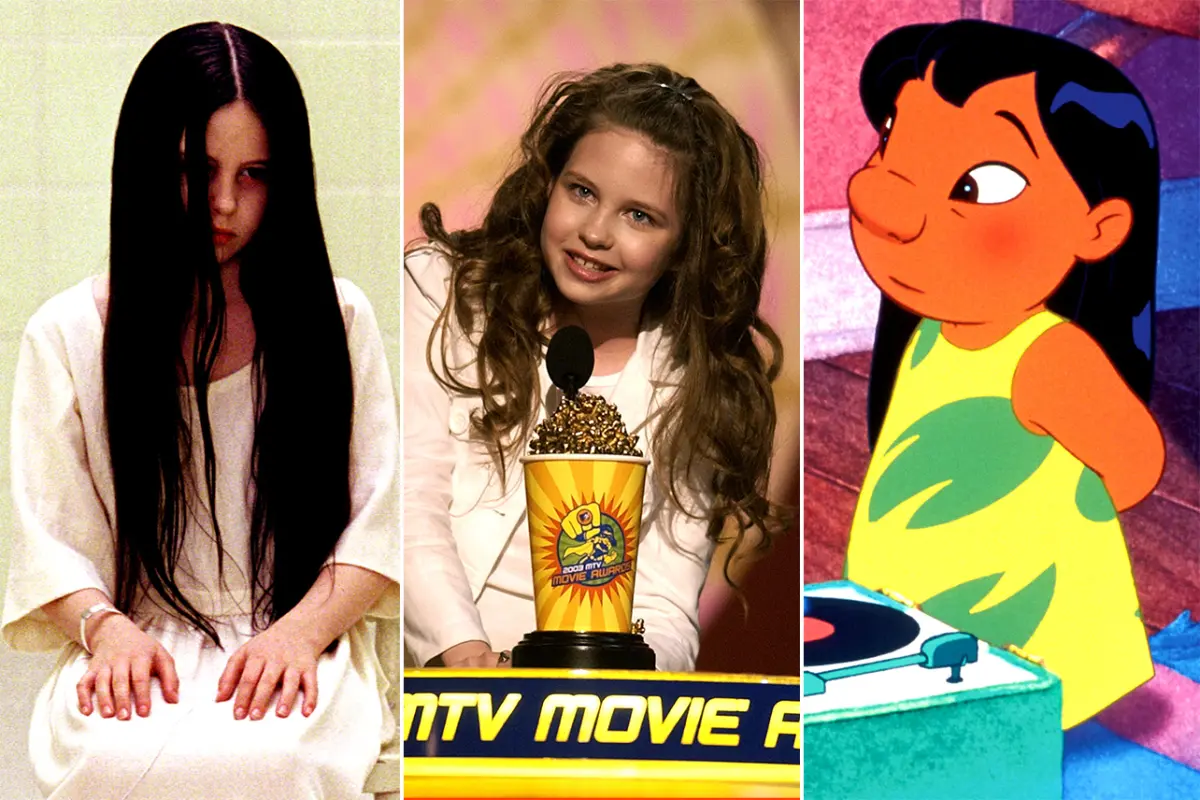
It’s a sadly familiar story: A child star begins their career with great promise, only to succumb to family and personal issues. Yet it feels shocking every time, even for performers who were no longer fixtures in film or TV. That was certainly true for Daveigh Chase, who hadn’t acted in about a decade when she passed away at the age of 35. In terms of her lingering in the public memory, she didn’t need to, thanks to an intensely memorable 2002, when she was just 12 years old.
Chase actually had an auspicious 2001, too. She appeared in the cult favorite Donnie Darko as the title character’s younger sister (meaning that, yes, she participated in SparkleMotion), and also shot a small singing role in Steven Spielberg’s brilliant A.I., though her part was ultimately excised from the final film. She also didn’t technically appear the following summer in her breakthrough role, though that didn’t stop audiences from falling in love. She was the voice of Lilo, the scrappy and eccentric young heroine of Disney’s animated film Lilo & Stitch, who befriends the destructive blue alien Stitch. (He’s basically a dirtbag E.T.) As much as Disney cartoons were known as the gold standard for kids in the ’90s and into the ’00s, they rarely centered actual child characters during this period. (Even The Lion King ages Simba up halfway through, and Toy Story sure isn’t about Andy.)
This makes Lilo stand out all the more from the more treacly incarnations of victimized kid heroes from previous generations of Disney cartoons. Much of the movie is unabashedly from her point of view, and within the first 10 minutes, she’s been kicked out of her dance class for assaulting a classmate. Barely scraping by under the care of her loving, but overwhelmed older sister following the death of their parents, Lilo is a classic lonely movie kid, but played with a heartbreaking degree of emotional realism — as well as a hilarious strangeness that feels utterly true to kids’ real-world whims. That includes her strange, but steadfast attachment to Stitch, no matter how antisocial the creature is at first.
Some of this is delicately wrought material comes from the writing, of course, and the movie’s gorgeously expressive hand-drawn animation. But it could all be for naught if the voice performance sounds too worked-over or cutesy. Chase never did. Though she was obviously preternaturally gifted at hitting her marks — not for nothing that she was chosen to provide the lead voice for the American dub of Spirited Away — she also makes Lilo sound utterly real. The way she tearfully asks her sister if she really would trade her in for a pet rabbit following a blow-out fight manages to get a laugh and an “aww” all at once. (Those Full House kids could never.) Chase kept the soul of the character intact through some direct-to-video sequels and a Saturday morning cartoon series. In the recent live-action remake, the part didn’t seem quite the same without her.
It’s fittingly Lilo-esque that Chase’s other big role of 2002 was similarly unruly, both as a physical presence and as a follow-up to a beloved family-friendly cartoon. She was the scary-as-hell little girl who crawls out of the damn TV in The Ring. It’s also quite the opposite of Lilo, in that the performance is almost entirely physical, with no lines to speak of. Again, there’s great filmmaking that went into making The Ring one of the best horror movies of its era and Chase’s Samara one of the most memorable on-screen ghosts. But it sure must have helped that Chase was able to deliver such a vivid evocation of a character who is at once a child and a literal old soul, crawling her way toward everyone’s nightmares. In doing so, she embodied a second and vastly different version of childhood’s darker corners. As was occasionally the case back then, it was up to the MTV Movie Awards to honor such an unconventional achievement, handing Chase an award for Best Villain. (She also won an Annie Award for her performance in Lilo & Stitch.)
Chase was largely a TV fixture in the decade that followed, including a regular role on HBO’s Big Love. But those two 2002 movies alone assure not only that future generations will be enjoying her work, but seeing it from two distinct angles, likely at distinct ages. She may not have been a household name, but her one-two punch of cinema icons sure were.
Jesse Hassenger (@rockmarooned) is a writer living in Brooklyn. He’s a regular contributor to The A.V. Club, Polygon, and The Week, among others. He podcasts at www.sportsalcohol.com, too.