

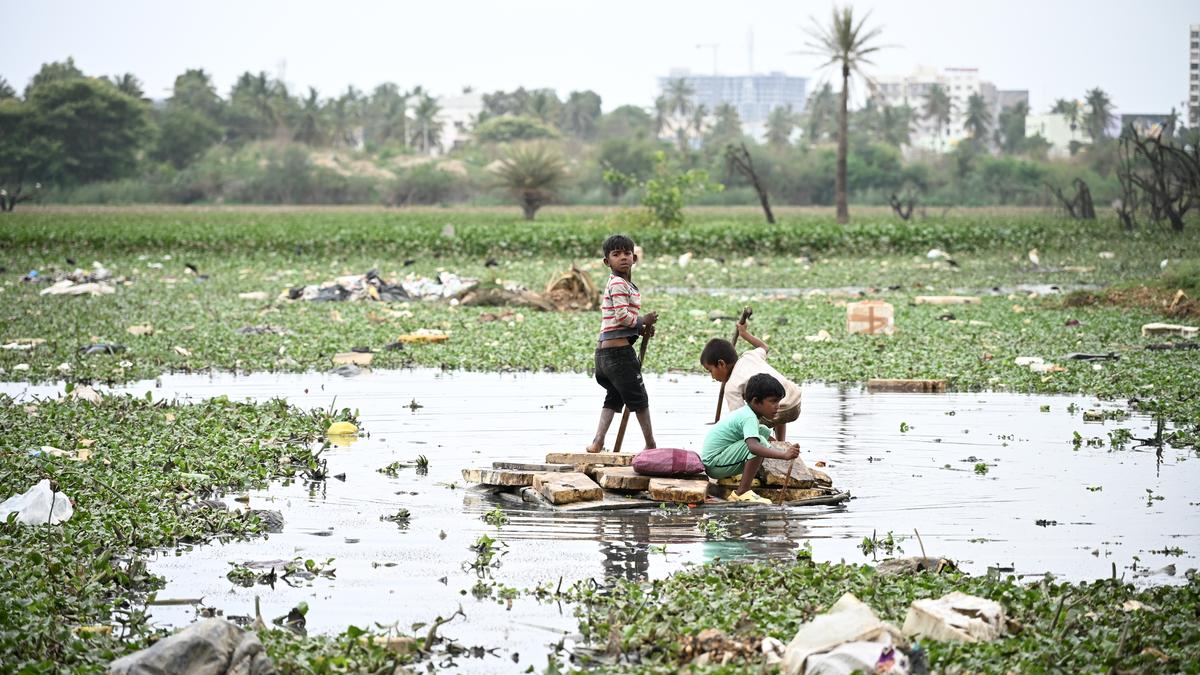
Near Siddhartha Layout in Kadugodi, the Dakshina Pinakini River resembles a swamp.
There is a sprawling garbage dump on the riverbank, and sacks of waste spill into the water, which is now almost entirely covered by a dense carpet of water hyacinth. A row of makeshift toilets line the concrete wall of the Rajakaluve, discharging raw sewage directly into the channel that flows into the river.
The river is murky and lifeless. The children playing on it are unaware of the health risks that prolonged exposure to polluted water could bring. The children of migrant workers who live and work in the garbage dump continue to frolic in the river, paddling their makeshift rafts.
Dakshina Pinakini is yet another casualty of Bengaluru’s rapid and unmindful urban expansion, choked by sewage, industrial effluents and the staggering quantities of solid waste the city throws up every day.

Seasonal to perennial
A seasonal river once, Dakshina Pinakini flows today perennially due to the continuous inflow of treated, untreated and partially treated wastewater.
“We used to go swimming in the river when we were kids. Not anymore,” says 39-year-old Hemanth, who was born and raised in the area.
Originating in Nandi Hills and draining into the Bay of Bengal after flowing through Karnataka and Tamil Nadu, Dakshina Pinakini, flowing along the eastern periphery of Bengaluru, was a water source for the locals before the city’s borders expanded.
Kadugodi residents remember a time when paddy, millets and guava were widely grown in the area. “The water in the river was used for washing clothes and irrigation earlier. The river filled up seasonally with rainwater. Now there is always water, only that it is sewage,” says Ratnamma, who is grazing her goats nearby.
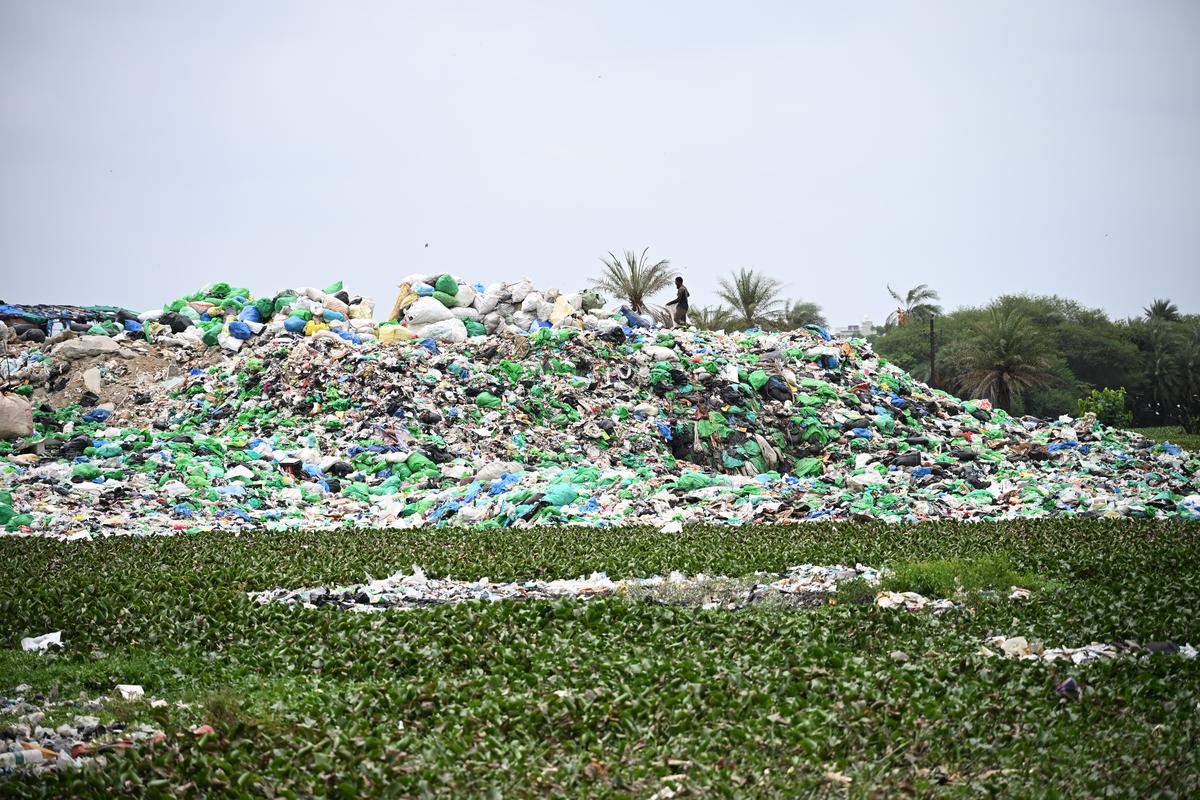
The construction of diversion channels around Bellandur and Varthur lakes, which previously acted as the river’s filters, has increased the pollution load carried by the Dakshina Pinakini.
| Photo Credit:
N. Ravichandran
Increasing pollution load
The major pollutant remains domestic sewage, which enters the river through the Varthur series of lakes, says Vishwanath S., urban planner and water expert. However, he adds that the industrial component among pollutants has been increasing, with small industrial units illegally letting their effluents into the river.
According to him, the construction of diversion channels around Bellandur and Varthur lakes, which previously acted as the river’s filters, has increased the pollution load carried by the Dakshina Pinakini.
“Previously Bellandur and Varthur lakes acted as wetlands remediating a lot of the pollution and preventing them from reaching the river. Now both of them have bypass channels. So, the remediating influence of both Bellandur and Varthur is gone. That’s one of the reasons why the river is now increasingly getting the burden of pollution.”
Growing piles of garbage
Recently, Bengaluru East Corporation seized six trucks allegedly involved in dumping garbage in areas adjoining the river.
While GBA officials say that legal proceedings have been initiated against those involved, including the landowners who reportedly allowed waste to be dumped on their properties, a visit to the area revealed that the mounds of waste continue to grow.

A walk in the dumping yard reveals mostly domestic waste — takeaway boxes, bottles, containers, other plastic items, sandals, briefcases, packing material, and polystyrene foam, among others.
Google Earth images show the area of the dumping ground expanding year after year and solid waste taking over parts of the river as time passes.
Some residents allege that construction debris and even medical waste are being dumped near the river.
Chemicals in your glass
A little away from the dump yard, an elderly woman herds her cows into the river.
“I have seen how the river changed,” she says in a sombre tone, hesitant to reveal her name and calculating her age to be around 60 years.
Many families in the area, including hers, rear cows and earn a living by selling milk to co-operative societies that feed into the Karnataka Milk Federation or Nandini.
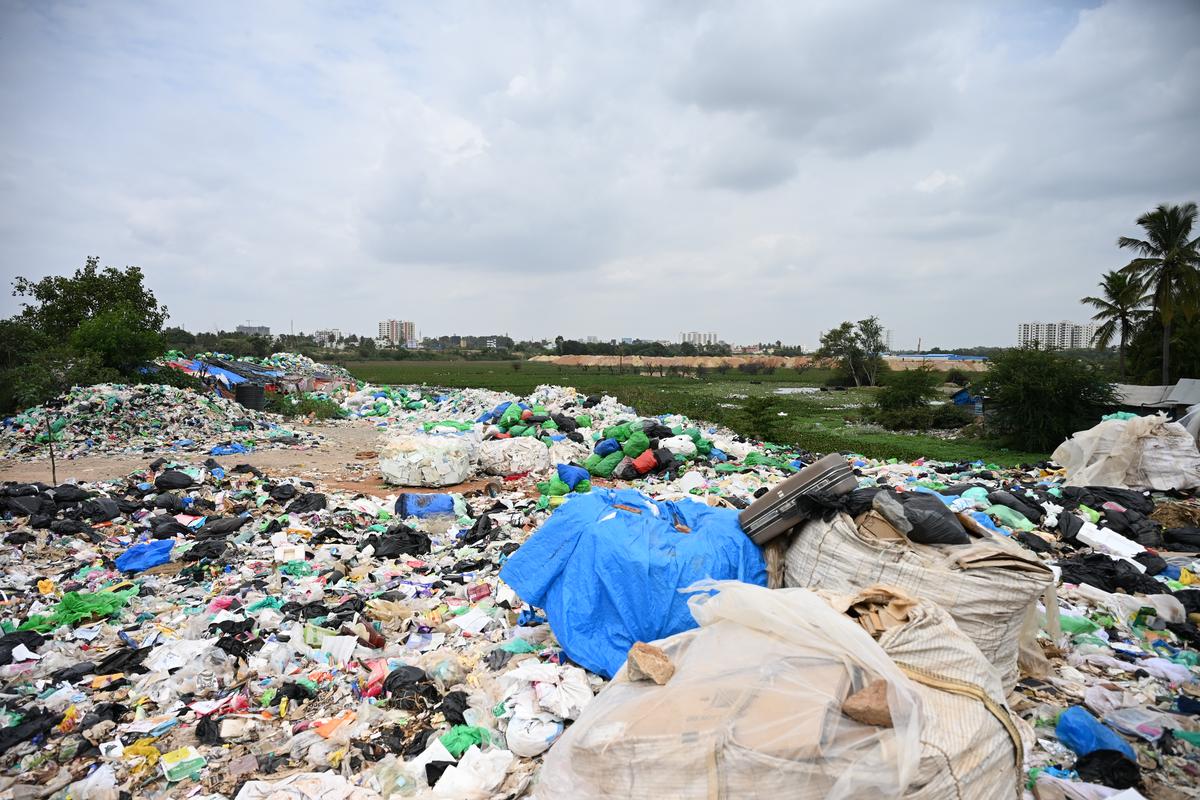
The absence of a ward-wise solid waste generation assessment hinders from understanding how much of the solid waste ends up in the river, experts say.
| Photo Credit:
N. Ravichandran
Nirmala Gowda, researcher and founder of Mapping Malnad, points out that the contaminants in the polluted river could find their way into the cattle, the milk they produce, and ultimately onto consumers’ tables.
“As solid waste is burned in the catchments, chemicals like dioxins and furans are released. These chemicals from the catchment are washed out into the river during the rains. When the cows graze within these waters, dioxins are transferred from the wastewater into them and eventually gets into our food supply via milk,” she says.
Ms. Gowda’s concerns are not unfounded.
A study (titled Application of Sanitation Safety Planning in the Usage of Wastewater for Agriculture in Bangalore Urban District, India) published in April 2024 documents farmers in Mugalur in Anekal reporting that the water in the river was not suitable even for cattle to drink.
It identified farmers and farm labourers, cattle herders, local community, and consumers as risk groups for exposure.
Hopes of revival?
As for the revival of the river, experts say it will require interventions on multiple fronts.
Ms. Gowda suggests ward-wise quantification of the waste generated in the city as a starting point. Citing the Justice Subhash Adi report on Municipal Solid Waste Management in Karnataka (August 2025) which said that BBMP is lacking in adopting a definite and effective mechanism for solid waste management, Ms. Gowda notes that the absence of a ward-wise solid waste generation assessment hinders from understanding how much of the solid waste ends up in the river.
According to Mr. Vishwanath, restoring the river would necessitate interventions ranging from catchment management and solid waste management, including construction debris, to medical waste and industrial effluent management.
“Tanks feeding into the river should continue to function as natural filters, with all sewage being collected and treated in STPs before discharge into the tanks and industrial waste treated in ETPs,” he adds.
Bengaluru’s filth chokes Dakshina Pinakini river
Dakshina Pinakini is yet another casualty of Bengaluru’s rapid and unmindful urban expansion, choked by sewage, industrial effluents and the staggering quantities of solid waste the city throws up every day.
| Video Credit:
The Hindu