

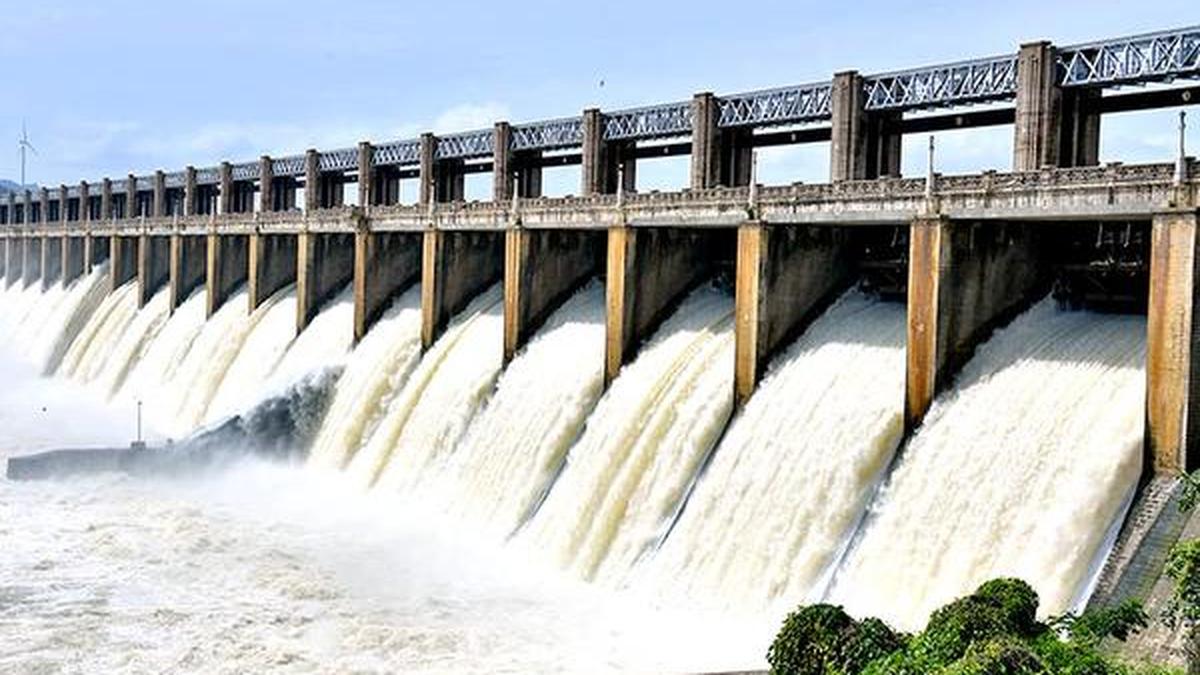
The Tungabhadra takes its name from two streams, as it is formed by the confluence of the Tunga, about 147 km long, and the Bhadra, about 178 km long, both of which rise in the Western Ghats.
River origin and course
The river, formed near Shivamogga in Karnataka, flows for about 531 km before joining the Krishna at Sangamaleshwaram in Andhra Pradesh. The combined waters then flow eastwards and enter the Bay of Bengal at Hamsaladeevi. Of its total course, 382 km lies in Karnataka, 58 km forms the boundary between Karnataka and Andhra Pradesh, and 91 km flows through Andhra Pradesh. The river is largely dependent on the south-west monsoon.
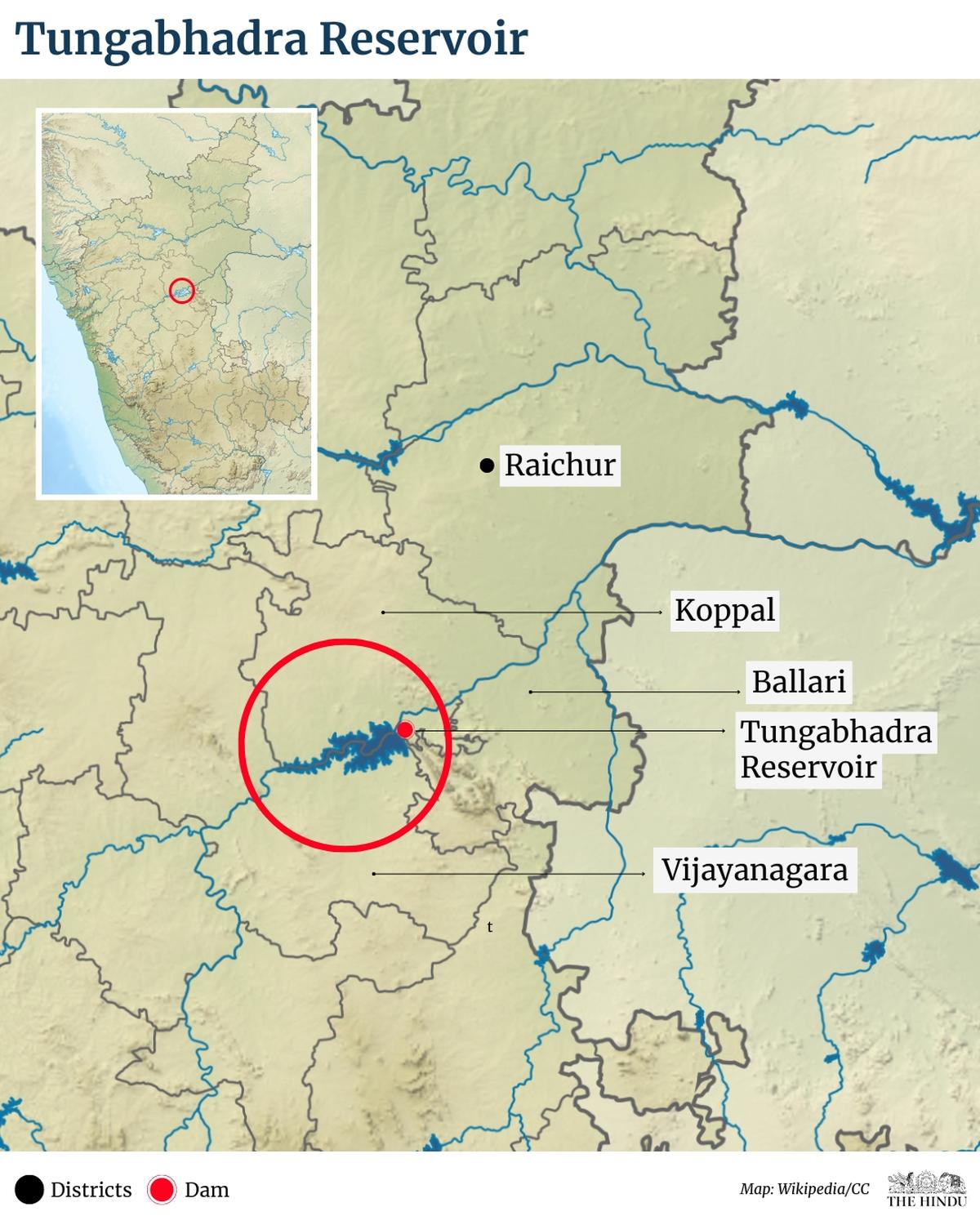
Tungabhadra reservoir project
The Tungabhadra dam, an inter-State project involving Karnataka, Andhra Pradesh and Telangana, was commissioned in the early 1950s, with crest gates installed in 1955. The project irrigates more than 16.38 lakh acres, including 9.26 lakh acres in Karnataka, 6.25 lakh acres in Andhra Pradesh and 87,000 acres in Telangana.
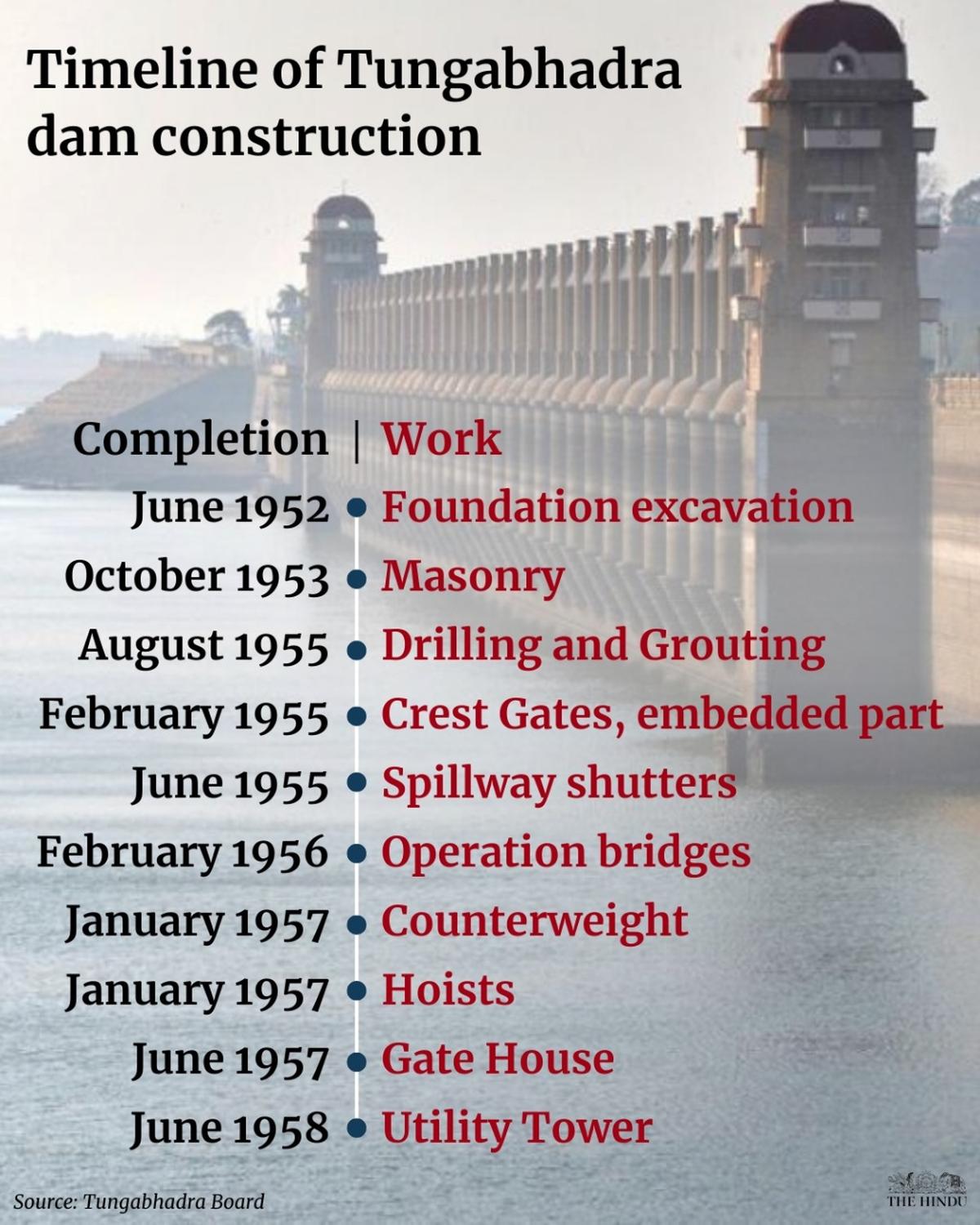
The reservoir is regarded as the lifeline of north Karnataka and parts of Andhra Pradesh and Telangana. It supports extensive agricultural command areas, with millions of farmers depending on the Left Bank Canal, the Right Bank Canal and their distributaries for irrigation. Several towns and cities also rely on it for drinking water supply.

Tungabhadra Board
The Tungabhadra Board oversees the inter-State project involving Andhra Pradesh, Karnataka and Telangana, with the objective of harnessing the river’s waters for irrigation, hydro-electric power generation, fisheries and tourism.
Its principal functions include regulating water supplies to the member States in accordance with the directions of the Krishna Water Disputes Tribunal, as well as maintaining the dam and reservoir.

Krishna Water Disputes Tribunal
The Krishna Water Disputes Tribunal was constituted by the Union Government on April 10, 1969, to adjudicate disputes relating to the Krishna river and its tributaries, including the Tungabhadra. It issued directions on the sharing of water between Karnataka and Andhra Pradesh, particularly with regard to utilisation at the Tungabhadra dam.
The tribunal also examined the need for the Tungabhadra Board and held that it should continue to manage works common to the two States until an alternative control mechanism is put in place.

Water sharing among the States
In 1976, the tribunal fixed the sharing of water, including losses, in the ratio of 65:35 between Karnataka and Andhra Pradesh. It also determined releases into the river course and the Vijayanagar canals.
Although the original capacity of the dam was 134 tmcft, the tribunal allocated 230 tmcft for utilisation, including 18 tmcft towards evaporation losses, taking into account that the reservoir typically fills twice in a year.
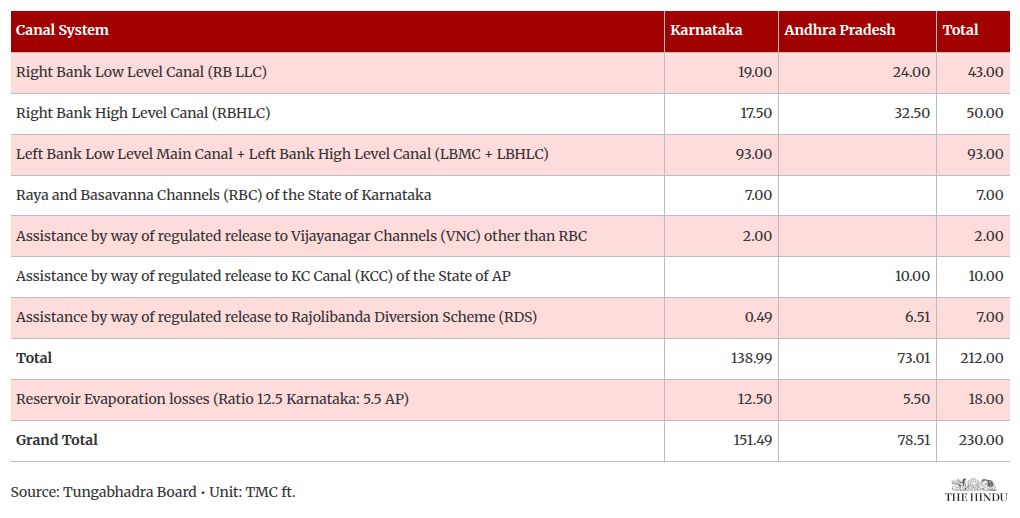
The Irrigation Wing of the Tungabhadra Board regulates water in the Right Bank High Level Canal and the Right Bank Low Level Canal, and maintains accounts of flows and losses. Under this arrangement, Karnataka receives 12.5 tmcft and Andhra Pradesh 32.5 tmcft in the Right Bank High Level Canal. In the Right Bank Low Level Canal, Karnataka’s share is 17.19 tmcft and Andhra Pradesh’s is 18.90 tmcft.
Regulation of the Left Bank Main Canal and the High Level Canal is under the Karnataka Irrigation Department. Overall, Karnataka has a share of 151.49 tmcft, while undivided Andhra Pradesh has 78.51 tmcft. Telangana’s allocated share from the Tungabhadra river and reservoir is 15.9 tmcft. Andhra Pradesh has an assured allocation of 32 tmcft from the inter-State dam.
Water sharing issues
The Tungabhadra project has largely remained free from major disputes, owing to the established sharing formula and the role of the Tungabhadra Board in regulating releases. The dam serves as a lifeline for six drought-prone districts, namely Ballari, Koppal and Raichur in Karnataka, and Anantapur, Kadapa and Kurnool in Andhra Pradesh.
However, the Upper Bhadra Project in Karnataka has emerged as a point of contention. The lift irrigation scheme, located upstream of the Tungabhadra reservoir, has drawn objections from Andhra Pradesh on the grounds that it may impound water allocated to it before reaching the dam, thereby affecting supplies to downstream canals serving Anantapur, Kadapa and Kurnool.
The Andhra Pradesh government approached the Supreme Court on February 9, 2023, by filing an original suit along with an interim application, seeking to restrain the implementation of the project and questioning the clearances granted by the Central Water Commission.
Telangana has also expressed concerns. Chief Minister A. Revanth Reddy has urged the Union Government to ensure coordination among riparian States, stating that the State is not receiving between 5 tmcft and 6 tmcft against its allocation of 15.9 tmcft. Telangana has previously contended before the tribunal that excess withdrawals by Andhra Pradesh affect downstream flows to the Srisailam reservoir and reduce its share.
Replacement of crest gates
In a significant development for dam safety, all 33 steel crest gates of the Tungabhadra dam at Hosapete in Vijayanagara district are dedicated to the public on Thursday (June 25, 2026).

The replacement follows a structural crisis during the 2024 monsoon. In August 2024, the washout of Gate No. 19 during heavy inflows caused concern among downstream residents and farmers across the basin.
The incident exposed vulnerabilities in the ageing gate system. The authorities opted for a comprehensive solution by replacing all the crest gates with new high-grade steel structures, instead of undertaking partial repairs, to ensure reliable operation during future monsoons.
Published – June 25, 2026 03:33 pm IST