
UPSC Current Affairs Pointers brings you essential current affairs of the past week, every Monday, to aid you in your Prelims and Mains preparation of UPSC, State PCS, and other competitive examinations.
— Resident individuals remitted $2.29 billion under the Liberalised Remittance Scheme (LRS) in April 2026, marking an 11.9% decline from $2.59 billion recorded in March 2026 and $2.48 billion in April last year.
— Under the LRS of the Reserve Bank of India (RBI), resident individuals, including minors, can freely remit up to $2,50,000 per financial year for permissible current or capital account transactions.
— These transactions include education, studies abroad, travel, medical treatment abroad, purchase of property and investments in foreign stocks.
— The Ministry of Heavy Industries (MHI) has extended timelines for global tenders under the REPM scheme as a response to demand for the same by multiple stakeholders.
— Under the scheme, the government aims to support 6,000 metric tonnes per annum (MTPA) of integrated REPM manufacturing capacity, which will be allocated among five beneficiaries selected through a competitive bidding process, with each eligible for up to 1,200 MTPA.
Story continues below this ad
— Selected beneficiaries will receive sales-linked incentives worth Rs 6,450 crore over five years, along with a capital subsidy of Rs 750 crore to set up integrated REPM facilities.
— The scheme specifically focuses on “sintered rare-earth permanent magnets”, which are primarily neodymium, iron, and boron (NdFeB) magnets, considered the strongest and most commercially demanded.
— These magnets use light rare-earth elements like neodymium (Nd) and praseodymium (Pr), combined with iron (Fe) and boron (B), for their strong magnetic properties. They also use heavy rare-earth elements such as dysprosium (Dy) and terbium (Tb) to improve susceptibility to demagnetisation, especially at high temperatures.
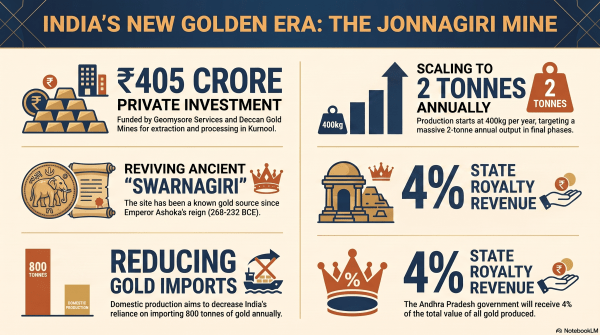 Infographics NotebookLM
— Andhra Pradesh Chief Minister N Chandrababu Naidu inaugurated India’s largest private-sector gold mining project at Jonnagiri in Kurnool district on June 24.
Story continues below this ad
— Geomysore Services India Pvt Ltd and Deccan Gold Mines, the companies behind the project, are investing Rs 405 crore in mining, extraction, processing, and marketing of gold bars from Jonnagiri itself. Here is why it holds significance for the region.
— Jonnagiri has been known as a site of gold exploration since ancient times. It was once known as Swarnagiri and was renowned during Emperor Ashoka’s period (268-232 BCE), with Ashokan inscriptions found near Erragudi.
— The wider Rayalaseema region has also been known as the land of precious stones and minerals. During the reign of Sri Krishnadevaraya (1509-29), gems and precious stones were traded in abundance.
— The Jonnagiri area is part of the Eastern Dharwar Craton, a piece of the Earth’s crust formed 3.6-2.5 billion years ago. The region is known for gold mineralisation, or when various geological processes result in the transformation of gold into extractable ore deposits.
Polity
— Recently, the Karnataka High Court permitted the parents of a 23-year-old woman with severe intellectual and developmental disabilities a total abdominal hysterectomy, or the surgical removal of the uterus.
— In this case, her parents had approached the court stating that their daughter’s cognitive impairments made her incapable of understanding or managing menstrual hygiene, which had led to recurring infections and prolonged medical complications.
Story continues below this ad
— After a multidisciplinary medical board confirmed that the woman lacked the capacity to give informed consent and recommended the surgery for her well-being, the court allowed the procedure.
— Section 10 of the Rights of Persons with Disabilities Act, 2016, prevents persons with disability from being subjected to any medical procedure leading to infertility without their free and informed consent.
— A legal dilemma arises in cases where a woman’s intellectual disability is so severe that she lacks the cognitive capacity rendering her unable to give “informed consent”.
— In such scenarios, caregivers and doctors cannot unilaterally make the decision and must approach a court. The courts invoke what is known as “parens patriae” — a legal doctrine wherein the court steps into the shoes of a guardian for individuals unable to care for themselves.
Story continues below this ad
— The court does not simply substitute its own judgment for the individual’s; it conducts an inquiry to determine what course of action lies in the “best interests” of the person — that prioritises their health, dignity, and bodily integrity.
— Under the RBI’s revised compensation mechanism, victims of digital payment fraud involving amounts up to Rs 50,000 can recover a major portion of the money lost to fraud. It will be officially implemented on January 1, 2027.
— Under the new mechanism, victims are eligible for compensation of up to 85% of their losses, up to Rs 25,000, thereby reducing the hit they take from such frauds.
— A bona fide victim who lodged a complaint involving gross loss of an amount up to Rs 50,000 on account of a fraudulent electronic banking transaction (EBT) will be compensated 85% of the net loss amount or Rs 25,000, whichever is less, once during the lifetime, the RBI’s new framework reads.
Story continues below this ad
— For a complaint involving a loss of less than Rs 29,412 via fraudulent EBT, the customer will receive 85% of the amount as compensation. Victims are eligible for such compensation only if they lodge a complaint regarding the fraud within five calendar days.
— The RBI will contribute the major part of the compensation under the new framework. In case of the victim’s bank negligence, that bank must compensate the victim entirely.
— For the first time, the 1975-77 Emergency — one of the most turbulent episodes in post-Independence Indian history — finds a place in a Class 9 Social Science textbook, with NCERT framing it as one of the major challenges that Indian democracy had to endure and survive.
— Emergency provisions contained in Part XVIII of the Constitution of India, from Articles 352 to 360, talk about the three different types of emergencies. Notably, these provisions are inspired by the German Weimar Constitution.
Constitutional provisions:
Story continues below this ad
⇒ Article 352 of the Indian Constitution deals with the “proclamation of emergency”.
⇒ Article 353 provides provisions about the “Effect of Proclamation of Emergency”.
⇒ Article 354 talks about the “application of provisions relating to the distribution of revenues while a Proclamation of Emergency is in operation”.
⇒ Article 355 deals with the “duty of the Union to protect States against external aggression and internal disturbance”.
⇒ Article 356 provides “provisions in case of failure of constitutional machinery in States”.
⇒ Article 357 deals with the “Exercise of legislative powers under Proclamation issued under article 356”.
⇒ Article 358 frees the state of all limitations imposed by Article 19 (“Right to freedom”) as soon as an emergency is imposed.
⇒ Article 359 provides provision with regard to the “suspension of the enforcement of the rights conferred by Part III during emergencies”.
⇒ Under Article 360 provisions about the financial emergency are provided.
— The Union Home Ministry has tightened the foreign funding framework for NGOs and associations under the Foreign Contribution Regulation Act (FCRA) through two notifications.
— The first notification amends the Foreign Contribution (Regulation) Rules, 2011, requiring every FCRA registration to specify both the purposes for which foreign funds can be used and the States or Union Territories where such activities can be undertaken. Organisations must now select their activities from a government-prescribed Schedule of 105 permissible purposes.
— Existing FCRA-registered associations have been given one year to indicate the purposes and geographical areas they wish to retain in their registration. Any subsequent expansion in scope will require fresh approval.
— The second notification revises compounding penalties for violations such as excess administrative spending, speculative investments, diversion of foreign funds and use of foreign contributions outside approved purposes or areas.
— Under the 2011 Rules, organisations broadly identified themselves as undertaking religious, cultural, educational, economic or social activities and described their programmes. The new rules require them to choose from a government-notified list of approved activities, with registrations tied to those specific purposes.
— A second major change is geographical restriction. While organisations earlier disclosed their areas of operation, registration itself was not linked to specific states or Union Territories. The new framework makes geography part of the licence.
— The 2011 rules referred mostly to “Members of the Executive Committee or Governing Council” and “Chief Functionary”, without defining “key functionary” which have now been specified.
International
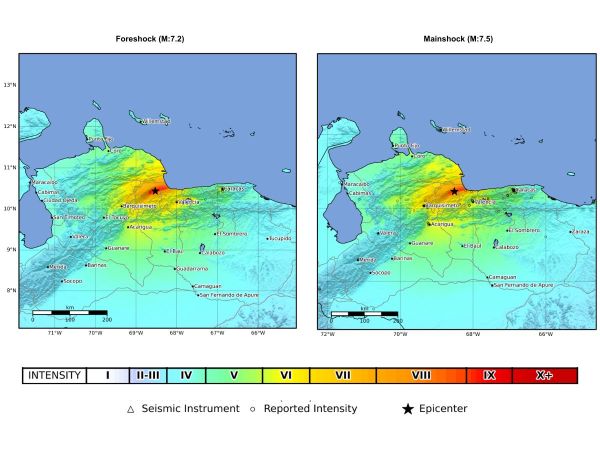 The magnitude 7.5 mainshock (right) produced stronger and more widespread ground shaking than the magnitude 7.2 foreshock (left). (USGS)
— The twin earthquakes in and around Venezuela’s capital Caracas are feared to have killed tens of thousands. The first quake, of magnitude 7.2, hit about 160 km west of Caracas late on 24th June. Just 39 seconds later, it was followed by a 7.5 magnitude quake.
— The US Geological Survey (USGS) described the disaster as a “seismic doublet”. The second quake was the largest to strike Venezuela or just off its coast since 1900, according to the USGS.
— The first earthquake struck about 24 km from San Felipe in Yaracuy state. The second hit near Morón in neighbouring Carabobo state, about 168 km west of Caracas, according to the USGS.
— In a typical sequence, the larger quake is followed by a series of smaller aftershocks. Doublets, however, are generally defined as earthquakes of similar magnitude that originate from distinct but closely related ruptures and occur in quick succession.
— Venezuela sits in one of the most seismically active regions in northern South America, along the boundary between the Caribbean and South American tectonic plates. These two plates can slide horizontally past each other along faults, in a phenomenon called a strike-slip fault (see box below), causing earthquakes.
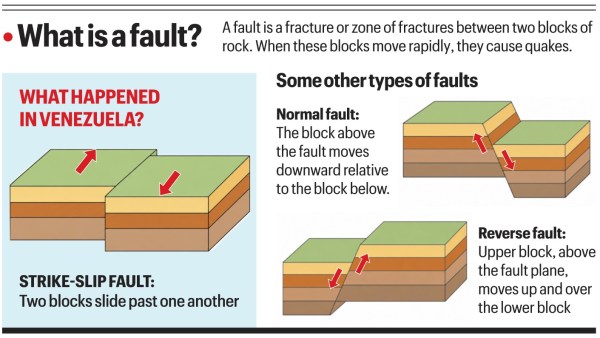 Earthquake faults
— According to the USGS, Wednesday night’s second, stronger earthquake resulted from shallow strike-slip faulting near the boundary between the two plates.
— Earthquakes often occur in sequences. The USGS classified the magnitude 7.2 earthquake as a foreshock, or a smaller earthquake that occurs before a larger one, and the magnitude 7.5 event as the mainshock, the largest earthquake in a sequence.
— In a report released on June 23, a United Nations Human Rights Council (UNHRC) commission of inquiry said that Israel has deliberately targeted Palestinian children in Gaza, documenting a pattern of acts to establish genocidal intent.
— The report has been released by the UN Independent International Commission of Inquiry on the Occupied Palestinian Territory, including East Jerusalem, and Israel. The commission was established in May 2021 through a UNHRC resolution as an independent body to follow up on the conditions in the occupied Palestinian territory. It is mandated to submit annual reports.
— The commission is currently chaired by S Muralidhar of India, who retired in 2023 as the Chief Justice of the Odisha High Court. Apart from Muralidhar, the commission has Florence Mumba of Zambia and Chris Sidoti of Australia as members.
— The commission cited instances to describe what it called “the intentional killing of Palestinian children through airstrikes in populated areas”. The report also discussed the torture of children during arrests and detention, including “rape, threats of rape, sexual assault, violence to the genitals, forcible stripping and humiliating acts”.
— In September 2025, the commission, then chaired by Navi Pillay of South Africa and comprising Miloon Kothari of India and Chris Sidoti of Australia as members, had reached similar conclusions on genocidal intent.
— The UN Genocide Convention, under Article II, defines genocide as “any of the following acts committed with intent to destroy, in whole or in part, a national, ethnical, racial or religious group, as such:
(i) Killing members of the group;
(ii) Causing serious bodily or mental harm to members of the group;
(iii) Deliberately inflicting on the group conditions of life calculated to bring about its physical destruction in whole or in part;
(iv) Imposing measures intended to prevent births within the group;
(v) Forcibly transferring children of the group to another group.”
— Genocide is defined in the same terms in the Rome Statute of the International Criminal Court (ICC) under Article 6, as well as in the statutes of other international and hybrid jurisdictions.
Environment
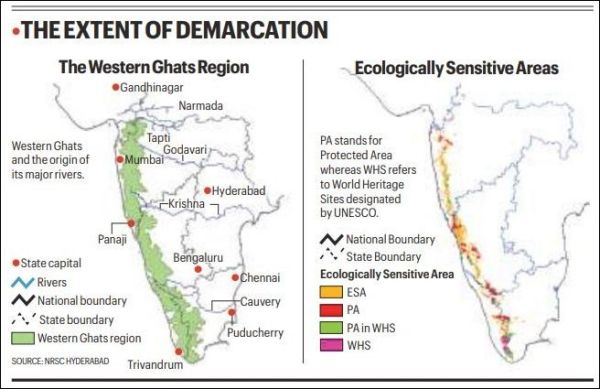
— Twelve years after it issued the first draft notification, the Centre is finally ready to finalise and notify the demarcation of Ecologically Sensitive Areas (ESA) in the Western Ghats region, at least in the three states in which contentious issues have more or less been resolved.
| The ESA is buffer areas demarcated around protected areas to minimise the negative impact of anthropogenic activities such as mining, hydropower projects, etc. |
— The Western Ghats, a 1,500-km long chain of largely unbroken mountains which fringes off the western coast of India, is one of the country’s most famous natural ecosystems, next only to the Himalayas.
— Unlike the Himalayas, the Western Ghats are densely populated and have been an economic hub for states abutting India’s west coast, and is home to famous cash crops.
— The western ghats spread across six states: Gujarat, Maharashtra, Goa, Karnataka, Kerala, and Tamil Nadu.
— Separate protections for the Ghats region were initially prescribed by the famous Madhav Gadgil-led expert panel, and later by a high-level working group, chaired by former Indian Space Research Organisation chief K Kasturirangan.
— Over 56,000 square km of land in six states are proposed to be demarcated as ESA, based on the 2013 recommendations of a high-level working group led by former ISRO chairman K Kasturirangan.
— It is in this backdrop of the Kasturirangan panel’s 2013 report that the Centre demarcated 56,825 sq km as ESA in a draft notification.
— Activities like new mining and quarrying projects, setting up of thermal power plants, operation of the most-polluting red-category of industries, new and expansion projects of buildings and construction with a built-up area of 20,000 square metres or above, are proposed to be completely banned or heavily restricted.
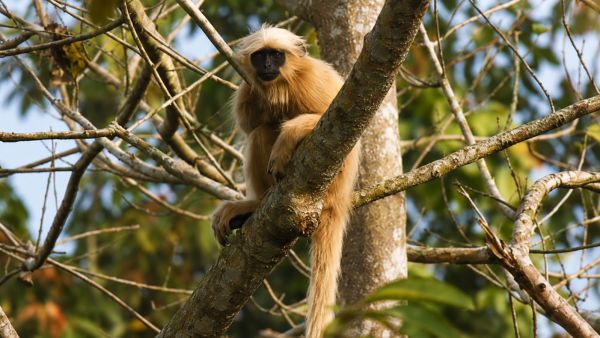 Assam Forest Minister Jayanta Mallabaruah announced that seven of the rescued langurs have been released into the Sikhna Jwhwlao National Park. (Screenshot from video shared by Jayanta Mallabaruah on X)
— A week after eight endangered golden Langurs were rescued from alleged wildlife traffickers in Assam, all except one have been released back into the wild. The one left died during the rescue and rehabilitation process.
— The golden langur (Trachypithecus geei) is an endangered primate endemic to Western Assam and the foothills of southern Bhutan. According to a population estimate released in 2024, there were 7,396 golden langurs in India at the time.
— These eight golden langurs had been rescued by a Special Task Force of the Assam police in the intervening night of June 19 and 20 from Chirang district in Western Assam, while they were in the possession of nine alleged wildlife traffickers.
— Assam Forest Minister Jayanta Mallabaruah announced that seven of the rescued langurs have been released into the Sikhna Jwhwlao National Park, which is spread across the Chirang and Kokrajhar districts in the Bodoland Territorial Region.
— The Sikhna Jwhwlao National Park forms part of the Manas Biosphere Reserve and provides habitat for several rare and endangered species, including the golden langur.
Science and Technology
— Provisions relating to strong hybrid vehicles in Delhi’s new Electric Vehicle (EV) Policy continue to be debated as the existing policy nears expiry. There is a clear divergence of opinion over exempting strong hybrids from road tax.
— Hybrids have both an internal combustion engine and an on-board electric motor, with the two systems working in tandem to provide motive power.
— A strong (or ‘full’) hybrid vehicle combines a traditional internal combustion engine with a powerful electric motor and a larger battery, which enables it to run entirely on electric power at low speeds, and to switch automatically to the engine for higher speeds.
— A mild hybrid, by contrast, has a smaller electric motor and battery, and cannot run on electricity alone. The electric motor in mild hybrids acts only to boost acceleration and smoothen stop-start systems.
— Cyber criminals are increasingly using a social engineering technique known as the “Boss Scam” or CEO impersonation fraud.
— In this scam, criminals impersonate senior executives or business owners to pressure employees into transferring money or sharing sensitive information. These requests often appear genuine and create a false sense of urgency.
— This modus operandi was used to dupe former Member of Parliament Naresh Gujral, son of former Prime Minister I K Gujral.
— Scammers had initially sent malicious messages to one of the company’s directors. Perceiving it as urgent, the director forwarded it to the accountant for further action.
— As soon as the accountant clicked on the ZIP file, his WhatsApp account was allegedly compromised. The alleged fraudsters then gained control of the account, altered Naresh Gujral’s contact details on WhatsApp, and began sending messages impersonating him.
| The compressed ZIP archive typically contains a malicious executable (.exe) file along with a dynamic link library (.dll) file. Similar cases have been reported across the country. |
— They instructed the accountant to transfer funds through Real-Time Gross Settlement (RTGS), a system used for urgent, high-value bank transactions.
— Sources said the scammers are targeting high-ranking officials and corporate executives by sending malicious ZIP archives through email or WhatsApp under the guise of urgent regulatory compliance requirements.
— In some cases, they impersonate officials from the Reserve Bank of India (RBI). The messages typically create a false sense of urgency by providing only a short time window for compliance.
— Seven people died and more than 40 were hospitalised in Tamil Nadu after an ammonia gas leak at a private seafood export company spread to the workers’ residential premises.
— Exposure to high levels of ammonia starts irritating and hurting the skin, eyes, throat, and lungs. It can lead to abdominal pain, nausea and vomiting. It can cause painful blisters on the skin.
— It can trigger swelling and narrowing of the throat, making it harder to breathe. It can lead to severe bouts of coughing and lung damage, which can ultimately result in death.
— Serious patients have reported pulmonary edema (fluid accumulation in the lungs), severe oxygen deprivation and respiratory failure.
— Some, who have been exposed to very high levels of ammonia, can experience long-term health consequences such as chronic cough, asthma and scarring of the lungs.
— There is no specific treatment for exposure to ammonia. Doctors and health professionals usually try to remove the ammonia from the body after an exposure and then provide supportive care for any symptoms a person develops.
— IBM, on June 25, announced a major breakthrough in semiconductor technology. The tech giant has unveiled what it describes as the world’s first sub-1 nanometer (nm) chip technology featuring a transistor architecture at the 0.7 nm or 7 angstrom node.
— The new sub-1 nm chip comes with around 100 billion transistors all packed into the size of a fingernail. It has nearly twice the density of IBM’s 2nm chip which was launched in 2021.
— According to the company, the new chip is backed by a range of structural and material innovations, including IBM’s groundbreaking three-dimensional nanostack architecture.
— Researchers at IBM created a new transistor architecture called ‘nanostack’, also the industry’s first known three-dimensional and nanosheet-based design, to develop the new chip.
Persons in News
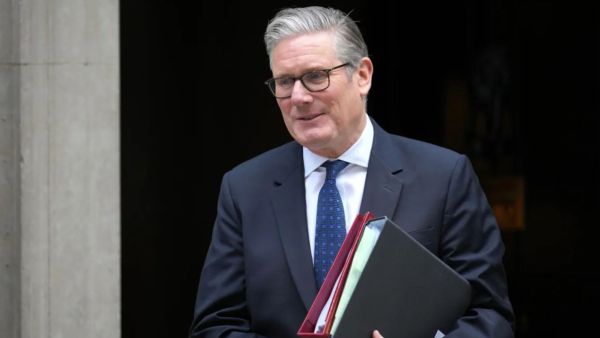 UK PM Keir Starmer announces his resignation. (AP Photo)
— UK Prime Minister Keir Starmer formally announced his resignation on June 22 after weeks of speculation, with the resignation extending to the leadership of the Labour Party as well.
— His election in 2024 had brought Labour back to power after 14 years. This kind of resounding electoral majority was last seen in 1997 when Labour had defeated John Major, the Conservative Prime Minister since 1990, by winning 328 seats under the leadership of Tony Blair.
— Starmer’s resignation and impending replacement mean that the UK will officially have had seven Prime Ministers over the course of a decade. Despite a Prime Minister’s fixed term of service being five years, not a single UK PM has come close to completing their term since 2016.
— The UK comprises England, Northern Ireland, Scotland and Wales. It has a constitutional monarchy, which largely remains ceremonial and symbolic.
— The Parliament has a two-house system – the House of Commons (lower house) and the House of Lords (upper house) – which meet at the Palace of Westminster in London.
— The House of Commons comprises 650 members elected directly, while the House of Lords, whose numbers are not fixed, comprises life peers, bishops and hereditary peers. The Prime Minister heads the executive branch of government for five years.
— A common misconception is that the PM is elected to serve a fixed term of five years. In reality, the limit applies to the parliamentary term for the party in power and not the individual that becomes the PM.
— Thus, even though the government and the party may enjoy popular support, the top leadership can continue to witness upheaval.
— The selection of the PM begins with the general elections, where citizens vote to choose their MP. This elected MP represents the local constituency in the House of Commons.
— The leader of the political party that secures the majority of the seats in the House of Commons is then invited by the Monarch (currently, the King) to form the new government.
— Importantly, the PM’s constitutional power stems from his/her ability to command the confidence of their party’s elected MPs.
— The Union Government appointed 1993-batch IPS officer Mahesh Dixit as the new Director of the Intelligence Bureau on 24th June. He will succeed Tapan Deka, who has served as the IB chief for the past four years.
— An officer of the Andhra Pradesh cadre, Dixit has spent more than 26 years in the Intelligence Bureau. A good part of this has been spent in Jammu and Kashmir where he has served in two stints – first between 2009 and 2012, then between 2020 and 2025.
Places in News
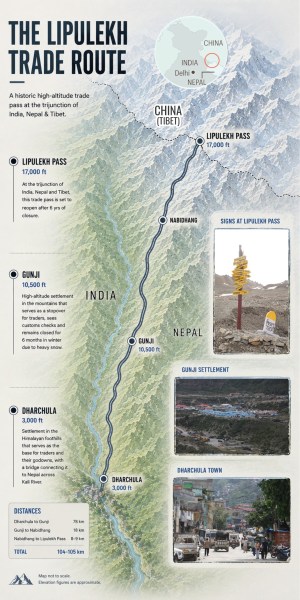 The road to Lipulekh from Dharchula.
— The Lipulekh Pass is set to reopen after seven years, opening the door to a cross-border trade that is buffeted by the vagaries of geography and geopolitics.
— The Pass has stayed shut since 2019, first due to the pandemic and later as India-China border skirmishes led to a chill in bilateral relations.
— At the trijunction of India, Nepal, and China’s Tibet Autonomous Region, the Lipulekh Pass loops its way through the snow-covered Himalayan ranges, reaching 17,000 feet at its highest point.
— The Pass has for centuries served as the gateway for pilgrims headed to Mount Kailash as part of the Mansarovar Yatra and Lake Manasarovar in Tibet. It’s also a historical transit point for trade between India and the Taklakot market in Tibet.
— The region is contested, with Nepal claiming Lipulekh and the larger region, including Kalapani and Limpiyadhura, based on the 1816 Treaty of Sugauli.
— Which is why the Pass, and the announcement earlier this year to reopen it for business, holds immense strategic value despite the low trade volumes.
— In Gunji, the Kali river cleaves through towering mountains and barren slopes. Its status as the facilitator of the trans-Himalayan trade between India and China means it has a customs office that levies GST and maintains records of goods that cross the Pass.
— Human skeletal remains excavated from the Harappan site of Rakhigarhi in Haryana have been formally handed over by the Archaeological Survey of India (ASI) to the Anthropological Survey of India (AnSI), a national research institute under the Union Ministry of Culture, for scientific investigation.
— The Ministry said that archaeologists uncovered eight burials at the site’s Mound No. 7 during excavations conducted by ASI in the 2025-26 field season.
| Field season refers to the primary period during the year when archaeologists conduct active fieldwork, such as excavations and surveys. |
— Material remains are a crucial source in reconstructing information about the Harappan Civilisation, since its script remains undeciphered.
— Human remains have been increasingly studied using approaches from palaeoanthropological research (interdisciplinary study of human evolution), molecular biology, and DNA studies. These techniques have enabled researchers to investigate what ancient people may have looked like and to trace patterns of ancestry and migration.
— Palaeopathological investigations — which study ancient diseases and medical conditions using physical human and animal remains — can help shed light on the diseases that the inhabitants of the Indus Valley Civilisation may have suffered and their overall health status.
About Rakhigarhi: Indus Valley site
— Located in Haryana’s Hisar district, Rakhigarhi is widely recognised as one of the largest Harappan sites in India, spread across approximately 550 hectares. The site was occupied from the Early Harappan phase (circa 3300-2600 BCE) to the Mature Harappan phase (circa 2600-1900 BCE).
— Archaeological excavations at the site have revealed evidence of a planned urban settlement including mud-brick fortifications, streets and drains. The site also boasts a well-developed craft tradition with the discovery of pottery, terracotta figurines, and uninscribed seals.
— Rakhigarhi is also significant as one of the Harappan sites where cemeteries and human burials have been discovered.
— Thousands of people belonging to the Kashmiri Pandit community from different parts of the country assembled at Tulmulla, around 30 km from Srinagar, on 21st June to celebrate Zyeshtha Ashtami and take part in the Kheer Bhawani Mela.
— Kheer Bhawani temple is dedicated to the goddess Ragnya Devi. It is situated 30 km from Srinagar city, and is one of the most sacred pilgrimage sites for Kashmiri Hindus.
— The temple gets its name from kheer, or milk and rice pudding, that pilgrims pour into the spring inside the temple complex as an offering to the goddess.
— Every year, a mela or festival is held at the temple. The festival, known as Mela Kheerbhawani, is the largest gathering of Hindus in Kashmir after the annual Amarnath Yatra.
Test Your Knowledge
(Note: The best way to remember facts for UPSC and other competitive exams is to recall them through MCQs. Try to solve the following questions on your own.)
(1) Consider the following pairs :
Festival States/UTs
1. Ambubachi: Assam
2. Losar: Andhra Pradesh
3. Kheer Bhawani festival: Jammu and Kashmir
Which of the pairs given above is/are correctly matched?
(a) 1 only
(b) 2 and 3 only
(c) 1 and 3 only
(d) None of the above
(2) Which one of the following ancient towns is well-known for its elaborate system of water harvesting and management by building a series of dams and channelizing water into connected reservoirs? (UPSC CSE 2021)
(a) Dholavira
(b) Kalibangan
(c) Rakhigarhi
(d) Ropar
(3) If the President of India exercises his power as provided under Article 356 of the Constitution in respect of a particular State, then ( UPSC CSE 2018)
(a) the Assembly of the State is automatically dissolved.
(b) the powers of the Legislature of that State shall be exercisable by or under the authority of the Parliament.
(c) Article 19 is suspended in that State.
(d) the President can make laws relating to that State.
Prelims Answer Key
1. (c) 2. (a) 3. (b)
For your suggestions and feedback, write to khushboo.kumari@indianexpress.com
Subscribe to our UPSC newsletter. Stay updated with the latest UPSC articles by joining our Telegram channel – IndianExpress UPSC Hub, and follow us on Instagram and X.
🚨 Click Here to read the UPSC Essentials magazine for June 2026. Share your views and suggestions in the comment box or at manas.srivastava@indianexpress.com🚨