

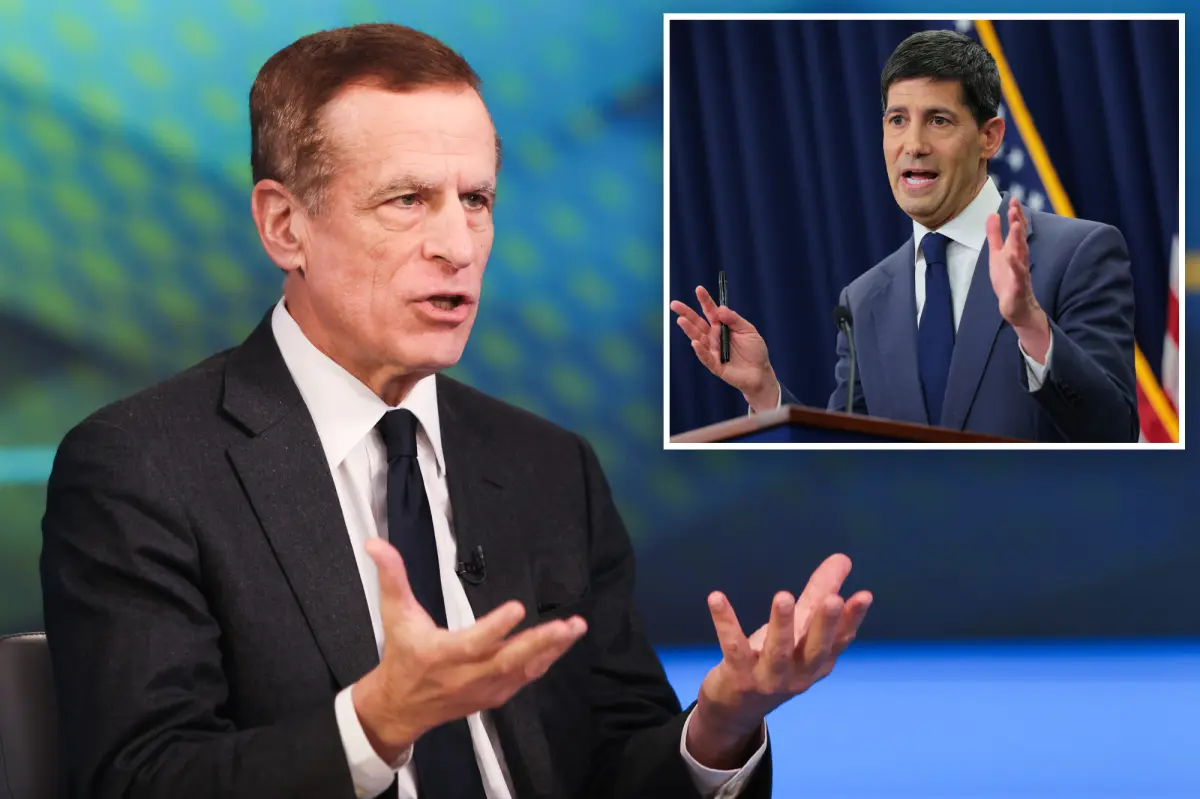

Federal Reserve Chair Kevin Warsh shocked Wall Street this week by delivering one of the most hawkish messages investors have heard in months, prompting traders to rapidly abandon expectations for interest-rate cuts and begin pricing in the possibility of rate hikes before year-end.
The dramatic shift in market sentiment came after the Federal Open Market Committee left rates unchanged but signaled that inflation remains its top concern despite signs of slowing economic growth.
The message was reinforced by former Dallas Fed President Robert Kaplan, who warned that policymakers may need to raise rates as soon as September if inflation fails to cool over the summer.
“If inflation prints don’t cool between now and we get to September, I actually think the balance of risks suggests it would be wise to take some action, either in September or in the fall,” Kaplan, now vice chairman at Goldman Sachs, said in an interview with Bloomberg Television.
Kaplan added that rate increases rarely come alone.
“If you move in September, you need to be prepared. There could be one or two more,” he said.
The hawkish turn caught many investors off guard. Earlier this year, markets largely expected the Fed’s next move to be a rate cut as economic growth moderated and inflation appeared to be moving closer to the central bank’s target.
Instead, Warsh’s debut as Fed chairman has shifted the conversation back toward inflation and the possibility that monetary policy may need to become even tighter.
“The odds of a rate hike are certainly higher than they were a month ago,” Scott Martin, partner at Kingsview Wealth Management, told The Post.
“The Fed has made it clear that inflation remains its primary concern, and if the next few inflation reports fail to show meaningful improvement, September is absolutely in play.”
Martin said the central bank appears increasingly focused on preserving its inflation-fighting credibility.
“Right now, it’s less about economic growth and more about protecting the Fed’s credibility on inflation,” he said.
Others see the Fed’s shift as even more dramatic.
Derek Reisfield, co-founder and former chairman of MarketWatch, said investors should prepare for higher borrowing costs.
“While the Fed rate remained unchanged for the moment, it is clear the positioning changed to reflect the increased likelihood of a rate hike later this year,” Reisfield said.
“I would say there is an 80 percent chance of a rate hike this Fall.”
Reisfield pointed to persistent inflation risks ranging from food prices to energy markets, warning that geopolitical uncertainty could keep inflation elevated through the end of the year.
The implications would extend far beyond Wall Street.
“Credit card, auto loan and other rates are likely to go up as well. So consumers will be paying more for credit all around,” Reisfield said.
Higher rates would also increase borrowing costs for the federal government as it finances its massive debt load.
For now, investors are left reassessing assumptions that had dominated markets for much of the year.
“I don’t think the market is overreacting,” Martin said.
“Investors spent much of the last year assuming the next move from the Fed would be a rate cut. Warsh is signaling that inflation is still a problem and that policymakers are willing to keep all options on the table.”