

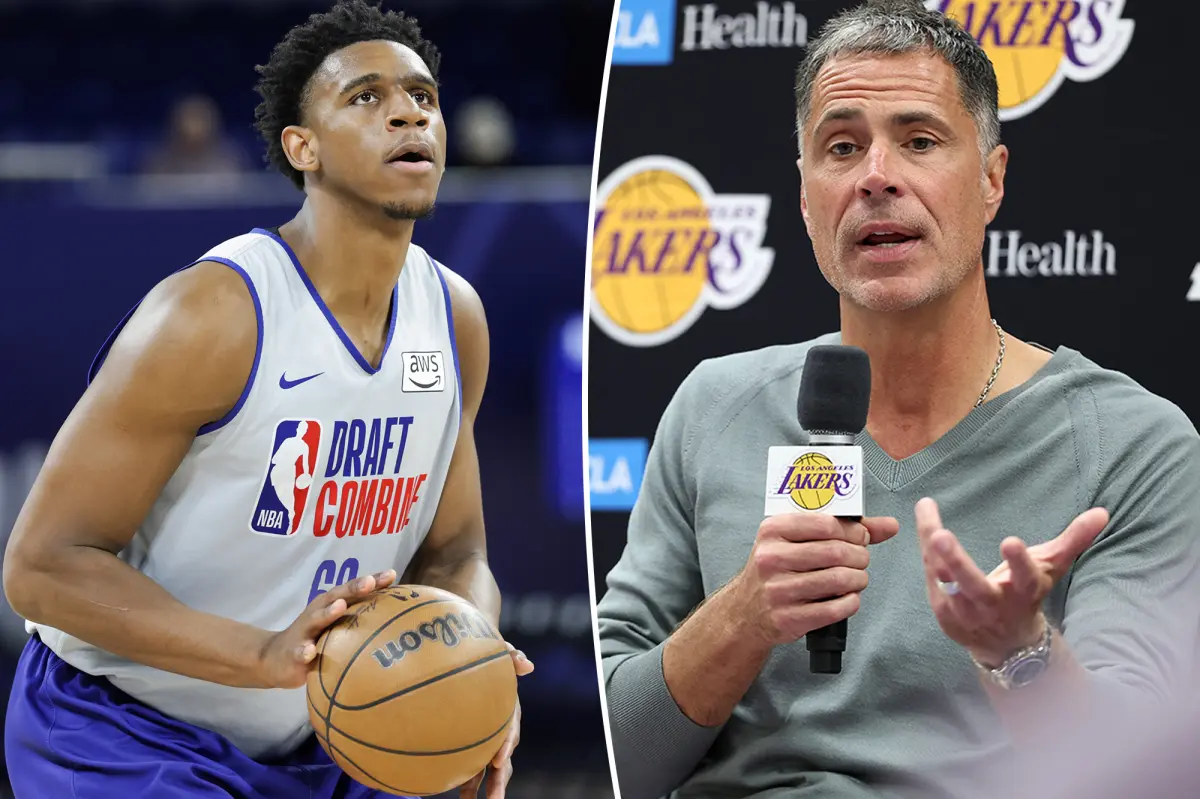
The 2026 NBA Draft is on the horizon, bringing one of the most significant dates on the league’s calendar.
Childhood dreams of making it to the NBA will be achieved.
Teams will turn draft assets into tangible players who they hope will contribute to winning in the short- and long-term future.
And in the background, teams will continue to explore the options that’ll help them achieve their goals for 2026-27.
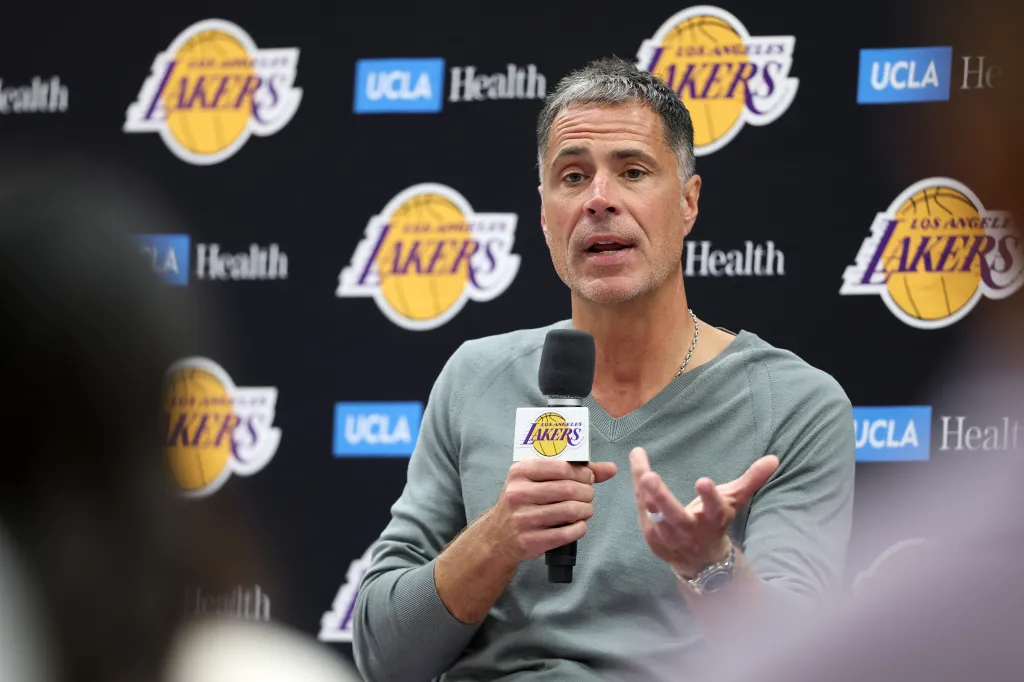
For the Lakers, who have a first-round pick in the draft (No. 25), the opportunity the draft presents as it pertains to roster building can’t be whiffed on.
In their pursuit of assembling a roster that’ll be competitive against the 2026 Western Conference champion Spurs and 2025 NBA champion Thunder, the Lakers have two main options for their first-round pick: trade it for a player who’s ready to compete for a title now alongside Luka Doncic or select a prospect whom they plan to develop and hope will help now and in the future.
If the Lakers choose the latter, there isn’t a shortage of options.
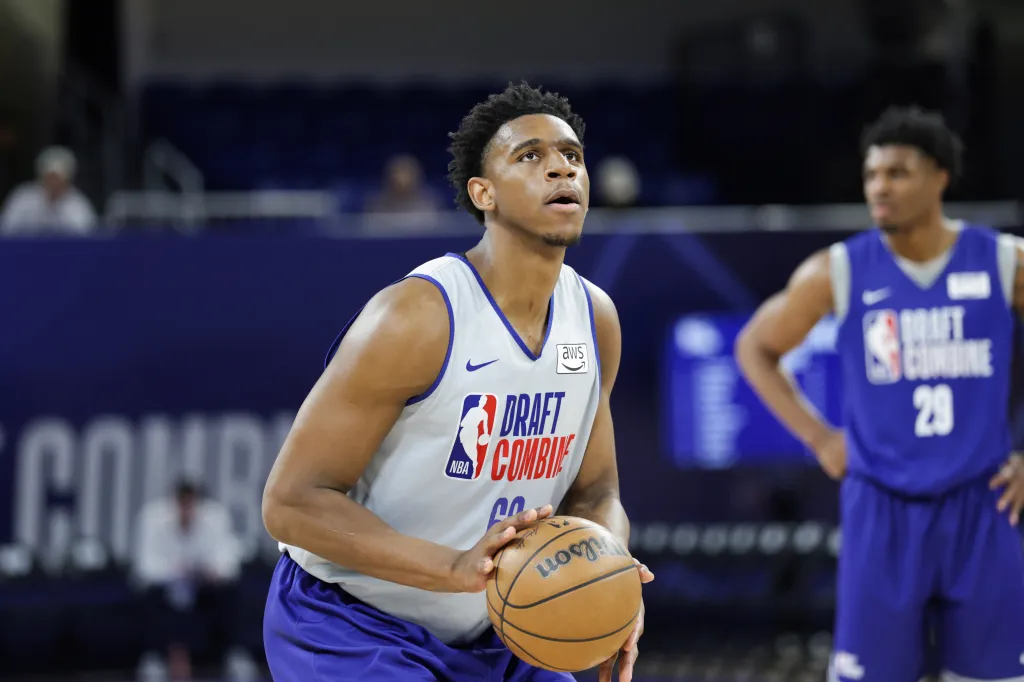
Toward the top of that list should be UConn big man Tarris Reed Jr., who could contribute to winning from Day 1.
Tarris Reed Jr., UConn big
2025-26 stats (UConn): 14.7 points (60.7% shooting), 9 rebounds, 2.3 assists, 2 blocks, 27.3 minutes in 35 games
2024-25 stats (UConn): 9.6 points (67% shooting), 7.3 rebounds, 1.6 blocks, 19.9 minutes in 35 games
2023-24 stats (Michigan): 9 points (51.9% shooting), 7.2 rebounds, 1.1 blocks, 26.6 minutes in 32 games
2022-23 stats (Michigan): 3.4 points (51.7% shooting), 3.9 rebounds, 12.6 minutes in 34 games
Measurements: 6-foot-9 ¾ (without shoes), 263 pounds, 7-foot-4 ¼ wingspan, 9-foot-2 standing reach
Why draft Tarris Reed Jr.?
Reed is one of the most physically imposing prospects in this year’s draft.
He weighed in as the second-heaviest player at the combine last month, and he used the combination of his strength, length and coordination to be one of the more dominant players in the paint in men’s college basketball.
Reed was an uber-efficient scorer inside of the 3-point arc in college. He shot 63.5% on 2s in his two seasons with the Huskies and led the Big East in field-goal percentage (60.7%) in 2025-26 after shooting 67% from the field in 2024-25.
He has great touch around the rim with both hands and is a skilled post player with a variety of finishes near the basket. As a more experienced prospect (136 college games played), Reed knows how to use his body to create good shots for himself by overpowering and moving through defenders.
Reed used those physical advantages to dominate the glass, averaging 5.8 defensive rebounds and 3.2 offensive rebounds per game in 2025-26. And he took advantage of those extra scoring opportunities by powering through defenses with putbacks.
He’s a strong screener who can play out of the short roll, finishing around defenders or spraying the ball out with simple passes after reading the defense.
Defensively, Reed’s strengths start with protecting the rim. He averaged at least 1.4 blocks in his last three college seasons.
He may not be the most traditionally athletic player, but Reed is a polished big man who should be able to contribute to an NBA team from Day 1 as a backup or third big man in the rotation for a good team.
Reed doesn’t need touches offensively to make an impact and should be at least solid in a lot of areas.
Areas of improvement?
Reed didn’t show to be much of a scoring threat outside of the paint, and his low free-throw percentage throughout college (58.2%) suggests that won’t change.
While he’s a switchable defender, he didn’t show to be an elite athlete by NBA standards in college, which could limit his effectiveness when guarding guards or even quicker forwards.
Reed can also improve with finishing at the rim when he can’t power through his defender.