
Frissons of anxiety ripple through coaching centres and hang in airless rooms that young men and women from rural areas take on rent in cramped neighbourhoods in UP’s cities. He or she could stay here for years, preparing for one exam after another, one exam along with another. The probability of failure is high, you must have a Plan B. After all, you are navigating, with few safety nets or none, an examination system notorious for the syndrome that afflicts it — papers that leak, results that are cancelled or delayed interminably.

These are stories of staggering odds — nearly 48 lakh candidates appeared most recently for about 60,000 constable posts in UP. They are freeze-frames of tenuous footholds. In a narrow room she shares with another young woman in Lucknow’s Aliganj, Dally Maurya, 27, who completed an Economics Masters from BHU in 2022, is studying for the UPSC, her third attempt is next year.
My home environment in Jaunpur is not conducive to study. Loud music is played in temples and marriages, the nearby railway station is noisy. Around my house, there are no trees.”
Her parents have been supportive, says Dally, but “I am scared they will marry me off if I still don’t make it”. For her housemate, Riddhima, the greatest fear is “being unemployed… staying at home… doing kitchen stuff”. For young men in the same situation, the nightmare is being called back home to work on the farm or in the business run by the family.
These young men and women are cramped by parents who are often struggling to make ends meet. They are denied agency at every step, from interfering landlords/landladies to paternalistic mentorship. “When we see students are raising questions, we tell them, don’t ask what is fair or unfair, don’t be distracted”, says Pawan Kumar Verma, associate centre head of Lucknow’s Vidyapeeth Coaching.
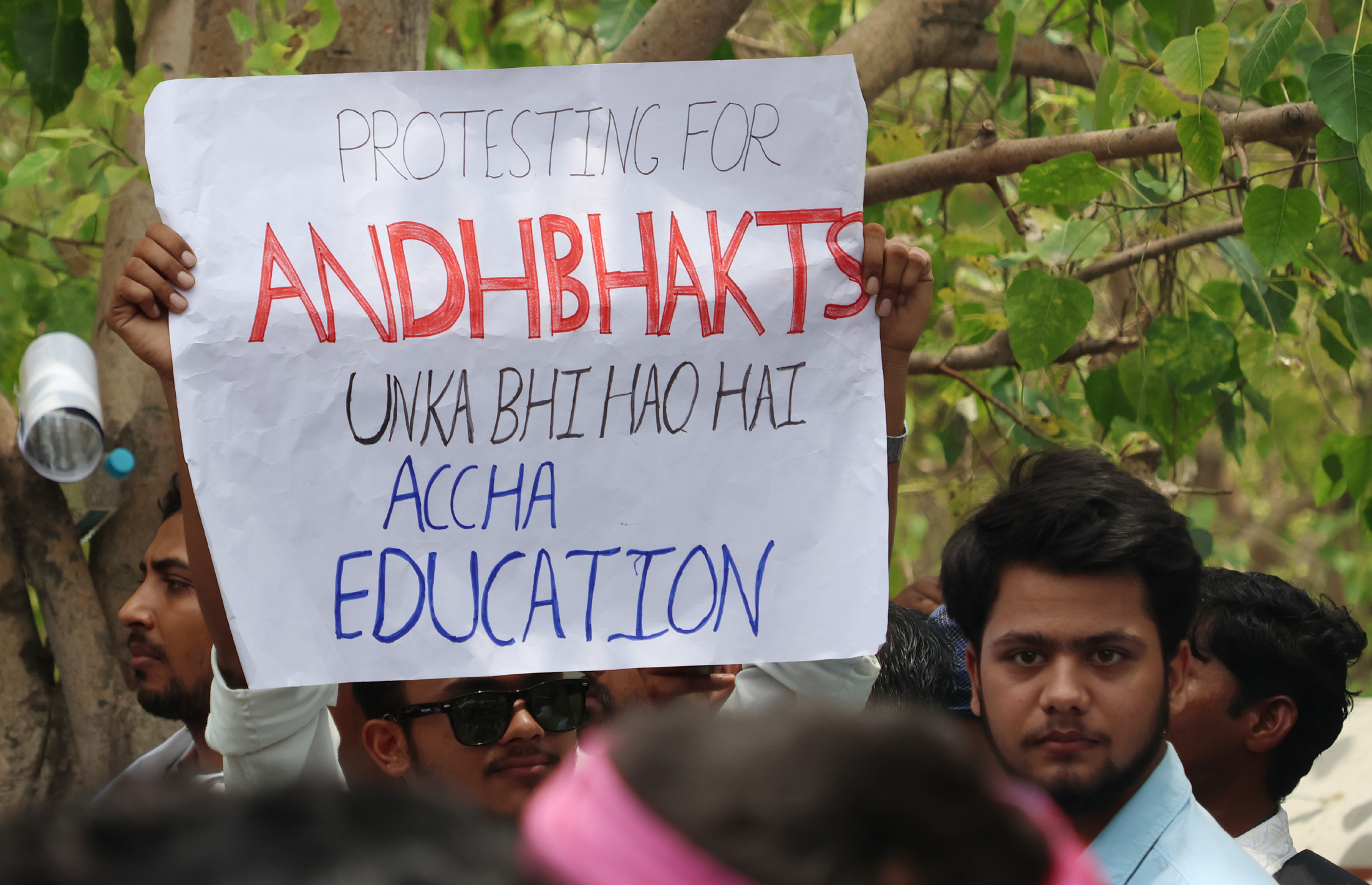 At a protest site against exam leak. (Express Photo by Vishal Srivastav)
Students who take exams while being enrolled in colleges and universities must contend with controlling administrators armed with the latest technologies. In Varanasi’s Kashi Vidyapeeth, director of the journalism school, Nagendra Kumar Singh, keeps an eye on all 12 classrooms on a CCTV panel in his office, simultaneously. “To prevent exam gadbad (trouble)… Girls versus boys… To protect property… Maintain discipline,” says Singh.
In June, the UP Governor underlined the default position of distrust vis a vis students. She directed all state universities and higher educational institutions to establish “anti-radicalisation units” to curb forced religious conversions on campuses.
When they vote in the 2027 elections, some of them for the first time, these students will be weighed down by pressures and circumstances. At the same time, in the aftermath of the NEET retest, it is among the young that you will also hear the most artless, the most direct questioning.
In Lucknow’s Eco Garden, on a hot June afternoon of protest against exam leaks, Mahima, who belongs to Mirzapur and has been preparing for exams in Lucknow since 2021, says she is not swayed by talk of the Yogi government’s law and order successes. “That is basic, that is our right… Aap ahsaan kar rahe ho (are you doing me a favour)?”
In Kanpur’s coaching hub in Kakadeo locality, Krishna, preparing for JEE, asks:
Should the government not be spending on education and health, instead of spending crores on building the world’s tallest shivling in Varanasi? Some cars in this city have “Bajrang Dal” emblazoned on them, some flaunt BJP flags. Isn’t it wrong that they are not stopped by the traffic police?”
“What about Manipur? If I look at the BJP’s performance on law and order, will I look only at UP?”, asks Sejal in Vinayak City Centre Mall in Allahabad.
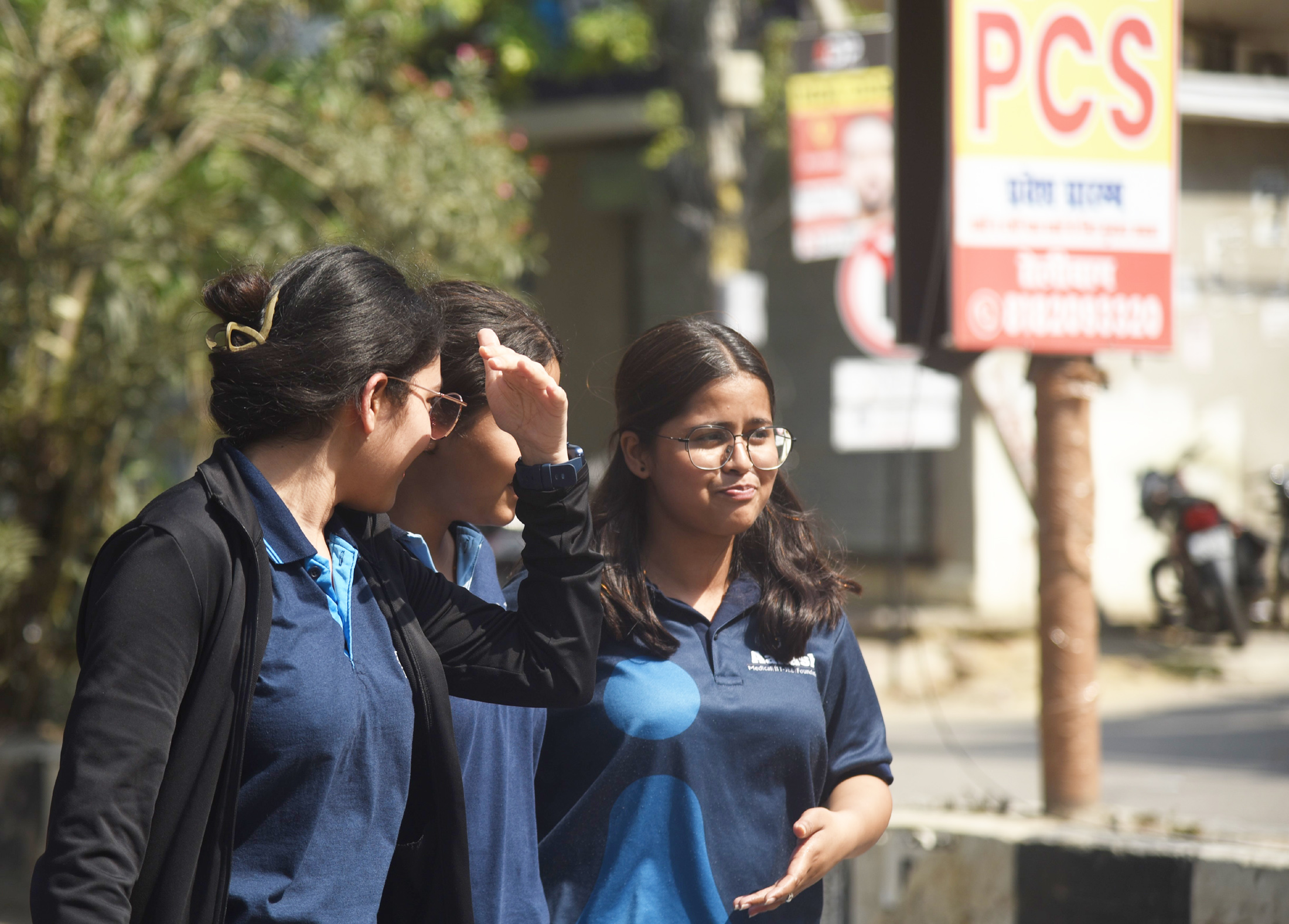 Students in Lucknow. (Express Photo by Vishal Srivastav)
‘Why can’t SP say sabka saath…?’
A straw poll in a roomful of students at a coaching centre in Allahabad shows that an overwhelming majority feels that UP needs a change of government, for reasons ranging from a broken education system to lack of jobs and besieged freedom of speech — but only a minuscule minority sees Akhilesh Yadav as the alternative.
So where will discontented first-time voters go, if not to the principal Opposition party?
In that question lies an answer — in UP, among large sections of the young, and also among the old, the figure of Akhilesh is still trapped in the past. Over nine years out of power, he seems unable to shake off the image of a leader who presided over lawlessness and lack of safety for women when in government, and showed undue favours to Yadavs and Muslims.
Not just in coaching centres, but also in tea shops, malls and slum clusters, many also ask why, despite mehengai, berozgari, bhrashtachar (price rise, joblessness, corruption) and paper leaks, Akhilesh has not taken people’s issues to the street.
SP leaders offer explanations for the visible dwindling of “aandolan” politics in the party that Netaji built. Because now, they say, the government cracks down on protest, slaps cases against SP workers, places leaders under house arrest on pretexts that are flimsy. Because the people themselves have changed. Given the BJP’s whirring propaganda machine, doing the chakka jam-halla bol politics that defined an earlier SP would only revive its image in the public mind of being a “goonda raj” party.
Earlier, protest was taken seriously. Today the mahaul, logon ki mansikta, media ka rukh (climate, people’s mindset, media’s tilt) are different. There is agitational politics at the district level, the media doesn’t cover it. But the SP has alternative strategies,” says SP spokesperson Udaiveer Singh.
To counter charges that the SP is a Muslim-Yadav party, the SP holds “PDA sammelans” and does “PDA audit”. The audit highlights the alleged marginalisation of backward castes, Scheduled Castes and minorities at different levels of the power structures in UP.
PDA stands for Pichhda (backward caste), Dalit (Scheduled Caste) and Alpsankhyak (minority) — A is also for agda (forward caste) and aadhi aabadi (women), says the SP.
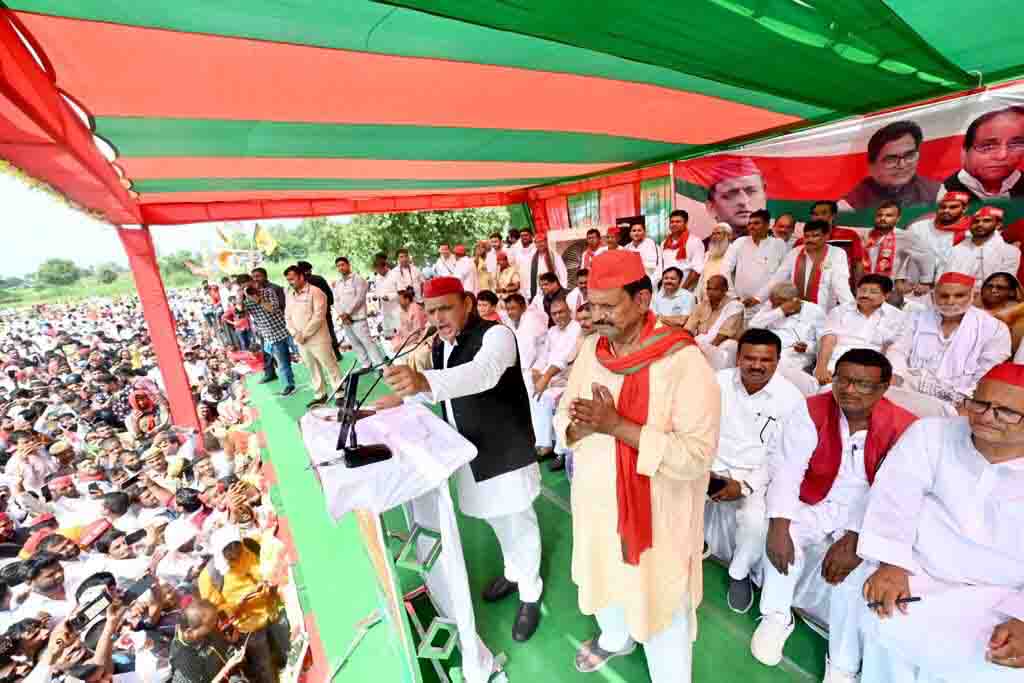 In UP, Samajwadi Party chief Akhilesh Yadav seems unable to shake off the image of a leader who presided over lawlessness. (Express Photo by Vishal Srivastav)
In Varanasi, Surendra Singh Patel, former minister in the SP government, says: “We have learnt from the 2024 LS result”. There are many readings of the BJP’s setback and the SP’s good showing in 2024 — the SP attributes both to its own astute ticket distribution, across castes. “In 2027, though there will be Yadav claimants for a ticket in every constituency, few will get it”, says Patel.
On the ground, however, the SP’s attempts to give the “A” of the PDA multiple meanings and its claims of a ticket distribution more encompassing mostly hit a disbelief.
“The SP rainbow doesn’t show anymore in its top leadership,” says Zafar Bakht, who runs coaching centres in Allahabad. “Earlier, if a Janeshwar Mishra was unhappy, Mulayam Singh Yadav would go to his house to pacify him.” In Kanpur, A K Verma, Director, Centre for the Study of Society and Politics, says:
Akhilesh still plays exclusionary politics. Why PDA? Why not say sabka saath…?”
Squeezed on the UP ground, the SP is casting a wider net through social media. By the “Vision India” programme, held in cities across the country, it is trying to build a national profile for its chief. “Akhilesh bhaiya Modi se lad rahe hain,” says Udaiveer Singh. “Only those regional parties that also have a national agenda will survive,” says Surendra Patel in Varanasi.
In Allahabad, where student politics, banished from the campus, has now shifted to the “delegacy”, the urban slum-like localities where students who don’t find place in hostels stay in rented accommodations, Samajwadi Chhatra Sabha leaders still plunge into street agitations — and pay for it.
“All of us have cases against us, one of us has 39,” says Priyanshu Vidrohi.
On June 12, we wanted to go to join the student protests in Eco Garden (in Lucknow), but we were detained at Prayag Junction, like aparadhi (criminals),” says Ashutosh Maurya.
“The cases are all for political protest, there was no violence. We treat them like medals,” says Anurag Yadav.
There is a visible gap between the SP leadership and its student wing — the Samajwadi Chhatra Sabha seems less inhibited in taking its politics to the street.
Rahul visible, Congress still missing
Another gap may be brewing — between Akhilesh and Rahul Gandhi, INDIA bloc allies, and probable partners, again, in UP.
Among the people, Rahul is mentioned in ways that show that, perhaps more than Akhilesh, he is shaking off a past image as “pappu” or political dilettante, or as someone who doesn’t have the required CV. The two Bharat Jodo Yatras have contributed to changing perceptions. Now, many say, “he raises people’s issues”, and “he is educated”. Or that “he looks the government in the eye when he speaks”.
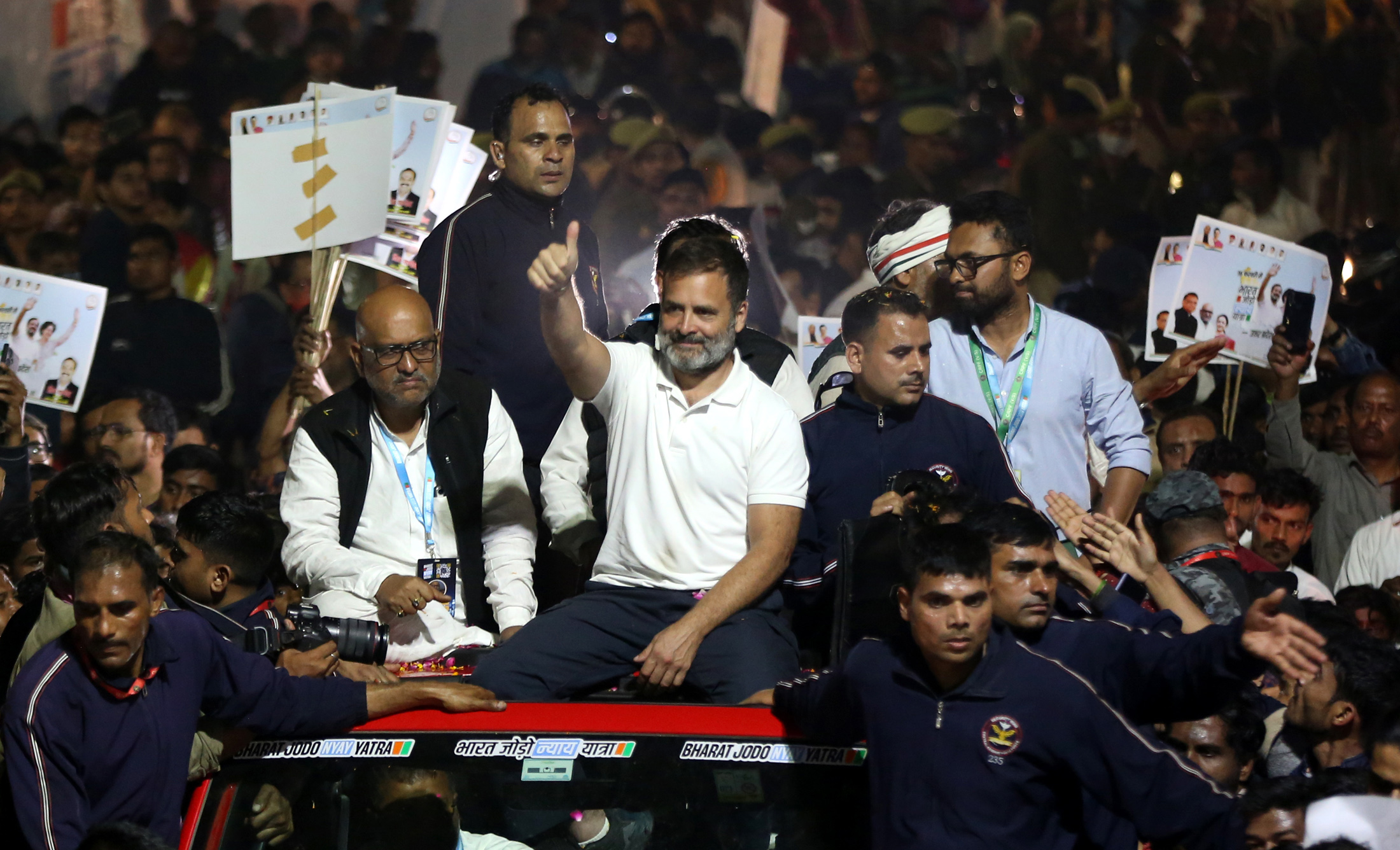 Rahul Gandhi is mentioned in UP in ways that show that, perhaps, he is shaking off a past image as a political dilettante. (Express Photo by Vishal Srivastav)
But Rahul’s party is still not visible on the ground in UP. Congress leaders sound wearied by their party’s long sleep. Or, they speak as if they have left it to the people to take the fight to the BJP. In Allahabad, veteran Congress leader Anugrah Narayan Singh talks about “vote dakaiti (robbery)” and “tantra ka durupyog (BJP’s misuse of state machinery)” and recalls the Emergency. “When the election came, it was logon ka aakrosh … (the people rose),” he says.
Ahead of an uphill battle, Rahul’s talk of the caste census has sent many of the party’s upper caste leaders into a sulk. The UP Pradesh Congress Committee, dissolved a year ago, has still not been re-constituted. In a crucial state, with polls only months away, it is left to the “nirvartaman” or outgoing committee members to supervise political activity — or not. “If you work well, you should be rewarded, but here, baitha diya jaata hai (you are made to back down),” says one Congress leader in Allahabad.
The SP still has committed workers. Akhilesh is walking behind his own karyakarta, while Rahul Gandhi walks ahead of his,” says Anshu Malviya, poet and activist.
Between dead ends and deep ends
In a Muslim mohalla in Gorakhpur, there is talk of a fear that has settled in, become “andruni”.
There has been a lot of development in this city, but we only want that our masjids are not touched, mahfouz rahein (we want safety).” “Lagta hai raaste band ho rahe hain (it’s as if we confront dead ends),” says Uzair.
“We used to play cricket near the Gorakhnath mandir, not anymore. Maan lijiye koi baat ho jaati hai (what if something happens)…,” says Anas. The fear persists, they say, even though Muslims also come to seek resolution of disputes in the durbar (people’s court) held in the Gorakhnath mandir complex, and get treated in its chikitsalaya (dispensary).
Ahmad bhai, in a bunkar basti (weavers’ cluster) in Varanasi that is being emptied out because of distress migration, says that it has been five years, or maybe six, since he has gone to the Ganga ghat, only a couple of kilometres away, in the morning. “Earlier I would go regularly to bathe in summer, and with the children on Sundays. Banaras ki masti khatam ho rahi hai (the city is losing its playfulness)”.
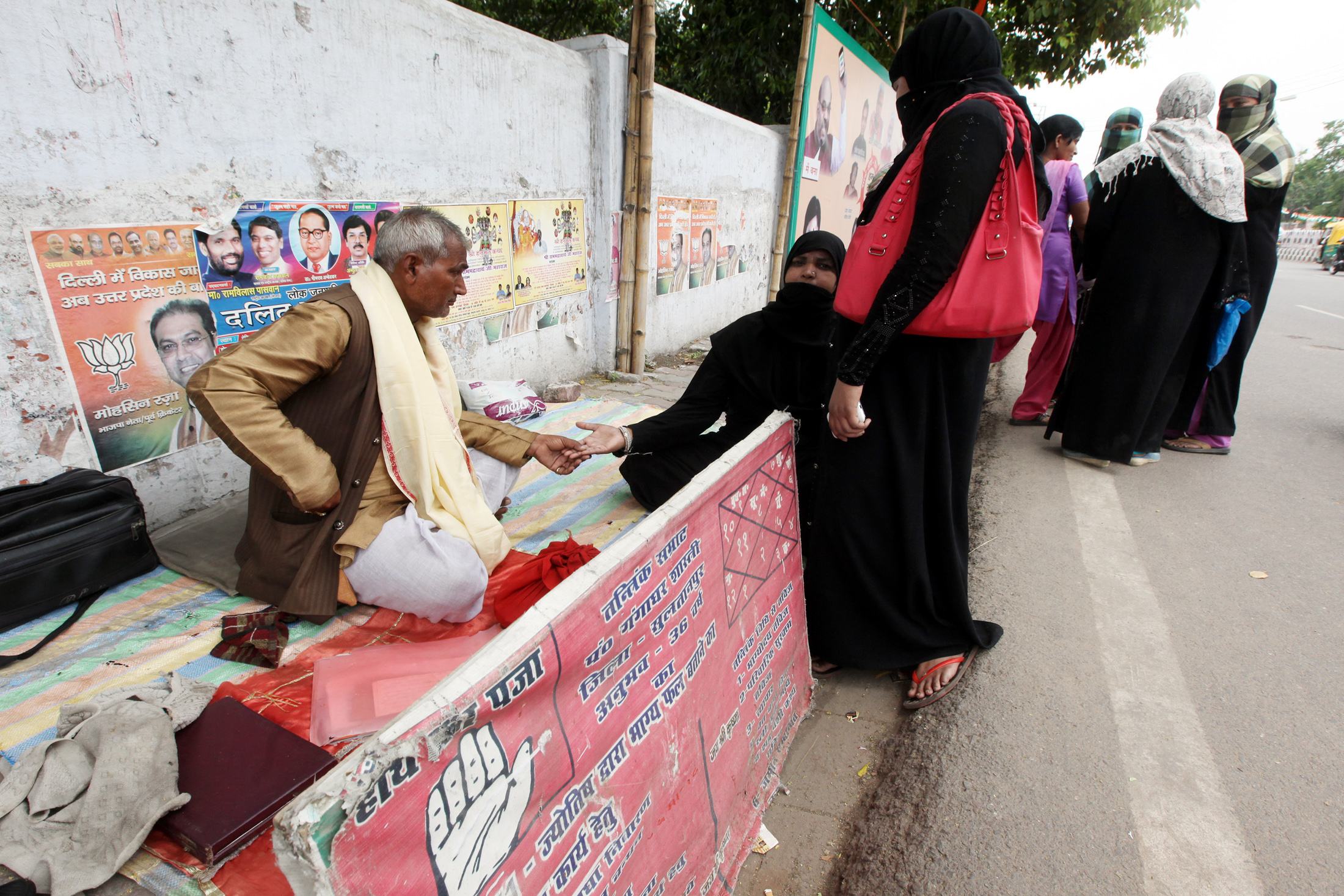 Women at a roadside palmist in front of state BJP office in Lucknow. (Express Photo by Vishal Srivastav)
In Lucknow’s Lulu mall, Abbas Mehdi says “We want sukoon (tranquility)… Akhilesh will have to change perceptions on the Hindu-Muslim issue but I don’t see him on the street. What kind of law and order is it, anyway, that even Akhilesh does not feel safe to step out?”
Akhilesh is an embattled figure in the Muslim neighbourhood — if Hindu voters accuse him of favouritism to Muslims (and Yadavs), he also draws reproach for not speaking up on issues that are “Muslim”.
In a cloth showroom in Kanpur, once the “Manchester” of the east, Anas says, “We are now untouchables, Akhilesh will lose votes if he talks about us. But he should find the language to talk to Hindus. The majority community will have to think about what kind of a country they want their children to grow up in”.
Strong arm of the government
In its 10th year in power, law and order continues to be touted as the Yogi administration’s biggest success story in UP.
A senior police official tells a story of improving systems and statistics: To take just one, the emergency response time of UP Police at 6 minutes and 48 seconds is the best in the country. Chief Minister Yogi holds a meeting, from 9 pm to 10.30 pm, to review law and order, every night.
In official police-speak, the term “zero tolerance” finds many a mention, as do “tool-kit”, “anti-national”, “eco-system”, “conspiracy”. UP’s history is invoked — the SP’s alleged laxity on law and order and the flourishing of mafias on its watch is cited. But these terms are also a part of the larger culture of distrust that has become entrenched in the time of BJP. In UP, they are used to justify police encounters, bulldozer action against alleged criminals, state repressiveness vis a vis civil society protest or Opposition activity or the minority community.
The police official cites the “broken windows theory” in criminology, which says that to prevent a perceived descent into major lawlessness, conspicuous crackdowns on low-level acts of disorder are needed. The heavy swoop-down on minor crime is a signalling device and, by all accounts, the UP Police sees itself as a prime instrument of political messaging — a “right-wing eco-system” is watching, and goalposts are set by the BJP’s “priorities”.
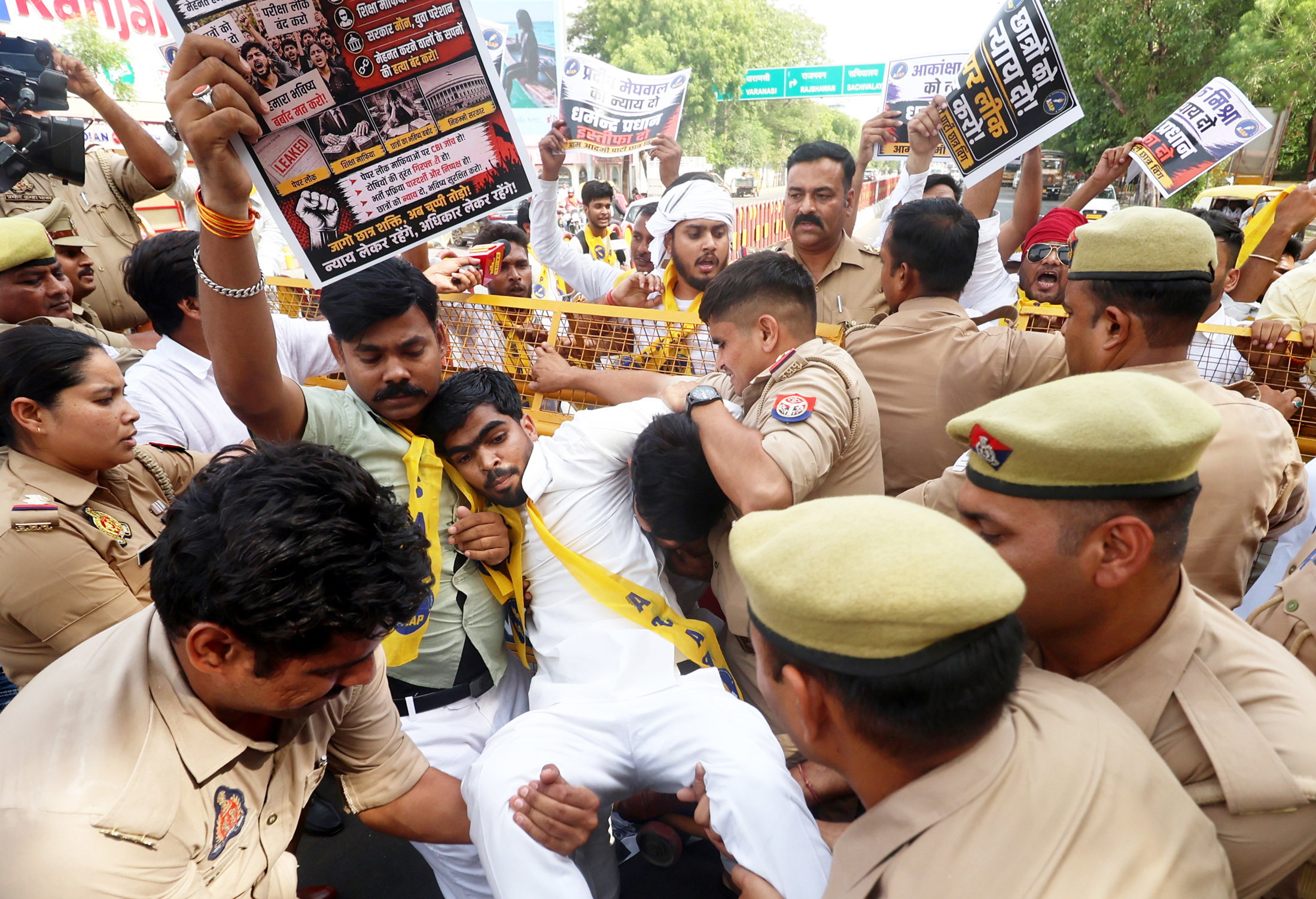 Police and demonstrators tussle during a protest on the NEET paper leak. (Express Photo by Vishal Srivastav)
In Varanasi, BJP MLC Dharmendra Singh spells out a need not to let down the guard: “2024 (when the BJP tally was dented in UP) was a speedbreaker, it’s like the vehicle jumped while you were on the phone, talking.”
The imperative was, it still is, he says, greater “anushasan (discipline)”. Because “There is a threat to sanskriti, parampara, sanskar (culture, tradition, values)…”
“If you don’t sleep at your door with weapons…”, he says, dangers will persist in UP. He doesn’t mean that literally, but the choice of word and image is telling.