

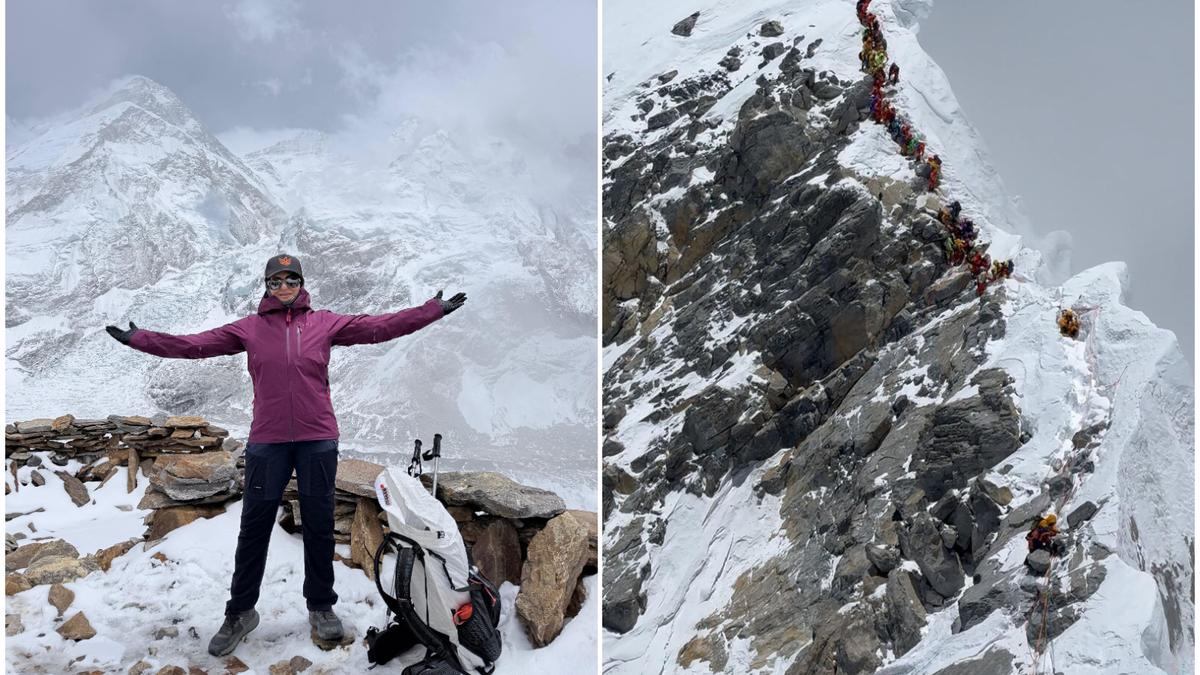
My journey to Everest did not begin with a fascination for summits. It was not even my second choice for a climb after the successful and spiritually fulfilling Manaslu summit.
But, the emotional upheaval of the COVID years and a personal loss had me Google possible choices for a scenic yet culturally significant trek far from the noise. For me, that refuge became the mountains. In quick succession, I lined up summits including Sandakphu Phalut, Khopra ridge, and Kilimanjaro. Encouraged, I proceeded to complete Everest base camp and Lobuche East, qualifying me for technical climbs including 8,000 metre peaks like Manaslu and Everest.

The mountains challenged me in ways life never had. They demanded endurance, patience and surrender. And in return, they gave clarity, mental resilience and devoured my ego and pride. With every ascent, I began learning to master emotion and mute fear. I felt this transformation began to reflect in my life. In my medical profession, in administrative responsibilities and in critical decision making, I found myself calm, with greater emotional control.
Locking in
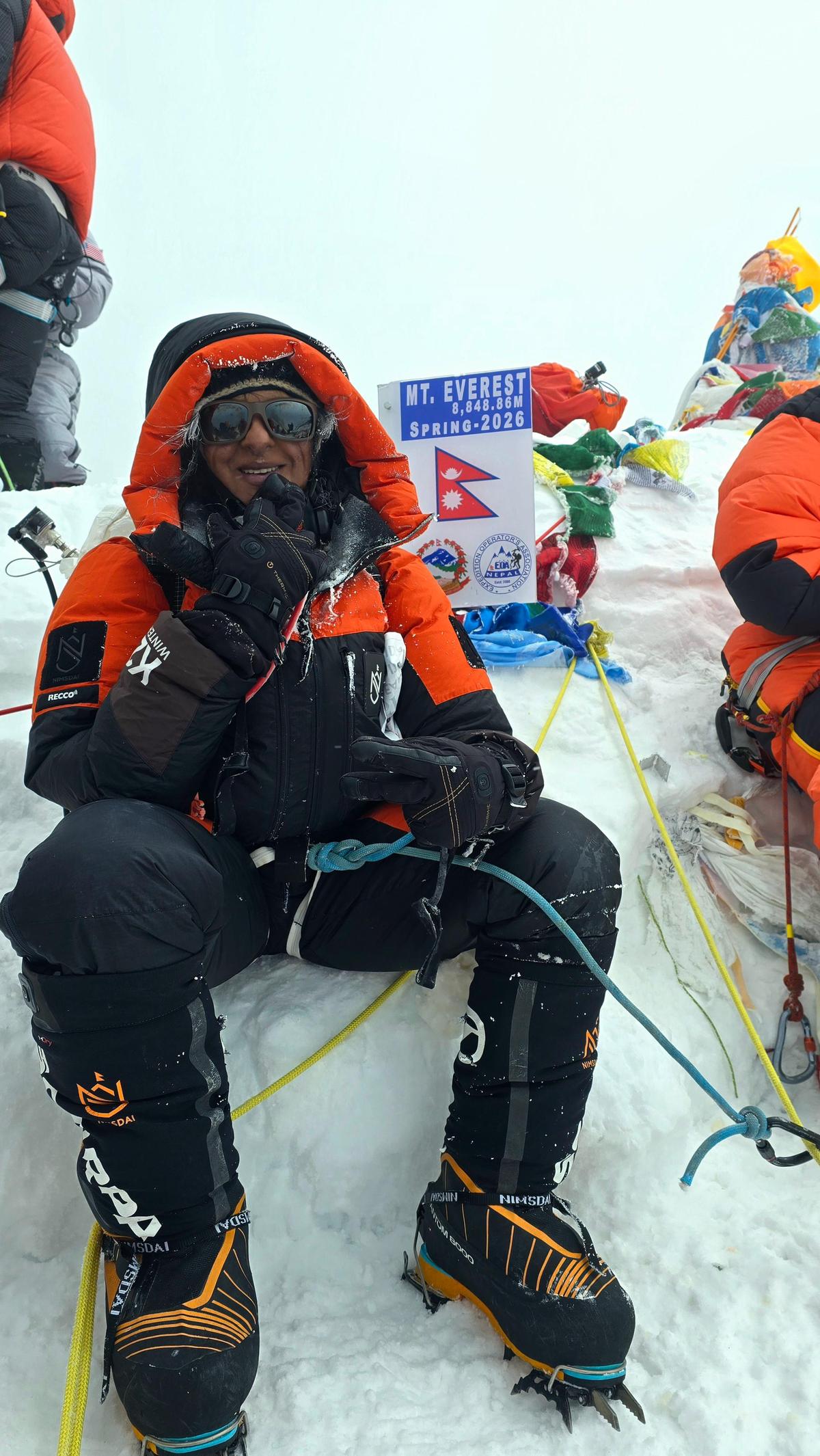
Dr Priya at the summit
| Photo Credit:
Special Arrangement
Before Everest came Mount Manaslu, the world’s eighth-highest mountain. To me, climbing Manaslu was deeply spiritual. It was my first 8,000-metre peak, and it gave me the confidence to believe that with the right mindset, piety, belief, and a reputed company and guide, even the impossible could be achieved.
I trained for the herculean Mount Everest from November 2025 until a day before I left for Nepal. The gap between two climbs was six and a half months but my training time for Everest was a short four months.
To most people, Everest is the ultimate conquest — the highest point on Earth. For people around me, the expectation became natural progression. But for me, it was never just about standing on the summit. It was about understanding what it would demand of me.

I trained for Everest at sea level in Chennai. As I had to balance my demanding work and deadlines, a well-researched schedule between my home gym, the hospital ramp and a weekly run to marina beach, was crafted by Dr Sunapradeep, a national-level athlete and dentist. It involved cardiovascular conditioning and strength training, with occasional runs and Muay Thai.
Prior certification for technical climbing skills of being able to do a 6,000-7,000 metre climb, and mental preparation for an endeavour like this, are essential. You must be comfortable with ropes, harnesses, ascenders, belay devices, boots, and crampons while moving efficiently under extreme fatigue. It is also very important to listen to your guide during the climb. This reduces risks as both lives are important on the mountains.
Peaking order
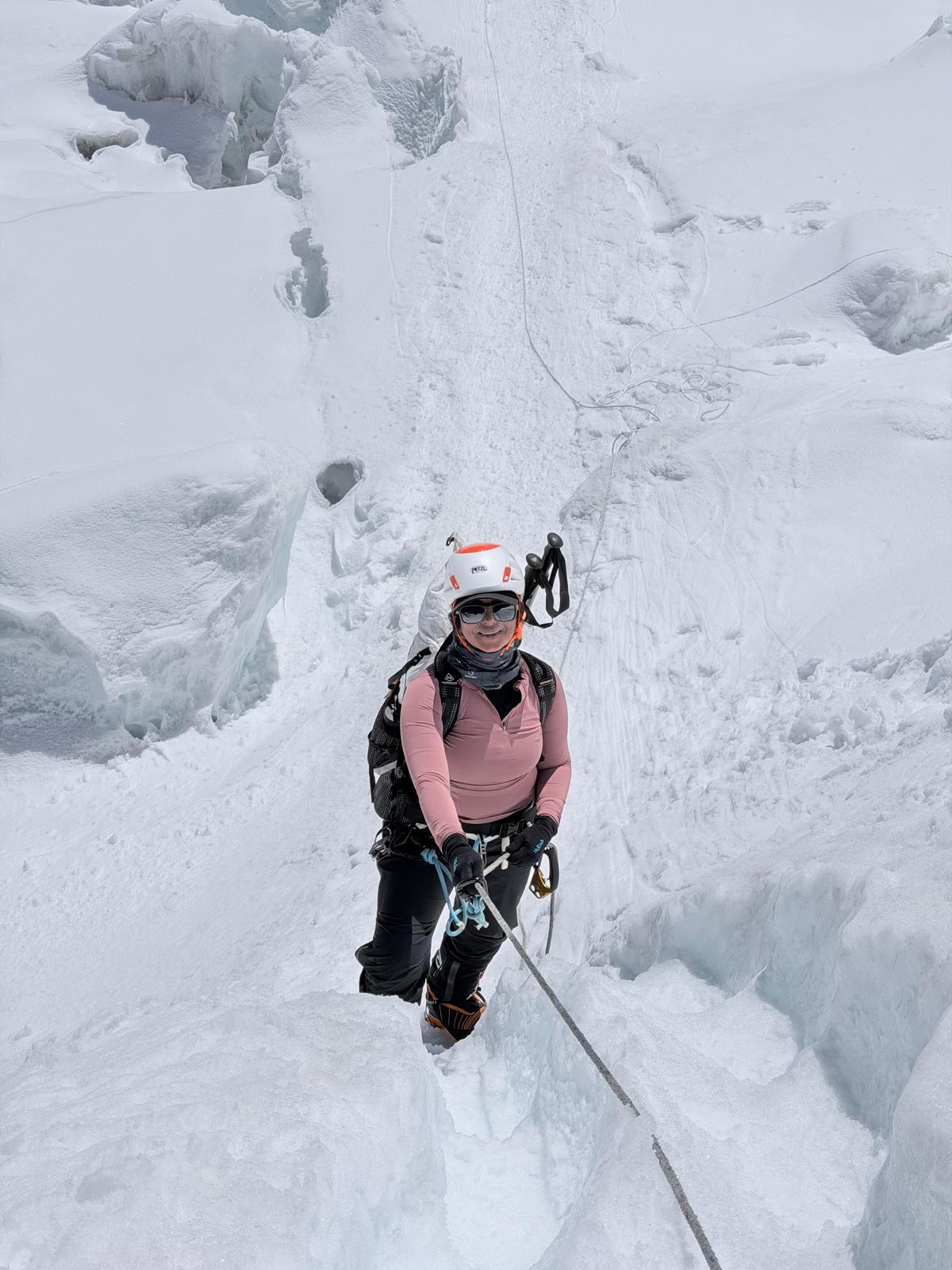
During the climb
| Photo Credit:
Special Arrangement
We must all acknowledge that overcrowding is an issue on Everest. This season, Nepal issued a record 494 permits for Everest alone, and almost 1,000 climbers including sherpas were lined up for summit,
When I began my climb in May, there were delays even before summit pushes began. Threatening seracs over the Khumbu Icefall (a highly perilous, constantly shifting river of ice located at the head of the Khumbu Glacier in Nepal) delayed route and rope fixing as well as rotations. The Khumbu Icefall itself is perhaps one of the most dangerous sections of Everest. Repeatedly navigating this region for technical training as well as rotations became both a physical and mental battle.
For me, these were the toughest moments, especially when our summit push was delayed due to weather conditions. The uncertainty of waiting played mind games. It is not uncommon to question yourself, suffer self doubt, have breakdowns, and cry. In these moments my coach and my children helped. Also, my friends and fellow climbers were highly supportive.
Then came the near-death experience.
During one crossing, I failed to make a jump over a crevasse and fell into it.
The only reason I am alive today is because I was tethered to the safety rope. I ended up with big bruises but was thankfully spared of fractures.
That moment reinforced something every climber must understand: technical knowledge saves lives. Your safety line must be clipped first. I owe my life to my Sherpa guide, Anup Gurung. His response was immediate. Calm, efficient and skilled, he deployed his rescue rope and helped haul me out.

The toughest parts of Everest come after Base Camp. Higher camps strip away comfort, appetite, sleep, and even coherent thought due to the declining oxygen levels. At Camp 4, famously known as the death zone, your body suffers from the lack of oxygen.
Hence, we all got on supplemental oxygen from camp 3. Besides this, during climbing season, we saw an indiscriminate amount of littering at this camp: Discarded oxygen bottles, torn tents and abandoned gear, all scars left behind on a sacred mountain. Increased access to the mountain has also brought new challenges, including overcrowding and environmental pollution.
Close to the summit, negotiating the Hillary Step was one of the hardest parts for me — technically demanding, exposed and exhausting. It was here that I was forced to confront what I know and yet find hard to swallow — the mountain can claim you. We moved slowly past climbers who had died on the mountain, their bodies still attached to their safety ropes.

The summit was completed on May 27. My first thoughts were gratitude and reverence to Sagarmatha, the Nepali name for Mount Everest, for granting me safe passage to summit. Only after these pure moments of blessings did I proudly unfurl both the Indian flag and the GG fertility research foundation flag. For me, mountains have been like a pilgrimage and the connection is largely spiritual.
The descent became my next challenge. By then, I was dehydrated, depleted and mentally spent. Yet, I had to stay focused. The mountain kept reminding me success was about coming home.
Hailing the heroes
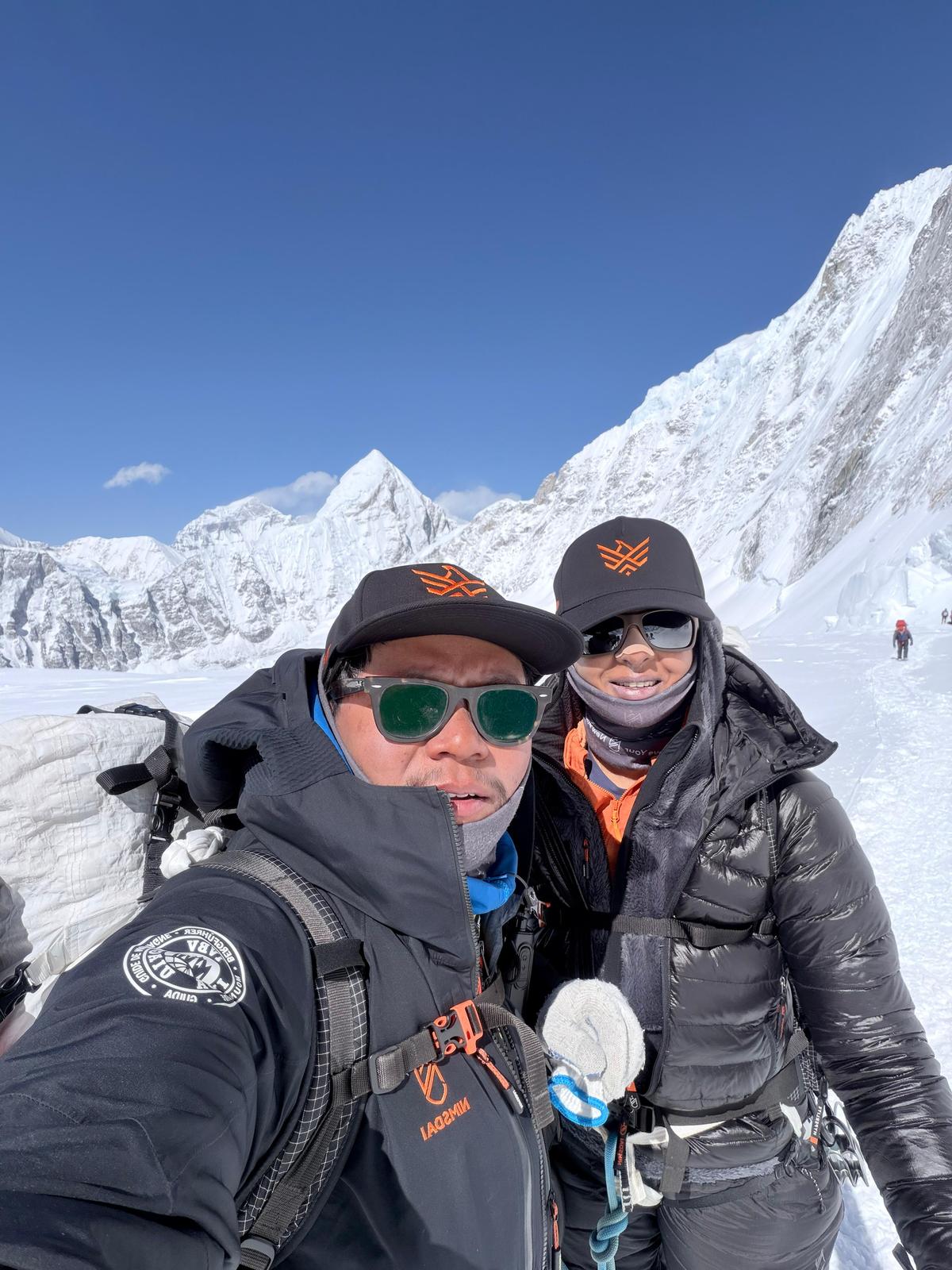
Dr Priya and her guide Anup
| Photo Credit:
Special Arrangement
I chose to work with Anup after our success on Manaslu together. This was his seventh Everest summit. His father is a well-known mountaineering guide and Anup is a popular face on the mountains, as many greet him, acknowledging him as a friend, mentor, and guide. He is kind, gentle, skilled, and patient. Though younger than me, at 38 , he would transform into a father figure on the mountain, checking if my gear was right and my harness in place. He also unfailingly kept reminding me to fix the safety rope first: the exact protocol that saved my life in the crevasse.
Let this be known that while we climbers often receive the glory, it is the Sherpas who are the true backbone of Everest.

Now, Sherpas are not just guides — they are becoming owners and operators of expedition companies. They understand and navigate the mountain better than anyone else. They not only carry loads but they also bear the responsibility for the summit of clients. They truly deserve far greater recognition.
I climbed with acclaimed mountaineer Nirmal Purja’s company, Elite Exped and this was my fifth expedition with them. According to Nimsdai, as we call him, a true climb begins from base camp, progresses to the summit, and involves a walk all the way back to base camp with no short cuts — meaning, no helicopter rides.
Today, I climb for discipline, lessons, building resilience, and strengthening survival skills. The mountain did not just test my endurance; it played mind games. If you are fortunate enough to return, you are certainly not the same person that you were when you started out.
Dr Priya Selvaraj is one of Chennai’s leading fertility experts, and director, GG Hospital.