


In January 1937, Pauline Trigère and her husband, Lazar Radley, along with their two sons and Trigère’s mother and brother Robert, arrived in New York City. The family was Jewish, and they had left France because of the growing Nazi threat. New York, however, was just a stopover: Their destination was Chile, where Lazar and Robert planned to establish a fashion business. Pauline was an experienced cutter and had grown up in her parents’ dressmaking workshop; but Lazar preferred that she not work, so her role would be minimal.
On their first morning in the city, Pauline, Lazar and Robert set out to scout Fifth Avenue for trends. It was then that Pauline began to envision a different future.
In every store they visited, she marveled at the quality of the fabrics and the tailoring. The prices were lower and the selection greater than in Paris. It was the dead of winter, yet shop windows were full of spring clothes. The American industry, Pauline realized, was very well organized and supplied if it could plan and execute production so far in advance. As for the average New Yorker on the street, she was much better dressed than the average Parisienne.
That evening Pauline told her husband that they she was staying in New York. He replied that she was crazy. It had taken months to get their visas. They were sticking to the plan.
Pauline refused to budge.
The family remained in New York, and Pauline went on to become one of the giants of Seventh Avenue, a maker of refined, impeccably tailored coats and suits worn by women like Lena Horne and Grace Kelly. She retired in 1994 at the age of 86 with three Coty Awards, the pre-cursor to the CFDA awards, to her name. She divorced Lazar.
Pauline Trigère understood instinctively what distinguished American fashion. She came from a tradition in which fashion was for those who could afford it — Paris was the birthplace of the haute couture, which focused on making one garment at time, for one client at a time. In New York, thanks to a robust manufacturing base, fashion was as plentiful as yellow cabs. As Mayor Fiorello LaGuardia once observed, a pretty dress was the right of every American woman, no matter her budget or size.
This thinking is grounded in the American ideals of democracy and equality. Fashion isn’t mentioned in the Declaration of Independence or the Bill of Rights, but its importance was certainly recognized by the Founding Fathers (and Mothers). When George Washington was inaugurated on April 30, 1789, he rejected the expensive silks and lace that signified wealth and status in Europe — instead wearing a plain brown wool suit such as any other man in the new country he was going to lead might own.
This principle lives on in the unpretentious archetypes that populate American fashion. The cowboy. The rebel. The worker. Even the most upper-class of American icons, the Ivy Leaguer, has an informal approach to dress. Tweed blazers and penny loafers were the off-duty clothing of mid-century, and preppies wore them until the elbows of their blazers split and the soles of their Bass Weejuns flapped open.
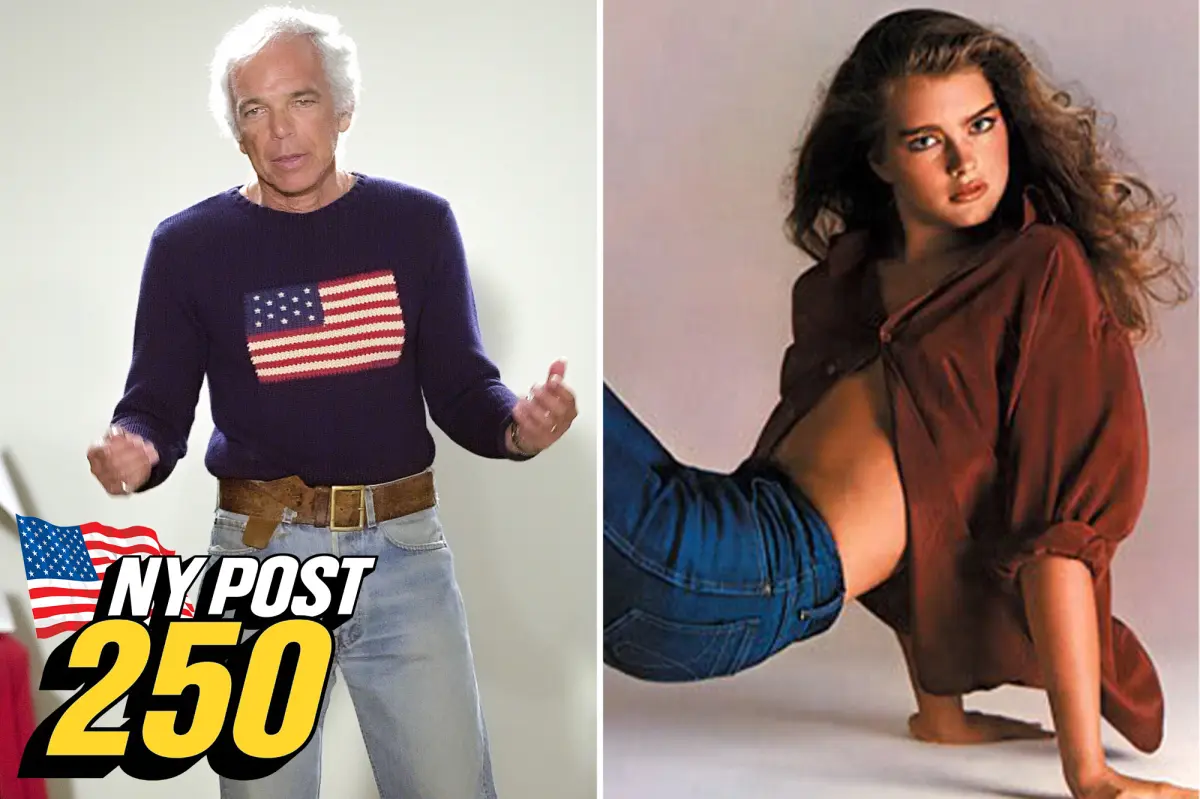
Connecting these archetypes are values like simplicity, comfort, utility and optimism. The most successful designers interpret these archetypes and values in ways that make sense for the times they live in. Calvin Klein took classic American sportswear — more on that in a minute — and made it sexy and minimalist. Ralph Lauren blended Western and preppy motifs and overlaid them with the iconography of Hollywood. Tommy Hilfiger gave us a mash-up of Ivy League and hip-hop. Marc Jacobs riffed on grunge.
Because American fashion is inclusive, these archetypes continue to evolve beyond clichés and whitewashing. Christopher John Rogers, for example, whose clients include Michelle Obama, Lady Gaga and Anne Hathaway, often alludes to the “Sunday best” tradition of Southern Baptist culture. Willy Chavarria, who worked for both Klein and Lauren, references the Mexican-American pachuco and cholo subcultures that originated in Texas in the 1930s and California in the 1970s.
As for the actual garments that American designers excel at making, they’re what’s known in the industry as sportswear, a term that doesn’t mean gear worn to participate in sports but, rather, casual clothing. The modern rendition includes jeans, T-shirts and athleisure, i.e. what people around the world wear every day. It is fashion at its most accessible. The designer Claire McCardell, aka the mother of American sportswear, defined it as clothing uninfluenced by Paris, where exclusivity is part of the DNA of la mode.
Like her colleague Pauline Trigère, McCardell was a visionary. She knew where fashion was going and how designers needed to prepare for it. “The wardrobe of the future will be global… we’ll all be plane-minded, hence global-minded, hence capsule-minded: The fewest number of costumes with the greatest number of possibilities,” she told a journalist in 1945.
In fact, McCardell had been designing capsule wardrobes since the mid-1930s, undeterred by the buyers who told her that women wouldn’t understand the concept, that they needed to be sold an entire look. It took another 50 years and another American designer, Donna Karan, who created her Seven Easy Pieces in 1985, for the idea to go mainstream.
McCardell died in 1958, at 52. At the time, New York was still fighting to be taken seriously as a fashion capital. Even today, it suffers in comparison to Paris, which has been the center of the fashion world since the reign of Louis XIV. In this juxtaposition, American fashion is usually deemed too commercial.
McCardell never saw this as a fault.
“I belong to a mass-production country where any of us, all of us, deserve the right to good fashion and where fashion must be available to all,” she wrote.
Mass production doesn’t have the romance of century-old couture houses. But it’s what drives the $1.8 trillion-dollar international fashion industry. And it is rooted in the humble but revolutionary idea, conceived of and first implemented in New York City’s Garment District, that fashion is for everyone.
Nancy MacDonell is the author of “Empresses of Seventh Avenue: World War II, New York City and the Birth of American Fashion.”