

Shinnecock Hills has hosted four modern-era U.S. Opens before this week. Here’s a look back:
1986: A win for the ages
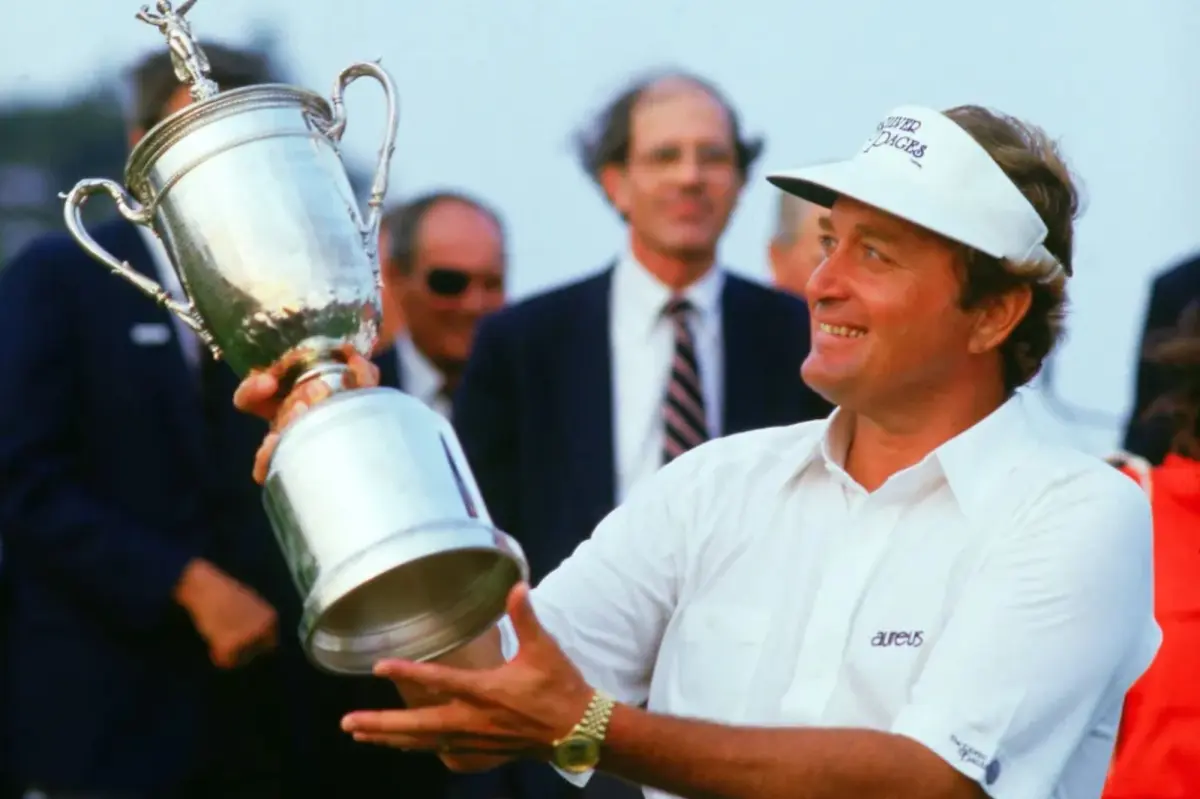
Raymond Floyd became the oldest player to win the U.S. Open at age 43 years, 9 months (Hale Irwin would win in 1990 at Medinah at age 45 to take the distinction).
Floyd shot a bogey-free final round of 4-under 66 to finish the week at 1-under, two shots up on Chip Beck and Lanny Wadkins. It was Floyd’s fourth and final major championship victory.
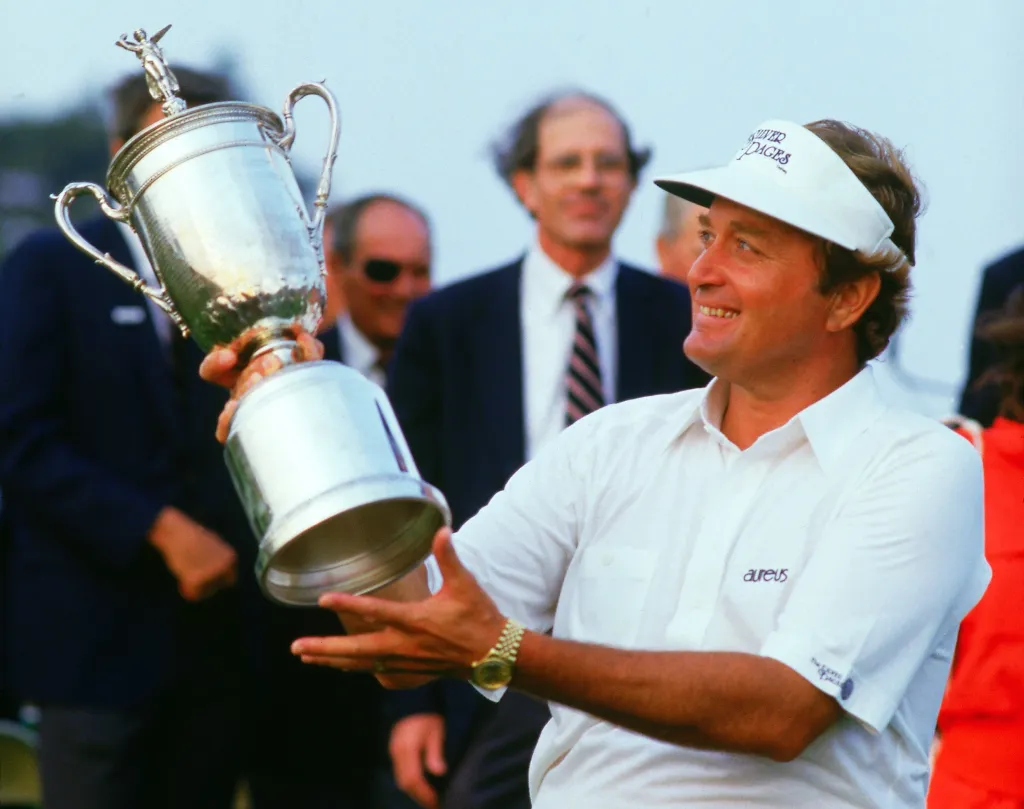
Years later, Floyd, who would become a member at Shinnecock, recalled the lead-up to that U.S. Open, which included losing the final-round lead and the tournament at the Westchester Classic the week before.
Floyd was in a nine-way tie on the back nine in the final round before emerging victorious.
“On Sunday, as I walked to the 10th tee, I looked in the gallery and saw [my wife] Maria,’’ Floyd recalled in a first-person story for Golf Digest. “She said later that when she saw the look on my face, she knew I was going to win. She called it ‘The Stare,’ a focused expression that told her I was in the zone.’’
1995: A shot for the ages
Corey Pavin’s victory will always be remembered for his uphill, 228-yard 4-wood approach shot on the 72nd hole. The ball came to rest 5 feet from the hole to seal his only major championship.
Pavin, who trailed 54-hole leaders Greg Norman and Tom Lehman by three strokes heading into the final round, shot a 2-under 68. And that historic shot almost never happened, with Pavin contemplating using a 2-iron to reach the green.
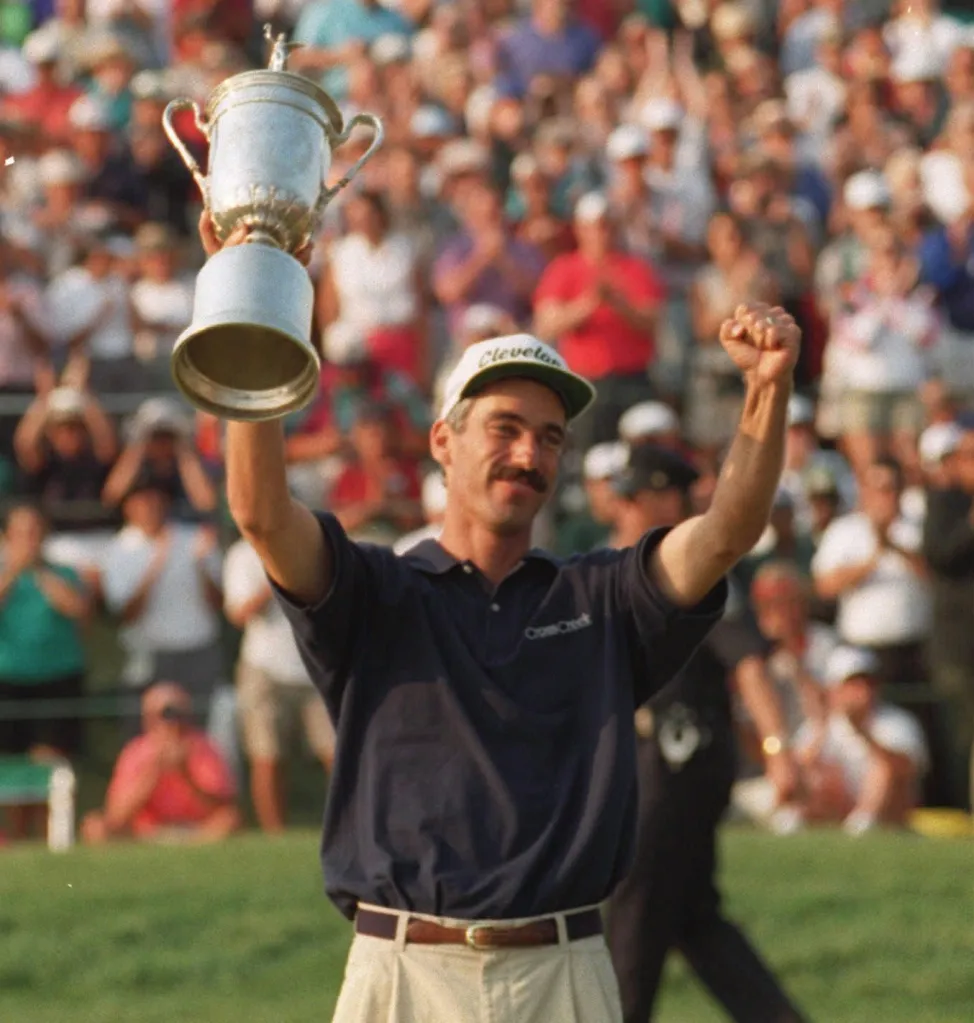
His caddie, Eric Schwarz, insisted it was impossible to reach with the 2-iron and recommended the 4-wood.
“I was 1 up with that shot to go,” Pavin recalled years ago. “Greg Norman and Tom Lehman were two holes behind me. In my mind, if I make par there I would very likely win. With having that in my head, I had to throw that out and concentrate on the shot. The wind was blowing 15, 20 mph right to left. I could see the top of the flag. That was it. I decided to aim at the right edge of the green and hit a little draw, the normal routing. The second I hit it I knew it was good.”
2004: A final round for the ages
Retief Goosen staved off Phil Mickelson in the final round with a remarkable 11 one-putts on the treacherous greens. It was his second U.S. Open victory in four years, having won in 2001. Goosen finished the tournament at 4-under, beating Mickelson by two strokes.
The final-round conditions were brutal, the field averaging 78.7 while Goosen shot 71. The tournament was ultimately decided on the 71st and 72nd holes. On the par-3 17th hole, Mickelson three-putted for a double bogey while Goosen tapped in for par. Then Goosen made par on 18 to win by two shots.
2018: A repeat for the ages
Brooks Koepka became the first player to win back-to-back Opens in 29 years, since Curtis Strange in 1988-89.
Koepka sealed the victory with a final-round 2-under 68, staving off Tommy Fleetwood, who shot a Sunday 63.
Koepka finished 1-over for the week while Fleetwood finished at 2-over.
Koepka’s friend, Dustin Johnson, the winner of the 2016 U.S. Open at Oakmont, had held at least a share of the lead for the first three rounds at Shinnecock, but faltered in the final round, missing four birdie and par putts from inside 7 feet.