

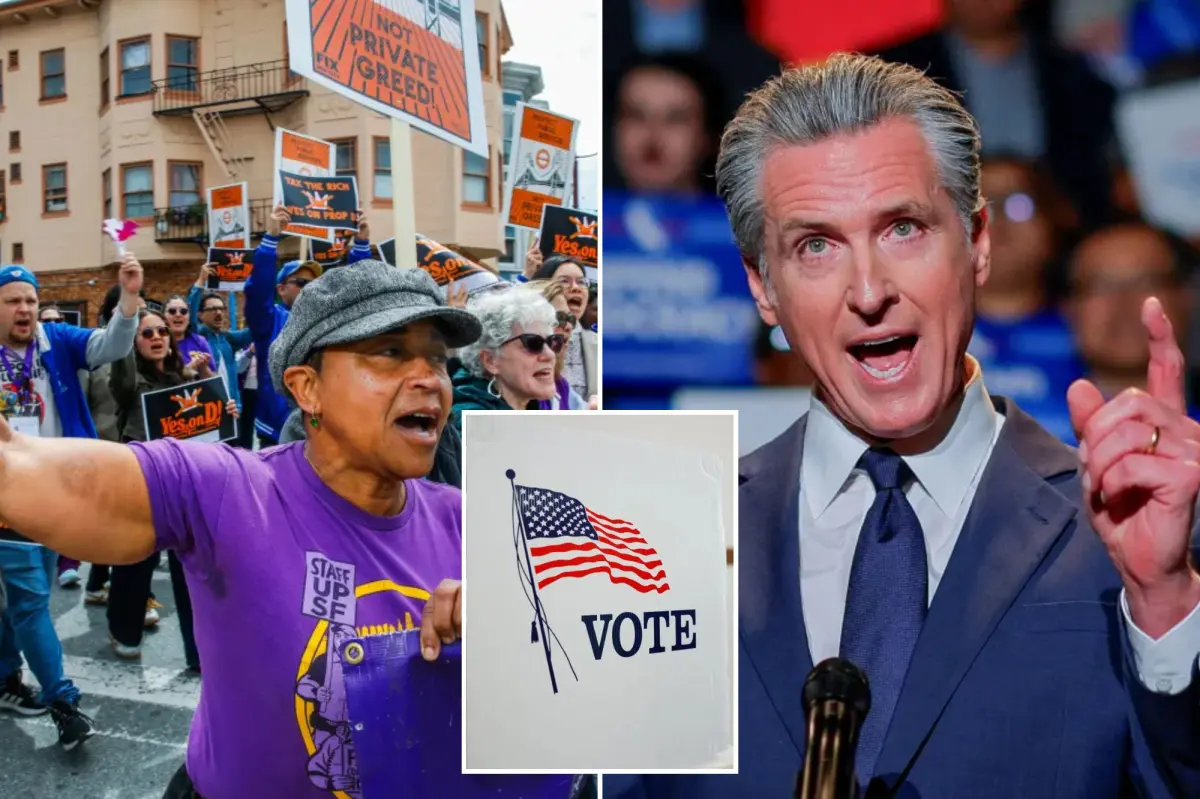

California voters will weigh in on 14 statewide ballot measures in the Nov. 3 election — covering taxes, housing, healthcare funding, climate policy, election rules and public campaign finance.
The proposals include competing tax plans, major borrowing measures for housing and medical research, changes to environmental review timelines, and new rules for voting and campaign financing.
Here’s what’s on your November ballot:
Billionaire tax
What it does:
Imposes a one-time 5% tax on the wealth of an estimated 200 California billionaires, collected over five years. Most revenue would go toward healthcare for low-income residents, with remaining funds directed to education and food assistance programs.
Supporters:
SEIU-United Healthcare Workers West, US Sen. Bernie Sanders, Teamsters California, AFSCME California
Opponents:
Gov. Gavin Newsom, Sergey Brin, Chris Larsen, California Medical Association, California Teachers Association, California Primary Care Association
Audit new tax spending
What it does:
Requires audits of programs funded by newly created taxes and applies that revenue toward the state’s spending cap rules. If both this measure and the billionaire tax pass, whichever receives more votes would take effect.
Supporters:
Building a Better California, Reform California, California Chamber of Commerce
Opponents:
Supporters of the billionaire tax measure
Ban new personal property taxes and retroactive taxes
What it does:
Prohibits new taxes on personal property and blocks retroactive tax increases. The measure is designed to limit implementation of the proposed wealth tax. If both measures pass, the one with more votes prevails.
Supporters:
Building a Better California, Reform California, California Chamber of Commerce, State Building and Construction Trades Council of California
Opponents:
Supporters of the billionaire tax measure
Make high-earner income tax permanent
What it does:
Extends California’s current income tax surcharge on high earners beyond its 2031 expiration. The tax applies to incomes above $360,000 for individuals and $721,000 for couples and funds public schools and community colleges.
Supporters:
California Teachers Association, California Federation of Teachers, California School Employees Association
Opponents:
California Taxpayers Association
Raise threshold for local special taxes
What it does:
Raises the approval requirement for local special tax measures from a simple majority to two-thirds of voters, making it harder to pass local tax increases.
Supporters:
Howard Jarvis Taxpayers Association, California Legislature, Gov. Gavin Newsom
Opponents:
Local tax advocacy groups
Affordable housing bond ($11.25 billion)
What it does:
Authorizes $11.25 billion in state bonds for affordable housing. Funds would support new construction, rehabilitation, preservation of existing housing, and veteran home assistance programs.
Supporters:
Gov. Gavin Newsom, Democratic lawmakers, California Apartment Association, California AFL-CIO
Opponents:
Republican lawmakers
$25 billion homebuyer assistance program
What it does:
Creates a state-backed mortgage assistance program offering up to 17% of a home’s purchase price for eligible buyers earning less than 200% of area median income. Buyers must contribute at least a 3% down payment.
Supporters:
Former Sen. Bob Hertzberg, Building a Better California, California Association of Realtors, United Brotherhood of Carpenters
Opponents:
None formally organized
Rainy day fund expansion
What it does:
Increases California’s budget reserve deposit cap from 10% to 20% of General Fund revenue and allows limited use of funds to pay down unemployment insurance debt.
Supporters:
Gov. Gavin Newsom, Democratic legislative leaders
Opponents:
Republican legislators
Expedited environmental review (CEQA reform)
What it does:
Establishes deadlines for environmental reviews of housing, infrastructure, water, healthcare, and clean energy projects. Limits court delays for qualifying developments under CEQA.
Supporters:
California Chamber of Commerce, Building a Better California, PG&E, Southern California Edison, California Building Industry Association
Opponents:
Environmental coalitions, construction trade unions
Voter ID and citizenship verification
What it does:
Requires government-issued ID for in-person voting and additional identifying information for mail ballots, along with a sworn citizenship declaration.
Supporters:
Reform California, Rep. Ken Calvert, Sen. Tony Strickland
Opponents:
League of Women Voters, ACLU California Action, California Donor Table
Public campaign financing
What it does:
Authorizes state and local governments to establish publicly funded election systems for candidates, lifting California’s longstanding ban on public campaign financing.
Supporters:
California Common Cause, California Clean Money Campaign, League of Women Voters, ACLU California Action
Opponents:
California Taxpayers Association
Recall election reform
What it does:
Eliminates automatic replacement elections following a successful recall. Offices would remain vacant until a separate election is held. Allows recalled officials to run again.
Supporters:
League of Women Voters, California Common Cause, Secretary of State Shirley Weber
Opponents:
Election Integrity Project California
Community clinic funding rules
What it does:
Requires federally qualified health centers to spend at least 90% of revenue on direct patient care and services. Noncompliant clinics would face fines, with funds redirected to workforce training programs.
Supporters:
SEIU-United Healthcare Workers West
Opponents:
California Medical Association, California Primary Care Association, Planned Parenthood Affiliates of California, California Teachers Association
Immunology research bond ($8.4 billion)
What it does:
Authorizes $8.4 billion in state bonds to fund biomedical research focused on immune-based treatments for major diseases including cancer, Alzheimer’s, and heart disease. Treatments developed with public funding would be subject to pricing restrictions.
Supporters:
Gary Michelson, Meyer Luskin, ALS Association, Alzheimer’s Association, Blood Cancer United
Opponents:
Robert Kaplan, former NIH associate director