
4 min readNew DelhiJun 28, 2026 04:55 PM IST
Long before weather apps, Doppler radars and satellite forecasts, farmers across India relied on nature’s signals to anticipate the arrival of the monsoon. Among the most celebrated of these signs was the appearance of the Jacobin cuckoo, also known as the pied cuckoo or Chatak bird. Its arrival just before the southwest monsoon earned it a reputation as a “monsoon forecaster,” a title that continues to capture public imagination even today.
But does this striking black-and-white bird actually predict rainfall? According to naturalist and author Jennifer Nandi, “People noticed that the Chatak or pied cuckoo appeared just before the southwest monsoon. This observation became embedded in folklore and rural tradition, which is why it came to be known as the monsoon bird,” says Nandi.

However, she points out that while modern ornithology supports the timing of the bird’s arrival, it does not support the idea that the bird can actually forecast weather.
“The cuckoo does not predict the monsoon. It migrates in response to the same large-scale seasonal changes in atmospheric circulation that eventually produce the monsoon. In other words, the bird and the rains are responding to the same environmental clock,” explains Nandi.
Research using satellite tracking and bird-ringing records has shown that many Jacobin cuckoos travel to India from eastern and southern Africa, timing their migration to coincide with the country’s wet season. Their arrival is therefore a remarkably reliable seasonal event rather than a weather prediction.
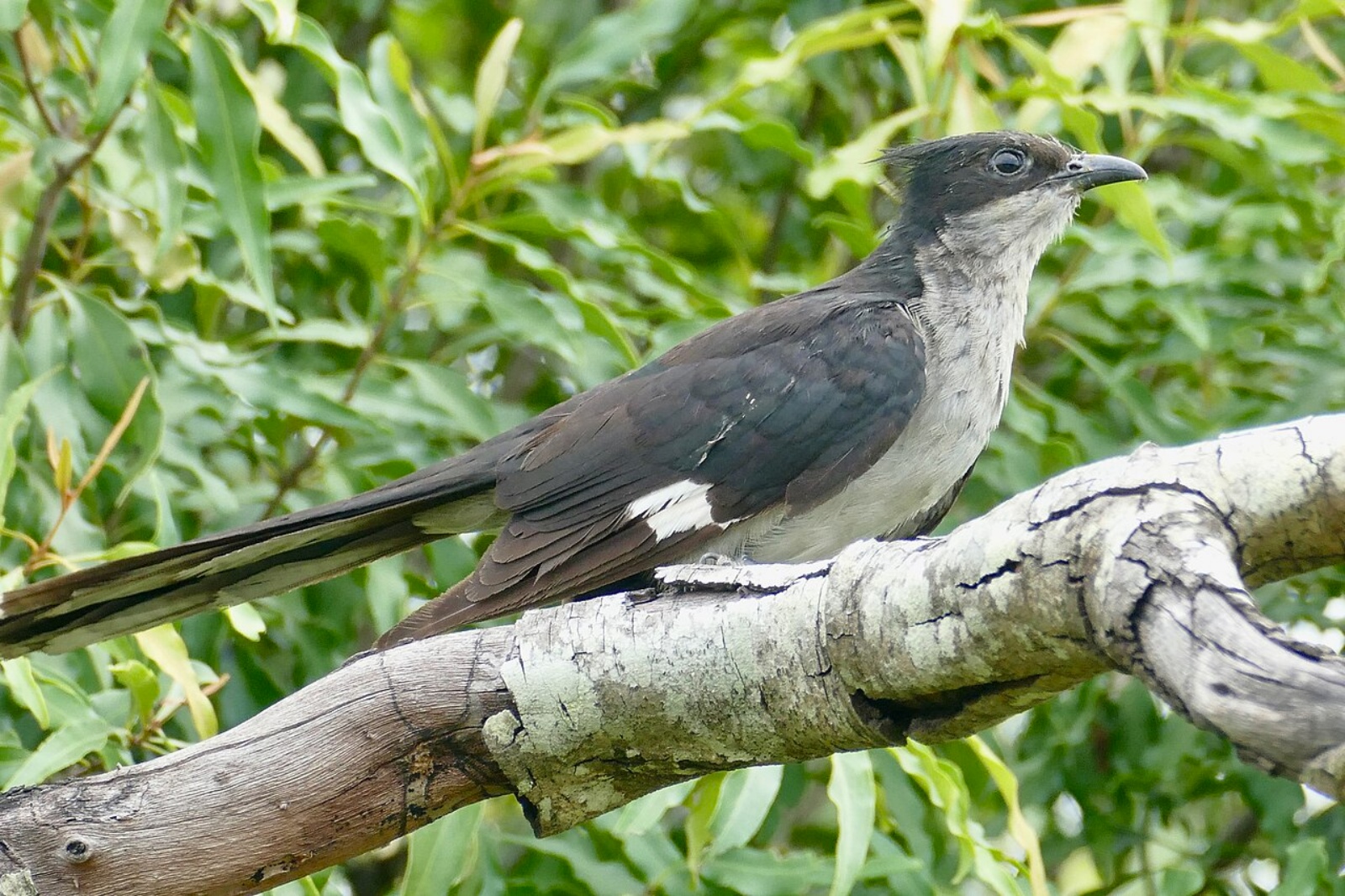 Jacobin Cuckoo (Photo: Wikipedia)
What guides the bird’s migration?
The Jacobin cuckoo undertakes an extraordinary journey that spans continents. According to Nandi, several environmental factors work together to trigger this migration.
- “Day length is probably the primary trigger,” she says. “As daylight changes in Africa, it stimulates hormonal changes that initiate migration.”
- “The Jacobin cuckoo is essentially following an ecological opportunity,” Nandi explains.
- Its timing is particularly advantageous because the arrival of the monsoon brings a surge in insect populations, including caterpillars and grasshoppers, which provide abundant food. At the same time, many of the bird species whose nests the cuckoo parasitises begin breeding.
- As a brood parasite, the Jacobin cuckoo lays its eggs in the nests of other birds, leaving them to raise its young. “Timing is crucial because the cuckoo must arrive when suitable host birds are actively nesting. Missing that narrow breeding window would greatly reduce its reproductive success,” says Nandi.
Can birds still predict seasonal changes in a warming world?
Nandi emphasises that birds remain among nature’s finest environmental indicators, but they are no longer as dependable as they once were.
Story continues below this ad
Historically, bird migration and breeding patterns closely tracked seasonal weather because climatic cycles were relatively stable. Today, however, many species are arriving earlier or later than they once did, breeding at different times, or shifting their geographical ranges altogether.
Nandi notes that one growing concern is the mismatch between bird breeding cycles and food availability. Birds often migrate based on day length, which remains constant, while insects may emerge earlier due to rising temperatures.
“The result is that chicks hatch after the peak abundance of food has already passed,” she explains. While the Jacobin cuckoo still appears to maintain a strong connection with the southwest monsoon, Nandi cautions that changing rainfall patterns could affect the consistency of its migration in the future.
“Bird behaviour still provides valuable clues about seasonal change, but scientists now combine these biological observations with satellite data, meteorology and long-term ecological monitoring,” she says.
Story continues below this ad
For Nandi, traditional knowledge and modern science are not competing perspectives but complementary ones. “Modern science doesn’t replace traditional knowledge. It enriches it by explaining why these patterns occur, and by revealing how climate change is beginning to reshape them.”