

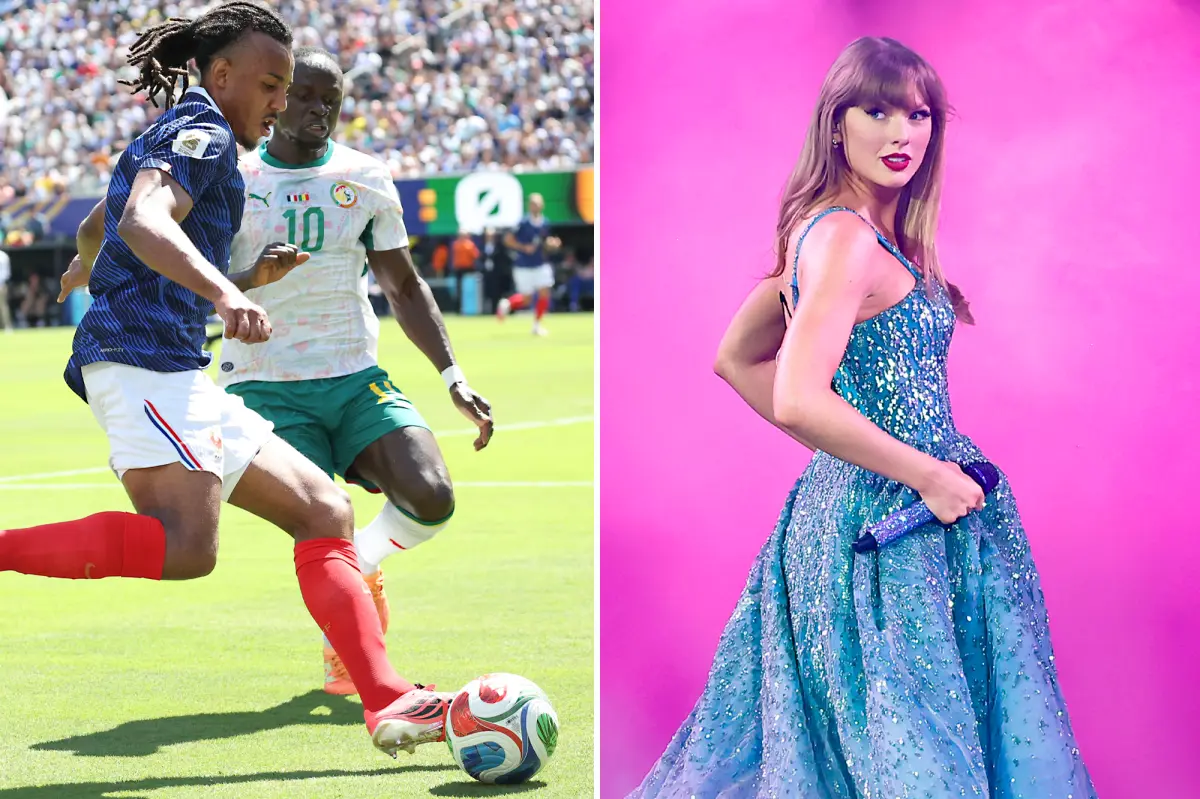

The 2026 FIFA World Cup is shaping up to be one of the biggest economic events in modern sports history — and the financial impact could make Taylor Swift’s blockbuster Eras Tour look small in comparison.
Bank of America analysts recently forecast that the month-long tournament will boost global gross domestic product by a whopping $45 billion — with roughly $19 billion of that going to US GDP, Barron’s reported.
The tournament, which is being staged across the United States, Canada and Mexico, is expected to drive an estimated billions in additional US consumer spending, analysts wrote earlier this month.
“In economic terms, all of this activity adds up,” Federated Hermes Head of Multi-Asset Solutions Damian McIntyre wrote in a research note.
“In this sense, it’s like the ‘Taylor Swift effect’ all over again,” McIntyre said.
The singer was widely credited for sparking mini-economic booms in the host cities of her 2023-24 world tour, a phenomenon that earned the tongue-in-cheek name of “Swiftonomics.”
The World Cup’s economic footprint could dwarf even the staggering numbers generated by Swift’s record-breaking shows.
Nomura estimated in 2024 that the first leg of Swift’s Eras Tour boosted consumer spending by about $5 billion.
Bank of America’s estimate for World Cup-related spending is more than six times larger.
Unlike a concert tour that visits a city for one or two nights, the World Cup unfolds over several weeks and draws millions of fans, sponsors, broadcasters, athletes and support staff.
The tournament is expected to generate spending across hotels, restaurants, bars, airlines, ride-sharing services, retail shops and entertainment venues throughout North America.
In New York and New Jersey alone, the host committee forecast $3.3 billion in impact for the region, with 26,000 jobs supported on both sides of the Hudson River.
The World Cup is also a massive media and gambling event.
Barron’s reported that it could become the largest betting event in history, and that at a time when the sports gambling industry faces growing regulatory uncertainty.
As of Friday, bettors had already wagered about $2.7 billion on prediction markets tied to the tournament winner.
The largest share of that action has flowed toward traditional soccer powers. France, Spain, England and Argentina are considered the favorites to lift the trophy, according to betting markets.
The US, despite enjoying home-field advantages for much of the tournament, was given just a 2% chance of winning it all.
The “Taylor Swift effect” became a recognized economic phenomenon during the singer’s Eras Tour, which packed stadiums around the globe and generated massive spillover spending far beyond ticket sales.
Research found that Swift’s concerts triggered large spikes in hotel occupancy, restaurant traffic, transportation demand and temporary hiring in host cities.
Across the US leg of the tour, hotel analytics firm STR estimated that Swift concerts generated $208 million in incremental hotel room revenue above seasonal norms.
Hotel occupancy during concert weekends jumped nearly 10 percentage points above normal levels, while average daily room rates climbed 23%.
In Pittsburgh, tourism officials estimated that Swift’s two-night stop generated $46 million in direct spending excluding ticket sales and produced roughly $3 million in state and local tax revenue.
Cincinnati projected $92 million in total consumer spending tied to her concerts there.
Economists caution that not every dollar spent on tickets translates directly into local economic growth because much of the revenue ultimately flows to artists, promoters, ticketing companies and suppliers outside the host city.
Still, the hospitality and tourism effects have proven difficult to ignore.
If the forecasts prove accurate, the World Cup could become the most economically significant sporting event ever staged in North America.