

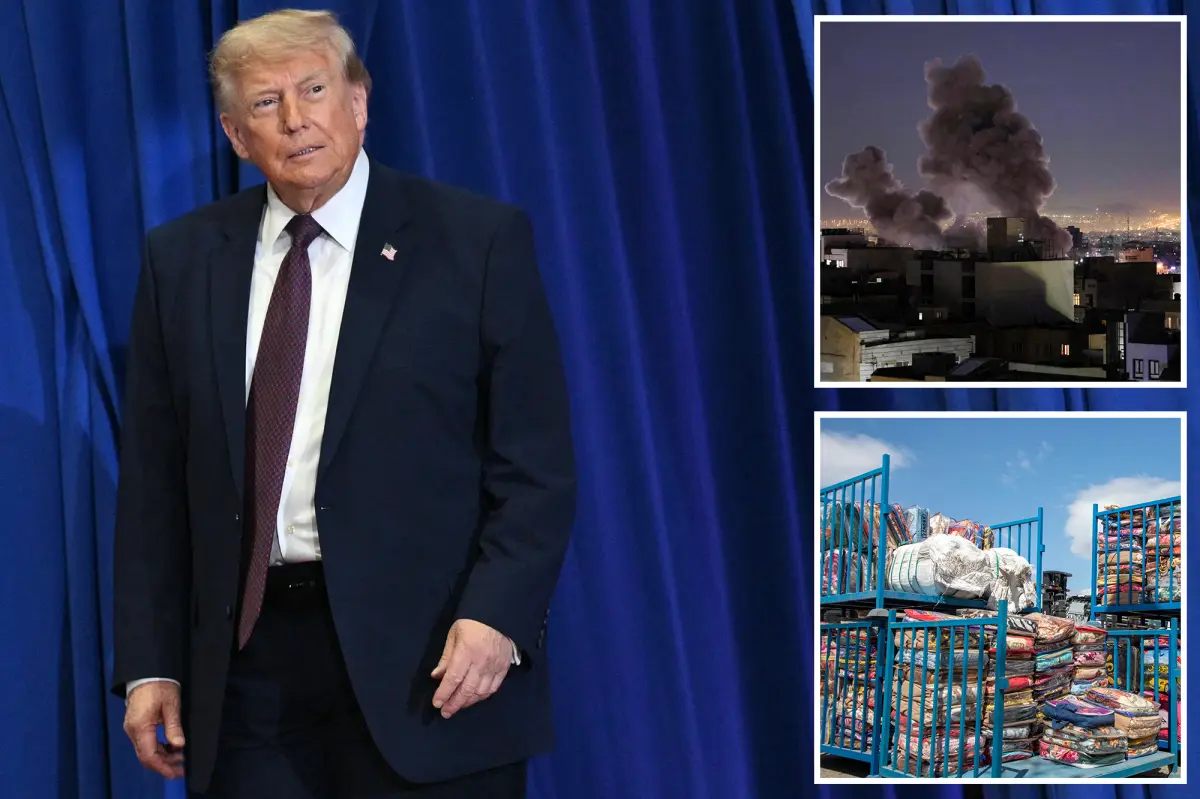

The Trump administration is insisting that billions of dollars in frozen Iranian assets will never actually reach Tehran’s hands, pushing back on criticism that the White House is preparing to bankroll one of America’s most dangerous adversaries.
“None of this money is ever going to touch Iran,” a senior US official told The Post.
Instead, officials say the funds would function more like an escrow account, with payments sent directly to approved vendors supplying humanitarian goods rather than to the Iranian regime itself.
“There’s no big handouts, there’s no big tranches of cash,” the person said.
Under the arrangement tied to ongoing US-Iran negotiations, Tehran can request purchases of items such as food, medicine and other humanitarian supplies, but would never directly receive the money.
That means payments will go directly to companies supplying agricultural products, medical equipment or other approved goods.
The humanitarian spending would come from a Qatar-held $6 billion fund released by former President Joe Biden as part of a September 2023 prisoner swap that brought home five detained Iranian-Americans, in exchange for five Iranians held by the US, officials have previously told The Post.
It comes after Iranian media this week suggested Tehran would be given $12 billion in two tranches.
The US argues the arrangement gives Washington complete control over the pace and scope of any economic relief while ensuring Iran receives incentives to continue cooperating with nuclear inspections and other provisions being negotiated.
The system ensures the money never enters Iranian government accounts and can be shut off immediately if talks collapse.
“Every single piece of this process, we retain control,” the official said. “If at some point in the process the Iranians stop walking this path with us, payments stop. We can freeze the whole thing.”
The $6 billion originated from Iranian oil sales years ago to South Korea, which the Biden administration in 2023 allowed to be transferred to Qatar for use on humanitarian goods. While the funds were moved to Doha, Washington put a hold on payouts to Tehran after the Oct. 7, 2023, Hamas massacre in Israel.
That money is entirely separate from the estimated $10 billion Tehran could make through oil sales over a 60-day period of waived oil sanctions the US granted as part of the MOU, which also removed the American blockade of Iranian ports.
US officials have downplayed the sanctions waiver, noting that Iran was already selling oil on the black market despite the American sanctions.
Still, experts say the move has made it far easier for Tehran to make cash quickly — as it also allows them access to legitimate banking networks.
“There is a world of difference between doing what you can to stop the world’s foremost state sponsor of terrorism from getting more dollars, to turning a blind eye to literally enabling it,” Behnam Ben Taleblu, senior Iran program director of the Foundation for Defending Democracies, told The Post.
It also does not include the $300 billion in reconstruction investments in Iran that the US has pledged to round up from private companies in the Gulf and across the world should Tehran agree to a final deal with Washington at the end of the negotiation period.
The official also emphasized that any funds released would come in small increments tied to specific humanitarian transactions outside of the country — without money touching Iran — rather than large cash transfers.
Officials argue the structure is designed to address humanitarian needs inside Iran while preventing the regime from diverting money to military activities, proxy groups or its nuclear program.
The arrangement remains one of the most politically sensitive pieces of the broader negotiations, with critics warning that any sanctions relief could ultimately strengthen Tehran.
Critics say any amount spent on Tehran can be problematic, as money is fungible and can free up other funds for illicit activities.
“We just got out of two direct conventional conflicts and a blockade with this regime, so anything that relieves the pressure frees up more revenue and more resources to build back better,” Taleblu said.
However, the MOU forbids Iran from supporting terrorism, and the administration has said frozen funds can be cut off if such behavior is detected.